
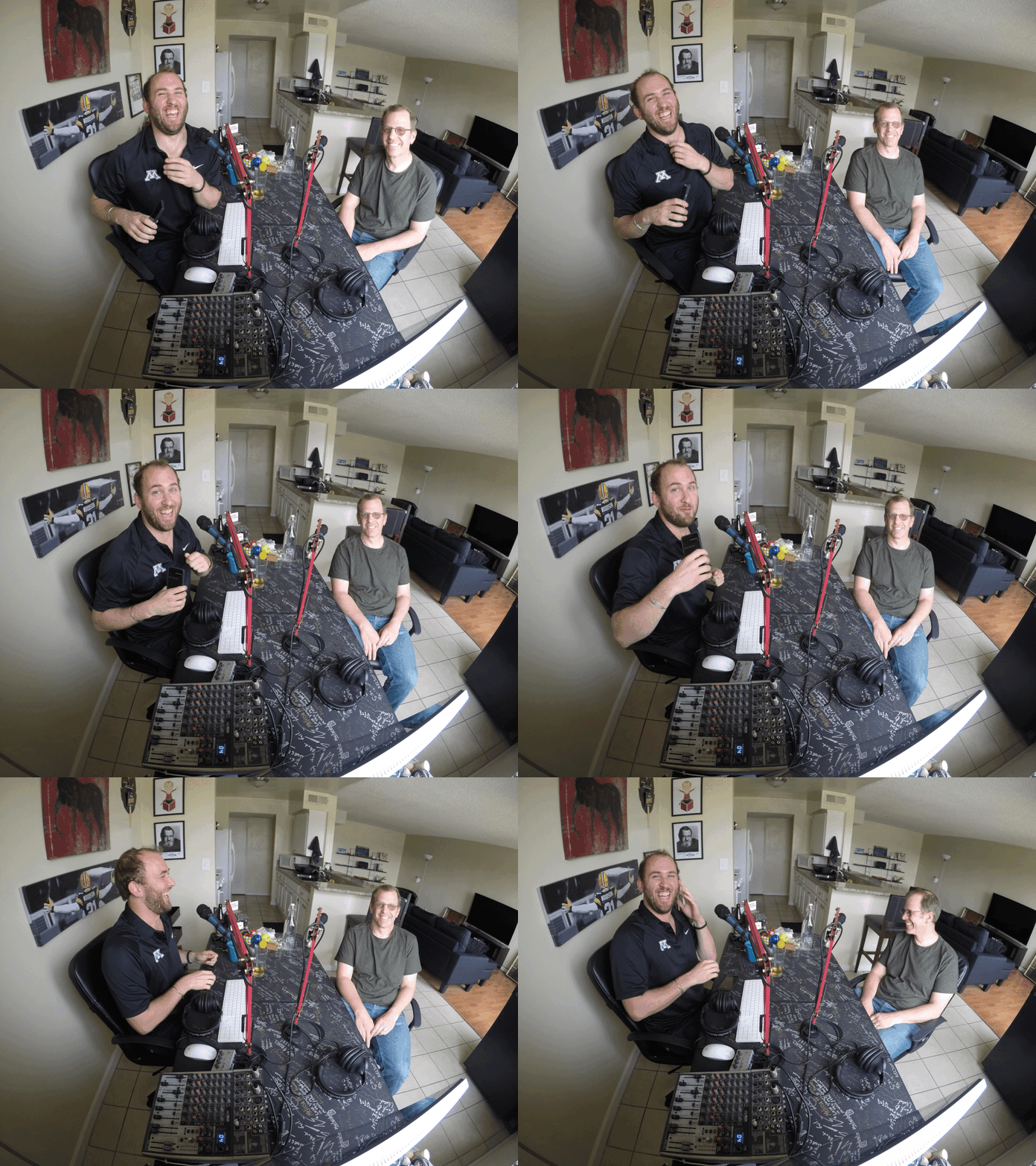
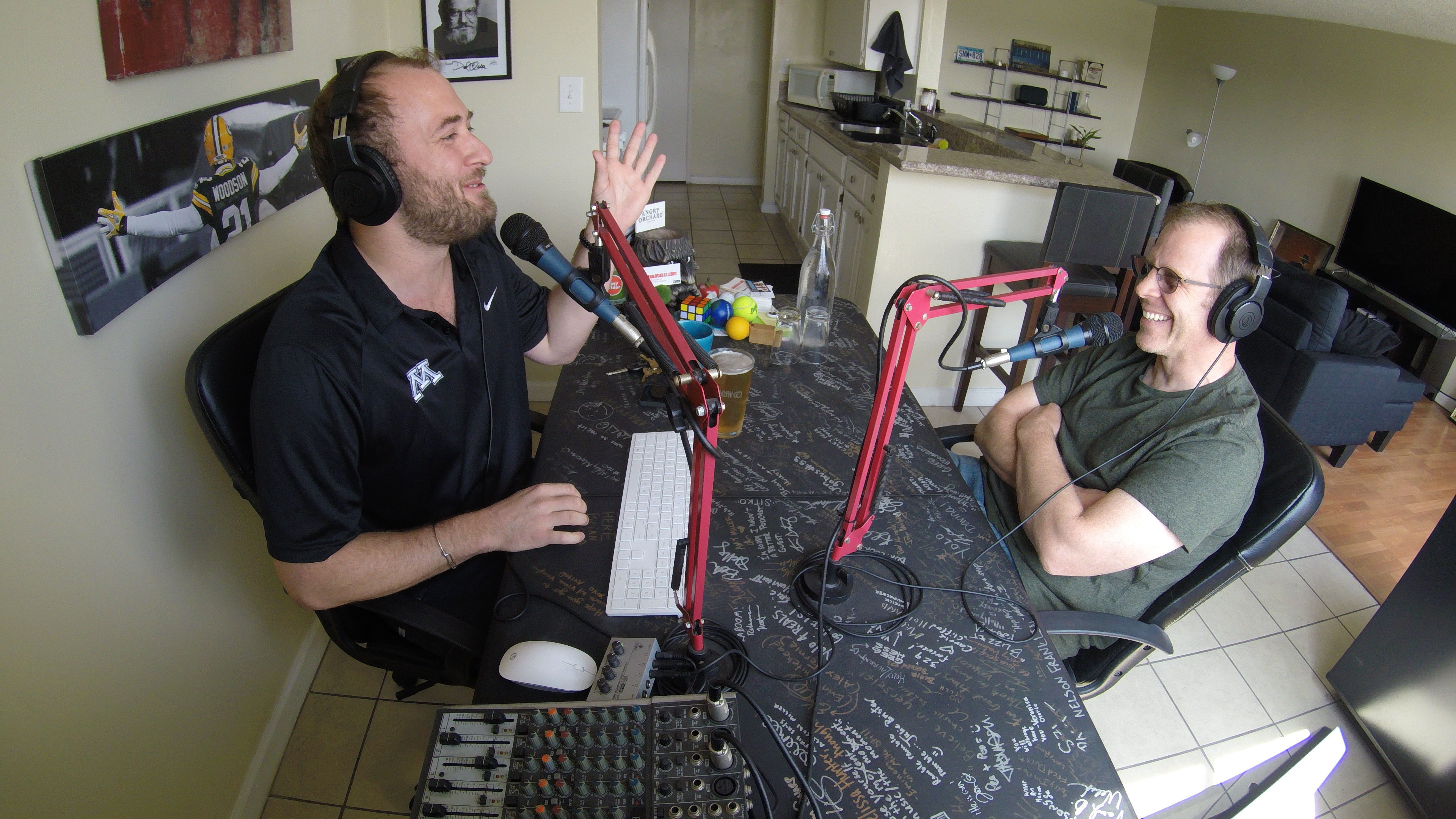
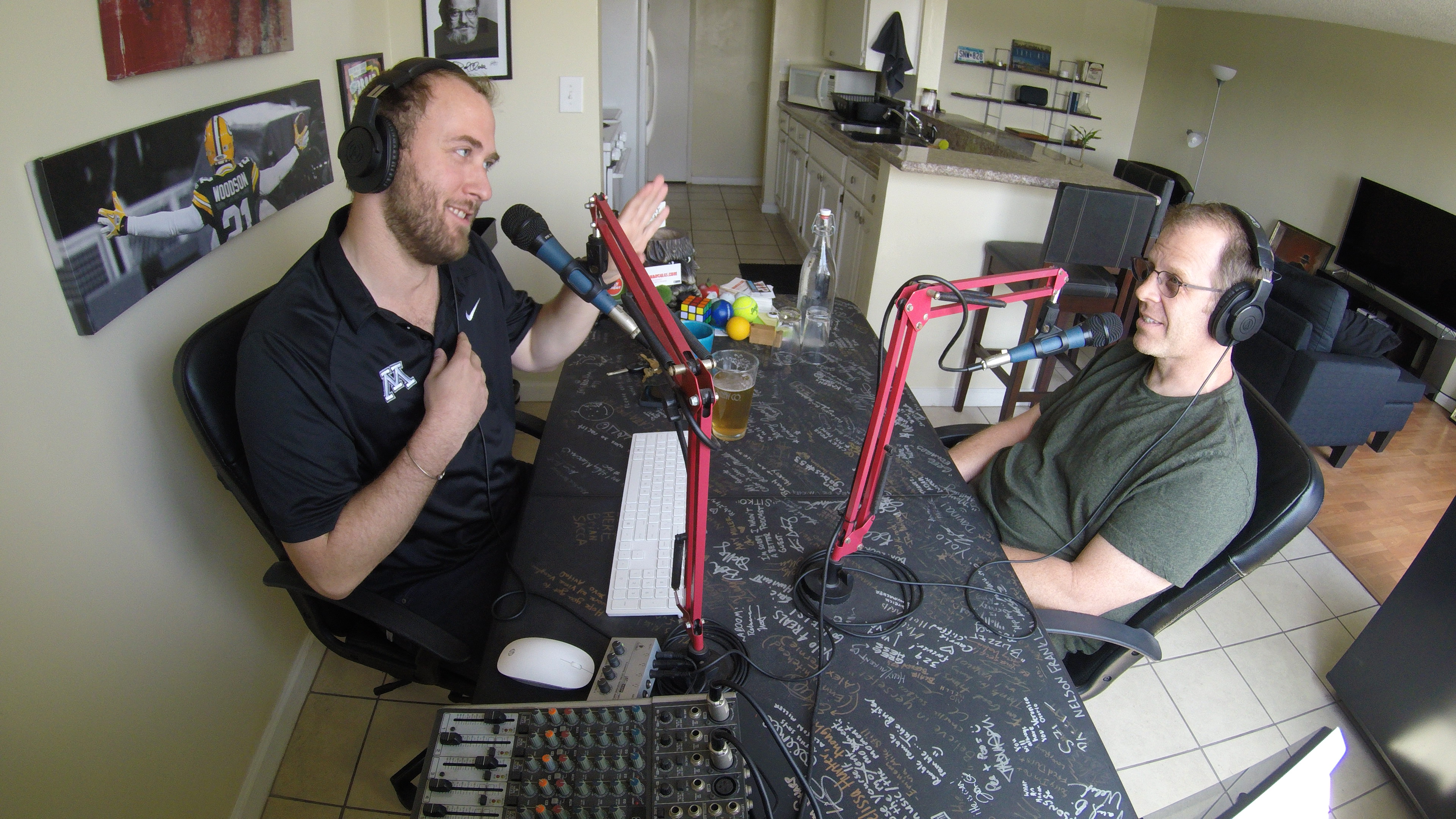
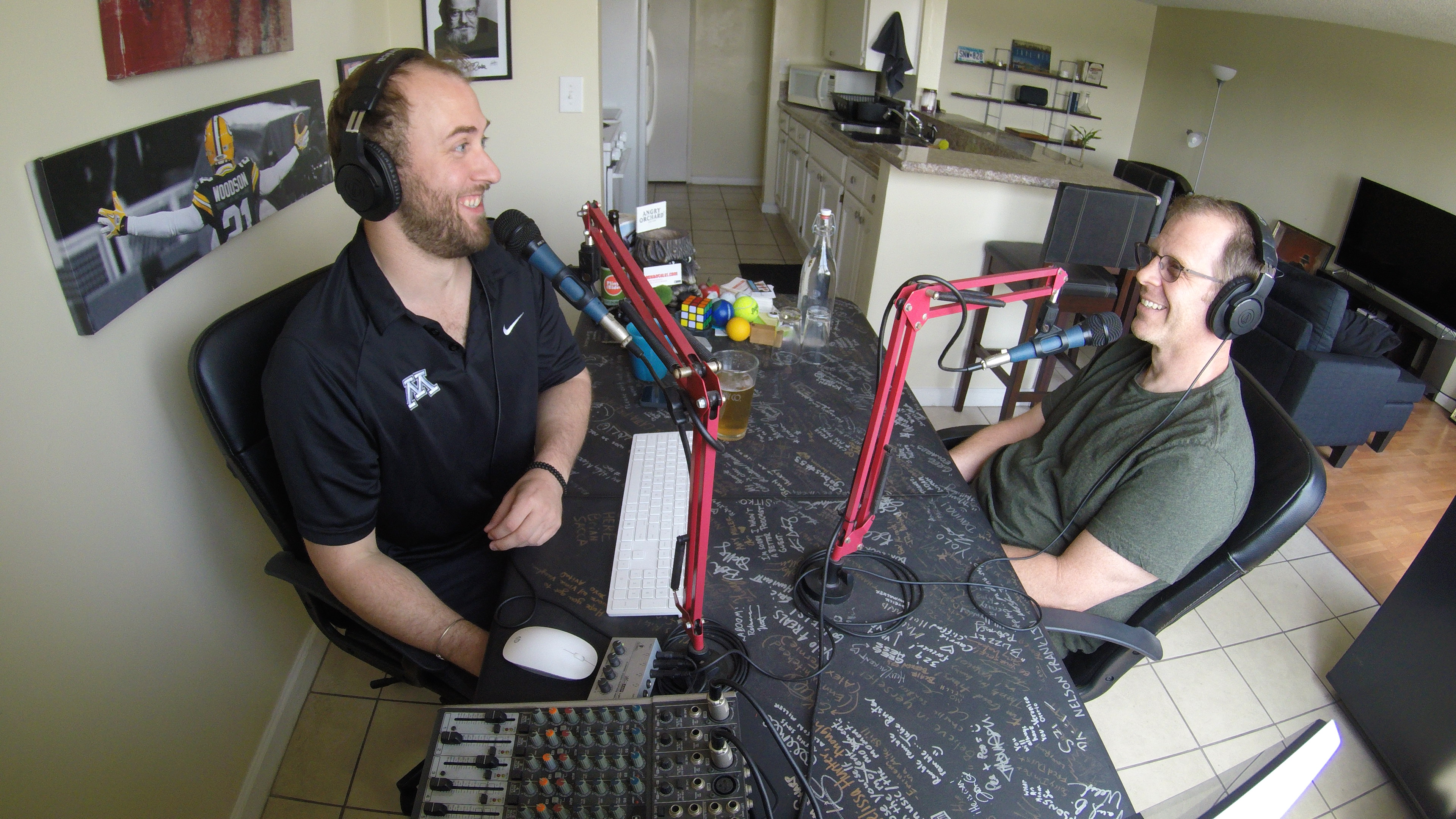
We’ve got another writing podcast today! Writer Paul Lieberstein (The Newsroom, King of the Hill) joins us on the Box Angeles podcast episode 227. Paul stops by Studio 309 and discusses making a sitcom in high school, playing the vibraphone, learning how to act on ‘The Office’, and more!
“I was so inexperienced as an actor. I just had given the whole thing so little thought.”
— Paul Lieberstein
Subscribe to the Box Angeles Archives to listen to this episode:


Support the show and unlock access to the full archive + bonus content.
Beats
00:00 – Introduction
02:02 – Box talks streaming needing a random episode button.
05:40 – The Studio Beer of the episode.
06:50 – Paul’s rituals around writing.
12:48 – What Paul sees in casting sessions from actors.
17:28 – Growing up in Connecticut and doing a sitcom in high school.
21:08 – Being active in music in high school.
23:18 – Attending Hamilton College in upstate New York for economics.
25:30 – Playing vibraphone in the jazz band.
27:25 – Briefly playing soccer
28:15 – Moving to NYC and briefly working in finance.
30:20 – Starting writing sketches and sitcoms out of boredom.
32:30 – Landing a William Morris agent with a writing partner.
35:54 – Feeling rich after ‘Clarissa Explains It All’.
37:05 – Living on Hollywood Blvd.
40:05 – Getting into some various writing rooms after a drought.
43:00 – Getting ‘King of the Hill’ from his brother-in-law Greg Daniels.
47:35 – Starting acting on ‘The Office’.
52:09 – The Scrantron Strangler fan theory.
55:50 – Getting a manager.
56:35 – Venturing into film w/ ‘Song of Back and Neck’ at Tribeca.
1:00:03 – The Box Angeles questions.
1:11:15 – Promoting stuff.
STUDIO BEER – Reel Brewery, Untitled Pilsner
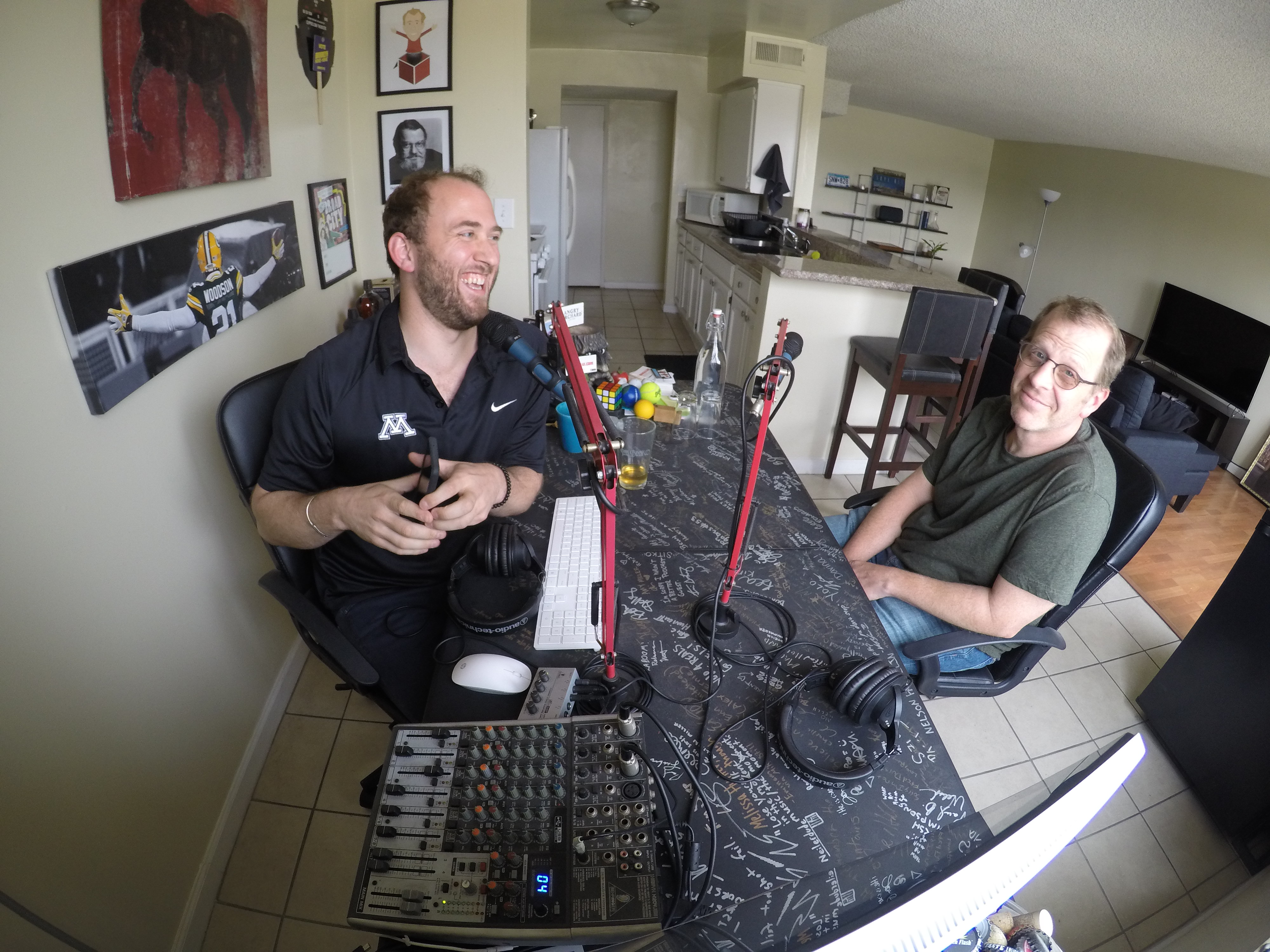
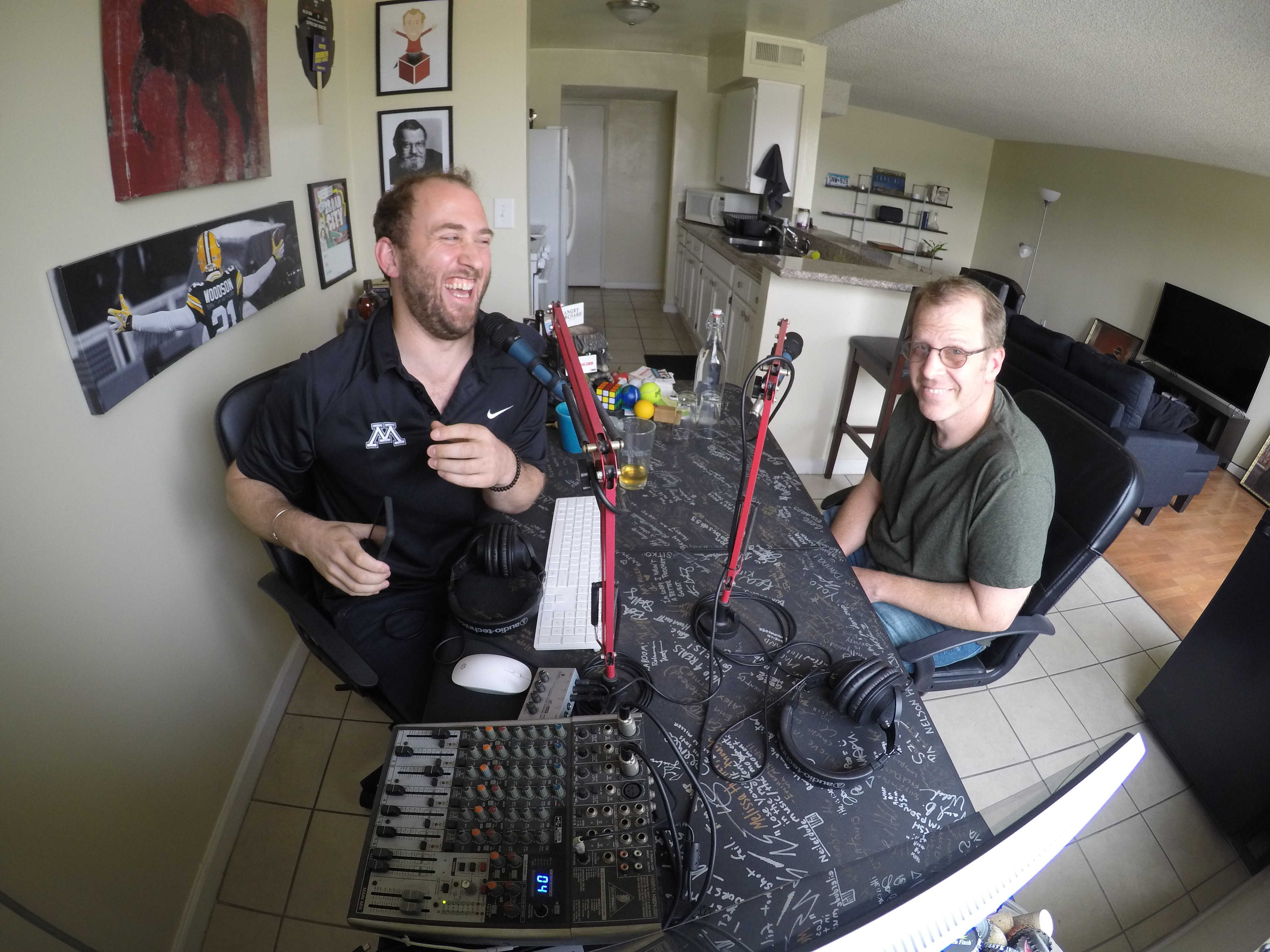
More Paul
 – Check Paul’s IMDb.
 – Follow Paul on Instagram @paullieberstein.
Transcript
MIKE ELDER (00:00)
Yes. Welcome to Box Angeles, everybody. Coming to you today from Studio 309. Yes. Hey. Hey. Look how you turned on once we got.
There’s so many podcasts out there my listeners could listen to, but they chose mine, so I appreciate that and I want to say thank you. Who’s my guest today? It’s writer Paul Lieberstein. Paul, I’m pumped to talk to you.
PAUL LIEBERSTEIN (00:27)
Thank you. It’s nice to be here, Paul.
MIKE ELDER (00:30)
Honestly, though, I’m really pumped to talk to you. I wanted to tell you this because I lived in a college house with four people, four dudes, busy life, party house. We rarely did things together other than drink, but twice a week we would get together in college, and one of those was to watch The Office. I don’t know how it worked, but we’d always get together. I’m talking when it was live, obviously, back in the early aughts, we would get together every week. Five straight white dudes in their mid, early 20s would get together to watch your show. And I thought that was pretty cool, that it brought us together.
PAUL LIEBERSTEIN (01:03)
Yeah, yeah. Bringing together straight white dudes was kind of our mission. That was part of the pitch.
MIKE ELDER (01:11)
I don’t know. It was that in south park was the only times we’d get together regularly. Otherwise we’d be out with our girlfriends or whatever, drinking at the bar. But those two times a week, we would get together.
PAUL LIEBERSTEIN (01:20)
I’m glad we do it. Thank you very much.
MIKE ELDER (01:22)
Well, thank you for being here. You haven’t done very many podcasts, have you?
PAUL LIEBERSTEIN (01:25)
No, I haven’t.
MIKE ELDER (01:25)
Why not?
PAUL LIEBERSTEIN (01:26)
I don’t know.
MIKE ELDER (01:29)
Nobody’s asking you or you’re just turning them down?
PAUL LIEBERSTEIN (01:31)
I don’t. I don’t have. That’s something I don’t do well here, so I think that is big.
MIKE ELDER (01:38)
Well, here’s the secret, though. Everybody I get on my podcast, I don’t go through the publicist.
PAUL LIEBERSTEIN (01:43)
It just.
MIKE ELDER (01:43)
It’s just too much work.
PAUL LIEBERSTEIN (01:45)
Yeah. You just track them down.
MIKE ELDER (01:46)
Yeah. And they’re like, who are you? We don’t care about you. So I just email people directly. They’re much sweeter and kinder. To those that are trying to make their way through this crazy world of Hollywood, publicists are, too. Yeah.
PAUL LIEBERSTEIN (01:56)
Yeah, I guess.
MIKE ELDER (01:57)
So it’s good you don’t have a publicist because that’s how I got you here. I feel like, excellent. Hey, I started this off with a rant, if you don’t mind.
PAUL LIEBERSTEIN (02:03)
Rant way.
MIKE ELDER (02:04)
Hey, this rant is great.
PAUL LIEBERSTEIN (02:06)
Okay.
MIKE ELDER (02:07)
I usually say they’re not great. But this one’s great.
PAUL LIEBERSTEIN (02:09)
Oh, cool.
MIKE ELDER (02:10)
Netflix and Hulu.
PAUL LIEBERSTEIN (02:12)
How long do you work on your ramp for you?
MIKE ELDER (02:13)
Oh, I don’t work. It’s the improviser.
PAUL LIEBERSTEIN (02:17)
But you know what you’re gonna say.
MIKE ELDER (02:18)
Yeah, I have, like, a notepad, and I write down little ideas that hit me during the day. You know, little. Well, juice. Juice. Things that get my juices flowing. And this one really gets me going. Streaming services like Netflix and Hulu, one of them could have my loyalty if they do one simple thing.
PAUL LIEBERSTEIN (02:33)
Yeah.
MIKE ELDER (02:34)
What’s your favorite sitcom of all time?
PAUL LIEBERSTEIN (02:36)
Larry Sanders Show.
MIKE ELDER (02:37)
Larry Sanders Show. Okay. It’s not on either of those, but it’s on HBO Go.
PAUL LIEBERSTEIN (02:41)
Yeah.
MIKE ELDER (02:42)
If you want to go watch the Larry Sanders show right now, you have to, like, scroll, and you’re like, which one do I want? Why don’t these services have a random episode button for shows like that, like cheers or 30 rock or things like that that you’ve seen the whole series.
PAUL LIEBERSTEIN (02:55)
Right.
MIKE ELDER (02:55)
And now you just want to revisit for that comfort? Why do they not have a random episode button? If I want to go watch The Office, I’m like, oh, now I got to figure out which one I want to watch. And then that ends up being more time than actually picking an episode of Bob’s Burger.
PAUL LIEBERSTEIN (03:07)
You know what I’m saying?
MIKE ELDER (03:09)
It’s so simple. It’d be so easy to code that Netflix needs to hire me. I have so many good ideas like that.
PAUL LIEBERSTEIN (03:19)
You could get some dice. I think you could do this for yourself.
MIKE ELDER (03:22)
Oh, okay.
PAUL LIEBERSTEIN (03:23)
Yeah.
MIKE ELDER (03:24)
Dice out the season and then dice out the episode.
PAUL LIEBERSTEIN (03:26)
Dice out the episode. You’re done.
MIKE ELDER (03:27)
That’s not bad. Yeah, but that seems like, again, too much work. It should be really easy for them to just implement that. That’s just like, a couple zeros and ones.
PAUL LIEBERSTEIN (03:37)
Yeah, yeah, yeah. But that’s all it would take to get your loyalty.
MIKE ELDER (03:40)
Yeah, that’s what I’m saying. If one of them did it, I would unsubscribe from the other and strictly go with that one. And I would scream it from the mountaintop because it seems like it’s so hard to do. Netflix has been around for how long now? Right?
PAUL LIEBERSTEIN (03:54)
Wait, how long has it been around?
MIKE ELDER (03:55)
Well, the DVDs have been out for, like, 20 years. I just saw it on an envelope. But I don’t know why they also. Netflix needs to work on the whole.
PAUL LIEBERSTEIN (04:03)
Okay, what do they need to work on now?
MIKE ELDER (04:06)
I’m all fired up.
PAUL LIEBERSTEIN (04:06)
Yeah. Yeah.
MIKE ELDER (04:08)
Netflix does not. Is on the assumption that everybody binges their Shows and people like me. I think a lot of millennials don’t have the attention span or the interest in knocking out 12 hours of. You know what I’m saying?
PAUL LIEBERSTEIN (04:19)
Yes.
MIKE ELDER (04:20)
So they need to. Netflix does not do. This is one of the few. They do not put like a recap ahead of the episode.
They just assume. You just finish knocking out.
So if I go like five days without watching, I have to go back and like fast forward through the previous episode to see the bullet points. It’s exhausting.
PAUL LIEBERSTEIN (04:35)
Interesting, Paul.
MIKE ELDER (04:36)
It’s exhausting.
PAUL LIEBERSTEIN (04:39)
But that would never be like no one else is recutting.
MIKE ELDER (04:44)
Everybody does that. Hbo go, hbo before the show.
PAUL LIEBERSTEIN (04:46)
Hbo they’ll like.
MIKE ELDER (04:47)
I just watched Barry part of.
PAUL LIEBERSTEIN (04:49)
Isn’t that part of regular hbo like hbo?
MIKE ELDER (04:52)
Oh, yes.
PAUL LIEBERSTEIN (04:52)
You just tune in the. The creators of the show or whatever. The. The, you know, the editors. Editors, whatever. They’ve done that recap. And you watch it before you watch it.
So they’re just putting on what they’re given. Right, Right.
MIKE ELDER (05:07)
And they. As they should. But every show should do that. I don’t know why every show doesn’t do that is what I’m saying.
I think it’s different. Networks do it. Like if the greatest show on TV right now is MasterChef Junior. Before the. Every episode, they put that on there.
And the recaps on Hulu. When I watch it on Hulu.
PAUL LIEBERSTEIN (05:21)
Right.
MIKE ELDER (05:22)
It’s great program. If you haven’t seen it.
PAUL LIEBERSTEIN (05:23)
I haven’t.
MIKE ELDER (05:24)
You gotta check it out. These little nine year olds talking about it. A red wine reduction on their flambe.
It’s insane, man. That’s my rant. I think that was a pretty good one.
Yeah, some better work. I’ve had some pretty piss poor rants lately. Hey, the studio beer is real. Breweries, narcissists. No, this is their untitled Pilsner. Actually. They give this to me for free.
PAUL LIEBERSTEIN (05:46)
That’s fantastic.
MIKE ELDER (05:50)
You’re not drinking with me because it’s very early in the day and I have a problem. And you don’t you normally drink though?
PAUL LIEBERSTEIN (05:55)
Yeah, I like to drink.
MIKE ELDER (05:56)
What is your go to.
PAUL LIEBERSTEIN (06:00)
Whiskey? All right. Yeah.
MIKE ELDER (06:02)
Bourbon or rye? What are we talking?
PAUL LIEBERSTEIN (06:03)
We’re talking like, you know, I got a lot of those single malt scotches or maybe some Johnny Walker too.
MIKE ELDER (06:11)
Sure.
PAUL LIEBERSTEIN (06:11)
You know.
MIKE ELDER (06:12)
What’s your favorite scotch?
PAUL LIEBERSTEIN (06:13)
Just putting on ice.
MIKE ELDER (06:14)
I like a macallan.
PAUL LIEBERSTEIN (06:16)
You like Macallan? Yeah, Macallan’s a little peaty. No, it’s not peaty.
MIKE ELDER (06:21)
I don’t like peat. I like, but. Oh, sure.
PAUL LIEBERSTEIN (06:26)
Yeah, Dalmore.
MIKE ELDER (06:28)
It’s a good one.
PAUL LIEBERSTEIN (06:29)
Do you know it?
MIKE ELDER (06:29)
Yeah, Yeah, I know. I went through my scotch phase in my early 20s. After The Office phase with my roommates.
PAUL LIEBERSTEIN (06:35)
There was a scotch phase from How.
MIKE ELDER (06:36)
I Met yout Mother.
PAUL LIEBERSTEIN (06:37)
Yeah. Oh, now I’m just a rye man.
MIKE ELDER (06:41)
Is it funny how pop culture get.
PAUL LIEBERSTEIN (06:42)
Through How I Met you, Mother?
MIKE ELDER (06:47)
The Gauntlet Thrown Down? I love it. I like to ask about rituals and process. Up top. You’re a. You’re. You’re a big show writer. You’re. You. You’re a showrunner.
I’ve had a few showrunners on. I love the idea of just rituals. Do you have any rituals when you’re running a show or writing things?
PAUL LIEBERSTEIN (07:01)
Rituals.
MIKE ELDER (07:04)
Interesting, because it seems like showrunning is a lot of organization.
PAUL LIEBERSTEIN (07:08)
Yeah.
MIKE ELDER (07:08)
Leadership.
PAUL LIEBERSTEIN (07:10)
Not too much. I mean, I guess in the. I guess, you know, process.
MIKE ELDER (07:15)
Process or rituals, whatever.
PAUL LIEBERSTEIN (07:17)
In the beginning. In the beginning, I like to just talk about, you know, spend a couple of weeks, if we have it in the schedule, with like, no goals whatsoever.
MIKE ELDER (07:28)
Yeah.
PAUL LIEBERSTEIN (07:29)
Just talk about characters. Trying to. Try to find some things that are interesting just in life.
MIKE ELDER (07:34)
Yeah. Just kicking the can around.
PAUL LIEBERSTEIN (07:36)
Yeah.
MIKE ELDER (07:37)
A lot like my rant.
PAUL LIEBERSTEIN (07:38)
A lot like your rant. Just let it go. And I would say, like, almost everything from that. That’s interesting. Works. Gets into the show.
MIKE ELDER (07:46)
Yeah.
PAUL LIEBERSTEIN (07:46)
Some point. So is.
MIKE ELDER (07:48)
Do you have somebody obviously dictate this or do you record it?
PAUL LIEBERSTEIN (07:50)
Taking notes. We, like, write down. You know, there’s usually a couple of writers, assistants in there making notes.
MIKE ELDER (07:56)
Sure.
PAUL LIEBERSTEIN (07:56)
But also, like, when something’s interesting, we just write it down on the board. Note cards or white. Whiteboard.
MIKE ELDER (08:01)
Sure. You just like a communal sort of idea spread.
PAUL LIEBERSTEIN (08:04)
Yeah, exactly.
MIKE ELDER (08:05)
That’s great. What about when you’re. When you’re on directing an episode or something?
PAUL LIEBERSTEIN (08:10)
Rituals for that?
MIKE ELDER (08:11)
Yeah. Just any rituals when you’re. When you’re working?
PAUL LIEBERSTEIN (08:16)
None that’s coming to mind. I’m like, rehearse?
MIKE ELDER (08:20)
Sure.
PAUL LIEBERSTEIN (08:21)
Like, sure. Yeah. Like, before we do it.
MIKE ELDER (08:23)
Yeah, that makes sense. It’s a good start.
PAUL LIEBERSTEIN (08:28)
No, nothing that’s not, like, connected to what I have to do.
MIKE ELDER (08:32)
Right. I know.
PAUL LIEBERSTEIN (08:34)
I’m not a very, like, superstitious person.
MIKE ELDER (08:36)
Oh, really?
PAUL LIEBERSTEIN (08:37)
Yeah. None of that.
MIKE ELDER (08:38)
Sure. You just do what’s got to be done, basically. Yeah, I get that. What about when you’re writing for yourself? If you’re just writing at home, do you go to coffee shops? Do you listen to music?
PAUL LIEBERSTEIN (08:47)
No music. Because that’s all I will do then. And then, like you, I will get sucked into Just picking the music. Spend most of the day just picking. Making a playlist for the day. But I’ve tried that, you know.
MIKE ELDER (09:01)
Yeah.
PAUL LIEBERSTEIN (09:01)
Yeah. It doesn’t work so well. No. Different phases have different things, but yeah, there’s a lot of just sitting and trying to get away from the computer.
MIKE ELDER (09:11)
Right.
PAUL LIEBERSTEIN (09:12)
Because that also will be a giant distraction.
MIKE ELDER (09:14)
Yeah.
PAUL LIEBERSTEIN (09:15)
And I’ve got these. I just recently put up these three whiteboards in my own little office.
MIKE ELDER (09:21)
Nice.
PAUL LIEBERSTEIN (09:22)
That I rent. And I just sit and stare at them, basically.
MIKE ELDER (09:28)
I feel like your thing is you just like to let something set and soak and think the process on it and sort of just toss it around.
PAUL LIEBERSTEIN (09:35)
Let it happen slowly.
MIKE ELDER (09:36)
Yeah, yeah, that makes sense. Let it simmer, as they say.
PAUL LIEBERSTEIN (09:39)
Yeah.
MIKE ELDER (09:40)
You can’t.
PAUL LIEBERSTEIN (09:40)
You can’t slow cook.
MIKE ELDER (09:42)
You can’t boil the frog by just throwing them in boiling water. You got to let it sit for a while.
PAUL LIEBERSTEIN (09:45)
Really torture that frog. What do you do when slow cooking?
MIKE ELDER (09:48)
What do you do when you get away from the computer? I like to go for walks, for example. Do you do stuff like that?
PAUL LIEBERSTEIN (09:54)
Yeah, I’ll go for a walk sometimes. Yeah. I’m in a phase now where, like, I don’t know what I’m going to do next, and I’m really trying to just think of something. So really, anything works.
MIKE ELDER (10:07)
Sure.
PAUL LIEBERSTEIN (10:08)
Yeah.
MIKE ELDER (10:09)
Just living by the moment. Yeah, I’m into that.
PAUL LIEBERSTEIN (10:12)
Yeah.
MIKE ELDER (10:13)
It totally works for me.
PAUL LIEBERSTEIN (10:14)
At least that’s what I’m telling myself. It’s a good way to just do anything.
MIKE ELDER (10:17)
You don’t do as much acting. But when you did act, did you have any sort of things you did before you were on camera or.
PAUL LIEBERSTEIN (10:27)
Memorize my life. Yeah, yeah, yeah.
No, let’s see. The Office was for most of it, and it changed a little in the last year, but we. It was just kind of a culture of not taking a very good look at your lines until, you know, just 20 minutes before seen and then not really learning them. Not really learning them until. Until you’re really on the go.
MIKE ELDER (10:54)
Yeah.
PAUL LIEBERSTEIN (10:56)
Which is really kind of indulgent into something very incredibly unprofessional as well. But it just. It lent to a very kind of fun feel and a real sense of, like, discovery on set.
MIKE ELDER (11:09)
I would. That makes total sense to me.
PAUL LIEBERSTEIN (11:11)
Yeah.
MIKE ELDER (11:12)
Because that’s something where you want the characters to be so real and honest.
PAUL LIEBERSTEIN (11:14)
Yeah.
MIKE ELDER (11:15)
And if they have these clearly well rehearsed lines and quips, it’s not gonna feel that way at all.
PAUL LIEBERSTEIN (11:19)
Yeah. Then when I was. When I did the newsroom, there’s Totally opposite. It was totally the opposite. It was insane. And that was a culture set by, I think, Jeff Daniels where he was extremely professional and he would want, you know, his performance, he said, he told me he would want it to feel. It’s like the hundredth performance of a play first, and he wants it right out of the gate to feel that way. Wow. So he’s got it down and he comes in where on The Office.
People sometimes would literally be reading the. When we do our little read through of the scene for blocking, some people would be reading it for the very first time.
MIKE ELDER (11:58)
Right.
PAUL LIEBERSTEIN (11:58)
You know, as the. As one of the writers, I would of course have been involved in it, but yeah, some people would really be seeing it for the first time. He came in totally off book, you know, and having it down for rehearsal and everybody.
MIKE ELDER (12:14)
Incredible.
PAUL LIEBERSTEIN (12:15)
Everybody was like, okay, I guess this.
MIKE ELDER (12:16)
Is what we’re doing.
PAUL LIEBERSTEIN (12:18)
And. And then Sorkin himself is so precise that, you know, he wants everything the way he’s written it. So. Yeah, I had a lot of lines and that was. That was like the first time I had to just spend the day before just hammering.
MIKE ELDER (12:37)
Seems like a steep learning curve.
PAUL LIEBERSTEIN (12:39)
Yeah. Yeah. It was terrifying.
MIKE ELDER (12:41)
But you survived.
PAUL LIEBERSTEIN (12:42)
I survived. Everybody survives acting.
MIKE ELDER (12:46)
Yeah.
PAUL LIEBERSTEIN (12:46)
No acting accidents.
MIKE ELDER (12:47)
Well, let me. Actually, that’s brings up an interesting idea. Have you been in many casting rooms as a showrunner?
PAUL LIEBERSTEIN (12:53)
Yeah.
MIKE ELDER (12:53)
Is it. What. What do you see from people like me who come in and audition for you? What do you do you see anything that you hate or anything that you love, like, as far as preparation or not?
PAUL LIEBERSTEIN (13:02)
Yeah, yeah, yeah. It’s. It’s the reason I don’t go audition.
MIKE ELDER (13:09)
Because it sucks.
PAUL LIEBERSTEIN (13:10)
No, here’s the thing. So, like, you know, to not let auditioning soak up your whole life, you know, you kind of want to just like, okay, I, you know, prepare for an hour and go in.
MIKE ELDER (13:22)
Yeah.
PAUL LIEBERSTEIN (13:23)
But that’s not. That doesn’t cut people who get the people we pick, you know, especially for the smaller roles, you know. You know, 20 lines and under, I would say a lot of times it’s just. There’s. There’s barely a character there. There isn’t. It’s a.
It’s a role made to service the other people. Yeah. So the person who gets it comes in with a take and they have a take for every word, you know, and it’s. It’s there.
MIKE ELDER (13:57)
Yeah.
PAUL LIEBERSTEIN (13:58)
And somebody does that.
MIKE ELDER (13:59)
Sure.
PAUL LIEBERSTEIN (14:00)
And they figure it out and they say everything, you know, with a little intention. Yeah.
MIKE ELDER (14:07)
And that’s what you like as a Showrunner.
PAUL LIEBERSTEIN (14:10)
Yeah. Someone’s come in, they’ve done that and you know, because there’s not a lot of time to correct someone.
MIKE ELDER (14:17)
Right. Especially if it’s an ancillary character, like you just said.
PAUL LIEBERSTEIN (14:22)
Yeah. So got to. Someone comes in, makes a character choice, presents a character, presents their lines deliberately. This is like. Yeah, yeah. Okay. That’s awesome.
MIKE ELDER (14:33)
That’s good to hear.
PAUL LIEBERSTEIN (14:34)
And of course, making. Making us laugh, that always helps. Yeah.
MIKE ELDER (14:39)
What about, what about if the choice they make is completely opposite of what you saw? Do you still respect the fact that they made a choice and could see something you could work with or. No, they blew it.
PAUL LIEBERSTEIN (14:52)
They probably blew it.
MIKE ELDER (14:53)
Okay.
PAUL LIEBERSTEIN (14:54)
But hey, well, you know, you put yourself in the role and that’s what you do, so.
MIKE ELDER (14:59)
Right.
PAUL LIEBERSTEIN (15:00)
People are wrong for roles. That’s okay.
MIKE ELDER (15:02)
Yeah, totally.
PAUL LIEBERSTEIN (15:03)
You can’t get everything I like to hear in the theater. There’s still this idea of like, you know, and not just an idea, but it’s in practice all the time. And you’re like, okay, let’s cast this, you know, 39 year old man for a role of a 68 year old and we’ll put some makeup on him and gray his hair and it’ll be fine, you know, because no one’s looking that closely.
MIKE ELDER (15:25)
Right.
PAUL LIEBERSTEIN (15:25)
You know, but it’s just like this doesn’t work in film.
MIKE ELDER (15:31)
Right. What’s your biggest pet peeve an actor does when he comes into audition? Like, try to yuck it up, talk.
PAUL LIEBERSTEIN (15:37)
To us first at all? I mean, you don’t even like, like.
MIKE ELDER (15:42)
A pleasantry, like a hello?
PAUL LIEBERSTEIN (15:43)
No, no, the hello is fine. Okay.
MIKE ELDER (15:45)
I was gonna say I break every.
PAUL LIEBERSTEIN (15:47)
Room then, but you know, that’s just, that’s just me. I wouldn’t, I wouldn’t advise actors to like, stop being personable.
MIKE ELDER (15:55)
Right.
PAUL LIEBERSTEIN (15:56)
I’m just like not. No, it’s just, it’s just you’re meaning you’re going through so many people, right. And you know, that’s what you’re doing all day. And then like this kind of pleasant conversation about like how you got here or what’s up with your car or whatever.
MIKE ELDER (16:13)
Right.
PAUL LIEBERSTEIN (16:14)
I don’t know.
MIKE ELDER (16:15)
That’s something I learned. And not to that extent, obviously, but something I learned quickly when I moved here was like I was treating initially when I moved here for the reasons you sort of just said I was treating the auditions like job interviews where it’s much more proper and serious. And I feel like I found much pretty quickly I discovered that you got to just be relaxed and go in there and just be normal.
PAUL LIEBERSTEIN (16:36)
Yeah.
MIKE ELDER (16:36)
Rather than prim and proper and try to, you know.
PAUL LIEBERSTEIN (16:38)
Yeah, no, no, definitely present yourself as.
MIKE ELDER (16:40)
If it’s a job interview, even though it is, but it isn’t type of thing.
PAUL LIEBERSTEIN (16:44)
Yeah. I imagine also, it’s really dependent on the role you’re going out for.
MIKE ELDER (16:49)
Right.
PAUL LIEBERSTEIN (16:50)
I mean, you know, I don’t audition people for really intense dramatic roles.
MIKE ELDER (16:56)
Right.
PAUL LIEBERSTEIN (16:56)
But that’s got to be a different thing, right, where you gotta get yourself in that.
MIKE ELDER (17:00)
Yeah. Are you watching Barry?
PAUL LIEBERSTEIN (17:04)
I saw the first one. I didn’t. I didn’t catch the rest yet.
MIKE ELDER (17:08)
It’s pretty good. Did you audition for the newsroom or did they just ask you to do it?
PAUL LIEBERSTEIN (17:12)
Yeah, I just did it because I was. I was writing Shovel.
MIKE ELDER (17:14)
Oh, that’s right.
PAUL LIEBERSTEIN (17:15)
Yeah.
MIKE ELDER (17:16)
Oh, yeah.
PAUL LIEBERSTEIN (17:17)
Season three.
MIKE ELDER (17:17)
Oh, yeah. Okay. So you just threw yourself. Smart.
PAUL LIEBERSTEIN (17:21)
We started doing a bit in the room, and then. Oh, and then he wrote it in.
MIKE ELDER (17:26)
Oh, funny. That’s cool.
PAUL LIEBERSTEIN (17:28)
Yeah.
MIKE ELDER (17:28)
Where are you from?
PAUL LIEBERSTEIN (17:29)
Connecticut.
MIKE ELDER (17:30)
Connecticut. The little old Connecticut. What are you doing in Connecticut as a kid? What’s going on up there?
I always just picture woods.
PAUL LIEBERSTEIN (17:36)
Is there a lot of woods? There’s a lot of woods, but it’s very suburban. But, you know, like, I don’t know what it’d be like today, growing up there. I mean, it looks similar, but, you know, you’ve got the whole. The world changed, you know? So as a kid, I don’t know, we would just get homeschool, throw our stuff down, have a snack, and go out again and home back at dinner.
No, no, no. We get.
MIKE ELDER (18:00)
Oh, home from school. Gotcha. And you just sort of run around outside.
PAUL LIEBERSTEIN (18:03)
Yeah, we walk home from school.
MIKE ELDER (18:05)
That’s cool.
PAUL LIEBERSTEIN (18:06)
Yeah.
MIKE ELDER (18:06)
Were you. Were you into entertainment as a kid? Were you watching tv? Were you doing plays or anything?
PAUL LIEBERSTEIN (18:11)
Not a lot. But in high school, yeah, I did my first sitcom.
MIKE ELDER (18:16)
What?
PAUL LIEBERSTEIN (18:16)
Yeah, we had a TV studio there, and we just got a bunch of people together, and it was. It was the coolest thing because you can just. You put up a sign that says, actors come at this time, and then bunch of people show up and you don’t have to pay them. It’s amazing. Or just like, people. We need sets built, and then people who like to, you know, build set, they just show up.
MIKE ELDER (18:37)
Okay. As an actor, I resent that. You were happy you didn’t have to pay them.
PAUL LIEBERSTEIN (18:42)
Well, I didn’t know it was paying me either, but.
MIKE ELDER (18:44)
Okay, wait, elaborate. So you were like, I’m gonna make a sitcom, or you and a Couple friends had this ambition or it was somebody else and you just got involved.
PAUL LIEBERSTEIN (18:53)
I think. I think I was walking with a friend and found that we had a TV studio. Oh, I didn’t know the high school.
MIKE ELDER (19:00)
And nobody was using it.
PAUL LIEBERSTEIN (19:01)
Yeah. Cuz I wasn’t like in the AV club or whatever. Okay, I forget what. I don’t know. Some people must have been using it for something, but I hope so. But then. Yeah, then we just asked the guy who ran the thing if we could do this.
Yeah, that’s what it’s for. And so I just wrote the scripts and someone else directed them.
MIKE ELDER (19:24)
What was it about?
PAUL LIEBERSTEIN (19:27)
It was. We called it the Hotel New Jersey. And it was just like a farcical, stupid little hotel. Like a Faulty towers. Kind of.
MIKE ELDER (19:38)
Okay, that’s amazing.
PAUL LIEBERSTEIN (19:39)
Yeah, I enjoyed it.
MIKE ELDER (19:41)
How many episodes did you do?
PAUL LIEBERSTEIN (19:43)
Three.
MIKE ELDER (19:44)
That’s incredible. And how big was the ensemble? Was it pretty small or did you get a lot of people involved?
PAUL LIEBERSTEIN (19:50)
I don’t think it was. I don’t know how much we, you know, an episode might have been five minutes.
MIKE ELDER (19:54)
That’s amazing.
PAUL LIEBERSTEIN (19:56)
Yeah.
MIKE ELDER (19:56)
Where they. Where are these at? Are they out there?
PAUL LIEBERSTEIN (19:58)
No. I don’t know. So probably on a, you know, Betamax somewhere.
MIKE ELDER (20:03)
So that was your first writing credit?
PAUL LIEBERSTEIN (20:04)
I guess.
MIKE ELDER (20:05)
That’s incredible. Did you show it to other students and stuff or did you just literally do it for yourself?
PAUL LIEBERSTEIN (20:09)
I think we played it in the lunchroom.
MIKE ELDER (20:13)
That’s great.
PAUL LIEBERSTEIN (20:14)
But it was kind of like in the hallway a little bit and people would walk by it.
MIKE ELDER (20:18)
Oh.
PAUL LIEBERSTEIN (20:19)
And no one would watch.
MIKE ELDER (20:20)
Oh, that sucks.
PAUL LIEBERSTEIN (20:21)
No, it’s. It was fun.
MIKE ELDER (20:22)
What a premiere.
PAUL LIEBERSTEIN (20:24)
Oh, yeah. Yeah.
MIKE ELDER (20:25)
As long as you didn’t compete with like a macaroni and cheese day, I feel like you’d have hope.
PAUL LIEBERSTEIN (20:28)
But lunch gets too exciting.
MIKE ELDER (20:32)
This is always the best. Corn dog and Mac and cheese day. That’s my favorite. That’s cool. So were you inspired by something? Were you watching a lot of TV as a kid or was that just like a whim that you knew that.
PAUL LIEBERSTEIN (20:43)
I was just watching a ton of tv?
MIKE ELDER (20:45)
Well, what did you like as a kid?
PAUL LIEBERSTEIN (20:48)
Mash. Yeah, sure.
MIKE ELDER (20:51)
Okay.
PAUL LIEBERSTEIN (20:51)
That was. I mean, it was on four times a day and I watched it four times a day and. But you don’t get to binge. You have to show up. You have to show up at.
MIKE ELDER (21:00)
You get a random episode at 7.
PAUL LIEBERSTEIN (21:02)
And 7:30 and then 11. 11:30.
MIKE ELDER (21:06)
That’s great. That’s super cool. What was your thing in high school then?
PAUL LIEBERSTEIN (21:09)
What do you mean?
MIKE ELDER (21:10)
Were you in the Drama club. Were you playing sports? What if you had a put you.
PAUL LIEBERSTEIN (21:14)
In a group, probably. Oh, yeah.
MIKE ELDER (21:17)
Singer, clarinet.
PAUL LIEBERSTEIN (21:21)
No, no. I was a drummer and vibraphone player.
MIKE ELDER (21:26)
Vibraphone? Yeah, I played a little xylophone in my day.
PAUL LIEBERSTEIN (21:29)
Timpani. Wow. Yeah.
MIKE ELDER (21:32)
Could you tune a timpani?
PAUL LIEBERSTEIN (21:33)
I could tune a symphony.
MIKE ELDER (21:34)
See, I. Okay. I was in percussion for a hot second, and whenever the band teacher was like, okay, show me how to tune this timpani, I was like, okay, nobody knows how to tune this thing. They’re just hitting it and pressing the foot pedal. I’m convinced you can’t tuna tympani.
PAUL LIEBERSTEIN (21:48)
Why?
MIKE ELDER (21:50)
Because I think I’m tone deaf. A, that’s why I was in percussion.
PAUL LIEBERSTEIN (21:52)
Yeah.
MIKE ELDER (21:53)
And B, I just think people just press it and hit it and they don’t know what they’re doing because I can’t do it. I’m projecting on other people.
PAUL LIEBERSTEIN (22:00)
I assume you start really low. Start with it low.
MIKE ELDER (22:03)
Yeah.
PAUL LIEBERSTEIN (22:03)
And then you have to have the little thing you blow.
MIKE ELDER (22:05)
Oh, I never did that.
PAUL LIEBERSTEIN (22:06)
Well. And you don’t know what pitch to go.
MIKE ELDER (22:09)
Yeah.
PAUL LIEBERSTEIN (22:09)
You didn’t know how.
MIKE ELDER (22:11)
You definitely didn’t, but you were able to do that. That’s pretty cool.
PAUL LIEBERSTEIN (22:16)
Yeah.
MIKE ELDER (22:16)
That’s amazing.
PAUL LIEBERSTEIN (22:17)
Basically.
MIKE ELDER (22:18)
Did you ever do like a solo on the vibraphone?
PAUL LIEBERSTEIN (22:21)
Yeah. Yeah.
MIKE ELDER (22:23)
This is incredible. Way to bury the leap. We should have been talking about this from the beginning.
PAUL LIEBERSTEIN (22:28)
How many mallets could you do a Toony Chan? Damn, I still got a vibraphone. What?
MIKE ELDER (22:35)
That’s incredible. You should start making a vlog where.
PAUL LIEBERSTEIN (22:39)
You just do that’s what your future should do. An album.
MIKE ELDER (22:43)
Dude, I had a crush on this girl. She wasn’t even that cute. No offense, but she could play double Double Malady’s hand.
PAUL LIEBERSTEIN (22:48)
None take.
MIKE ELDER (22:50)
Not to you. If she somehow finds it, she could double mallet each hand. And I thought it was the most beautiful thing ever.
PAUL LIEBERSTEIN (22:56)
That’s pretty cool. When someone could do it.
MIKE ELDER (22:58)
It’s incredible.
PAUL LIEBERSTEIN (22:58)
Looks very cool.
MIKE ELDER (23:00)
They had to feature you at least a little bit if you could do that. Because nobody else in your school could do that, I would think.
PAUL LIEBERSTEIN (23:05)
Yeah, well, you know, no one was too interested in the vibraphone in college. I was in the jazz band. Oh, that’s featured a lot.
MIKE ELDER (23:17)
So. Okay. So where’d you go to college?
PAUL LIEBERSTEIN (23:19)
Hamilton College. It’s in upstate New York.
MIKE ELDER (23:21)
Okay. I always get confused about staying New York, but. So why’d you go to Hamilton?
PAUL LIEBERSTEIN (23:27)
Oh, I don’t know. I wanted a small liberal arts school. I just thought somehow that would be a good Fit for sure. Who I was at the time.
MIKE ELDER (23:37)
And that’s not too far from home.
PAUL LIEBERSTEIN (23:38)
No, about a five hour drive.
MIKE ELDER (23:40)
That’s perfect. Yeah, that’s great. And so what was your intended major? I always say intended because people always change it.
PAUL LIEBERSTEIN (23:48)
I don’t know if I went in with an intention, no intent. I majored in economics.
MIKE ELDER (23:52)
Okay, that’s great.
PAUL LIEBERSTEIN (23:53)
Yeah, but so the jet is incredibly easy. I just enjoyed it.
MIKE ELDER (23:57)
Yeah.
PAUL LIEBERSTEIN (23:58)
Yeah.
MIKE ELDER (23:59)
What do you. What are your thoughts on macro?
PAUL LIEBERSTEIN (24:03)
On macroeconomics?
MIKE ELDER (24:04)
That’s the only buzzword I could think of. You have thoughts, what are they?
PAUL LIEBERSTEIN (24:08)
I still have thoughts. I don’t know if they’re.
MIKE ELDER (24:11)
Are they political?
PAUL LIEBERSTEIN (24:14)
No. Sometimes I feel like that everyone’s still going on these old models that just, you know, this. Here we get to the boring part.
MIKE ELDER (24:26)
Yeah, please do. Sounds like a hot take.
PAUL LIEBERSTEIN (24:29)
This will make it to YouTube.
MIKE ELDER (24:33)
He’s calling his shot, folks.
PAUL LIEBERSTEIN (24:35)
Everyone’s still always very concerned about the money supply and the Fed rate and its effect on unemployment and growth in the economy and the ease of money and lending. And I feel like that’s a 20 year old model and we’re too global and the Fed does not have control over the global industry.
MIKE ELDER (25:02)
Interesting.
PAUL LIEBERSTEIN (25:03)
Anymore.
MIKE ELDER (25:03)
That is a hot take.
PAUL LIEBERSTEIN (25:05)
I think so. I think, you know, and you know, the, you know, the business channels and whatever shows are still. They’re still saying that same stuff.
MIKE ELDER (25:14)
Yeah.
PAUL LIEBERSTEIN (25:15)
I just don’t think it’s true. And every like, indicator would. Would lend you to believe it’s not true.
MIKE ELDER (25:23)
Sure. Watch out for Ron Paul in the hallway. He’ll.
PAUL LIEBERSTEIN (25:26)
Yeah, he’ll yell at you.
MIKE ELDER (25:29)
Okay, so you studied economics. Was the jazz band sort of just something you joined once you got to school, or was that something you had scoped out beforehand?
PAUL LIEBERSTEIN (25:36)
No, I was really into music.
MIKE ELDER (25:37)
Okay, so what’s the. Sorry, I didn’t do band. College band. I saw the marching band and stuff. But were you doing concerts and things like that all the time?
PAUL LIEBERSTEIN (25:45)
Jazz band does concerts? Yeah. No one really goes.
MIKE ELDER (25:51)
Nobody goes. So it’s not like whiplash where there’s a huge auditorium full.
PAUL LIEBERSTEIN (25:56)
It is not like whiplash. Although.
MIKE ELDER (25:58)
Was it that intense?
PAUL LIEBERSTEIN (25:59)
Although, you know, it was really interesting how they shot that last scene with all those lights. You couldn’t tell if anyone was there or not.
MIKE ELDER (26:05)
Oh, that’s a fair point.
PAUL LIEBERSTEIN (26:06)
Yeah.
MIKE ELDER (26:07)
See, when I see those lights, there’s a shit ton of people there always. So I project, I’m projecting onto them.
PAUL LIEBERSTEIN (26:11)
Yeah.
MIKE ELDER (26:13)
Nobody comes to see me when I do improv. But I digress. That was bad okay, so. So we.
How big was the band? Was it like 20 people? 100 people?
PAUL LIEBERSTEIN (26:23)
Yeah, like a 20 person jazz.
MIKE ELDER (26:25)
That’s amazing.
PAUL LIEBERSTEIN (26:25)
That’s right.
MIKE ELDER (26:26)
And you were the percussion section all yourself.
PAUL LIEBERSTEIN (26:28)
Or I would be the drummer. Or I would be the vibraphone player.
MIKE ELDER (26:31)
That’s super cool. What? What are you doing?
PAUL LIEBERSTEIN (26:33)
I think there was a better drummer that came in and so he got. He got to play the drums.
MIKE ELDER (26:40)
What was his name? Chad.
PAUL LIEBERSTEIN (26:43)
It might have been Chad.
MIKE ELDER (26:44)
Chad seems like a drummer’s name, doesn’t he? Yeah, fucking Chad.
PAUL LIEBERSTEIN (26:48)
That’s really correct. That’s funny.
MIKE ELDER (26:52)
That’s really weird. What were you doing for fun in college? Did you do improv?
PAUL LIEBERSTEIN (26:56)
Ever?
MIKE ELDER (26:56)
Did you find improv in college?
PAUL LIEBERSTEIN (26:58)
No. No, I don’t sure that really existed. It’s there now, but it was like this conservative, like little, not so artsy school.
MIKE ELDER (27:08)
Okay. Are you do. What are you doing for fun? Are you writing at all at this point in your life other than your sitcom days?
PAUL LIEBERSTEIN (27:15)
No, not outside of like creative writing class.
MIKE ELDER (27:18)
Okay.
PAUL LIEBERSTEIN (27:19)
Which was fun. So the writing stopped. Music and then just hanging out. Tried to play soccer one year.
MIKE ELDER (27:29)
On the club team or the actual school team?
PAUL LIEBERSTEIN (27:31)
On the school team.
MIKE ELDER (27:33)
Were you athletic?
PAUL LIEBERSTEIN (27:34)
I really tried hard. No, I made JV for a while, but that’s only because they didn’t really cut. That was pretty terrible. Although I got to say, you know, it was a pretty terrible team.
MIKE ELDER (27:48)
Well, it’s because the field was covered in snow. Nine months there probably.
PAUL LIEBERSTEIN (27:52)
Yeah.
MIKE ELDER (27:53)
That’s fun. Were you a defense mid? Mid. Mid.
PAUL LIEBERSTEIN (27:56)
I’m not sure I’ve got that far. I would play mid or defense because I definitely didn’t have like a striker’s foot.
MIKE ELDER (28:07)
Okay, that’s a fun one. So after you graduate college with your economics degree, what’s your move? Do you know you want to write at this point or are you still sort of like.
PAUL LIEBERSTEIN (28:17)
No, no. Then I like get holes. Get really swept up in like the 80s finance thing and try to get a job as an investment banker, which. And to their credit, they were. They were on to me right away.
Did not hire me. But then I did get a job working for kind of big eight accounting firm in their auditing department.
MIKE ELDER (28:40)
Okay.
PAUL LIEBERSTEIN (28:41)
And. And I went out as like an auditor on all these different projects.
MIKE ELDER (28:46)
That’s great.
PAUL LIEBERSTEIN (28:46)
Knowing nothing about auditing.
MIKE ELDER (28:48)
This is where. In Hamilton Town or.
PAUL LIEBERSTEIN (28:51)
No, when I graduated, after I graduated, New York City.
MIKE ELDER (28:53)
Oh, you moved to New York City?
PAUL LIEBERSTEIN (28:54)
Yeah.
MIKE ELDER (28:55)
Okay. Had you.
PAUL LIEBERSTEIN (28:56)
That only lasted about six months.
MIKE ELDER (28:57)
Okay.
PAUL LIEBERSTEIN (28:58)
And I got written up a lot. And they. Well, they told me I had to learn how to look busy. Like that was written down anyway.
MIKE ELDER (29:07)
What?
PAUL LIEBERSTEIN (29:07)
Yeah, they just really wanted me to look busy all the time.
MIKE ELDER (29:10)
That’s so weird.
PAUL LIEBERSTEIN (29:11)
I guess I was daydreaming.
MIKE ELDER (29:12)
You moved to New York because you. Finance is all in New York. Is that why you moved in New York?
PAUL LIEBERSTEIN (29:15)
Yeah. You know, grew up outside this. An hour outside the city. Yeah. Everything was there.
MIKE ELDER (29:20)
Sure. So when you realized you weren’t destined to be. Yeah, an auditor slash financier.
PAUL LIEBERSTEIN (29:27)
And I just. I just quit and. Which was amazing.
MIKE ELDER (29:34)
Did you do like a mic drop or something? Like a fuck you, fuck you type of thing?
PAUL LIEBERSTEIN (29:38)
Such a. It was such a. It was. It was a fuck you, but it was such a. A tame fuck you within the boundaries of.
Of being an account. Like, I just.
It was a shirt that wasn’t quite appropriate and a tie that also wasn’t quite appropriate.
MIKE ELDER (30:00)
You really stuck it to him.
PAUL LIEBERSTEIN (30:03)
I really did.
MIKE ELDER (30:03)
You know, Paul’s losing it.
PAUL LIEBERSTEIN (30:05)
Stripes. Oh, shit. What’s happening?
MIKE ELDER (30:08)
Wait, did you just stop going or did you announce that you were.
PAUL LIEBERSTEIN (30:11)
I don’t know. I gave notice.
MIKE ELDER (30:12)
Oh. It wasn’t super tame.
PAUL LIEBERSTEIN (30:17)
Yeah.
MIKE ELDER (30:17)
Okay, so how do you go from that to writing? Where’s the jump? I’m missing the disconnect or it’s disconnected.
PAUL LIEBERSTEIN (30:23)
I had. I was so bored while I was there. It was awful. And I. I always liked writing. Yeah, I was always writing, I guess since, you know, in school and. And just started.
Even while I was working there, started writing again. Did. Tried to get on Sesame Street. I was in New York. Yeah. Really wanted to write for Sesame Street.
MIKE ELDER (30:45)
They just had, like, an open audition for writers or writers.
PAUL LIEBERSTEIN (30:48)
Oh. It was really hard, and I didn’t get on.
MIKE ELDER (30:50)
But they. You knew they were hiring?
PAUL LIEBERSTEIN (30:52)
No, I was like. I was like, knocking on the door of Sesame Street. Wow. Here’s my sketches. You know, I wrote this for Grover.
MIKE ELDER (31:02)
A lot of people don’t know. Sesame street actually is just down in Tribeca. You can just go down there.
PAUL LIEBERSTEIN (31:06)
You can just.
MIKE ELDER (31:06)
Yeah, take a left off Houston. It’s right there.
PAUL LIEBERSTEIN (31:09)
It’s hard to get to. Yeah, you’re easily lost.
MIKE ELDER (31:12)
Wow, that’s aggressive of you. That doesn’t seem like you up until this point at all to be that forward with something.
PAUL LIEBERSTEIN (31:20)
Yeah, that was aggressive. I think I really annoyed them and did not get it.
MIKE ELDER (31:24)
You got to do that, though.
PAUL LIEBERSTEIN (31:25)
But, you know, I just kept writing sketches and writing sitcoms.
MIKE ELDER (31:32)
Just for yourself. Yeah. So where. Where do you finally get paid or get a job in the Industry.
PAUL LIEBERSTEIN (31:38)
I hooked up with another guy and we wrote some stuff together. Because at the time. And maybe still a little today, but definitely at the time, it was a lot easier to break in as a team.
MIKE ELDER (31:51)
Yeah, I think it still is.
PAUL LIEBERSTEIN (31:52)
You think so?
MIKE ELDER (31:52)
Yeah. I just had Craig Gerard on. He broke into his team. I’ve had a few people recently there. Yeah. Because they pay you half.
PAUL LIEBERSTEIN (31:58)
They pay you half. They got more voices in the room. Yeah. And with these, like.
Yeah, really small staffs today. I’ll bet. I’ll bet teams. I bet that works.
So what was I saying?
MIKE ELDER (32:11)
Where did you meet. Where did you meet the writer at?
PAUL LIEBERSTEIN (32:13)
Oh, this is a guy my sister introduced me to. She went to college with him.
MIKE ELDER (32:18)
Okay.
PAUL LIEBERSTEIN (32:18)
Interested in writing. And so we wrote together for a while, and then it wasn’t really working out, but some of the stuff we did was good.
MIKE ELDER (32:28)
Yeah.
PAUL LIEBERSTEIN (32:29)
And it got us a job on Clarissa Explains It All. That was my first show.
MIKE ELDER (32:34)
That’s amazing.
PAUL LIEBERSTEIN (32:35)
We wrote there together and then, you know, like I said, it wasn’t really working out.
MIKE ELDER (32:39)
Sorry. How do you get that job, though? Like, you’re writing this stuff. How do you get it in the hands of that staff or whatever?
PAUL LIEBERSTEIN (32:45)
We started just sending it to everywhere. And he had a friend on In Living Color, and In Living Color started to have some interest, and we never got that job. But based on that, we got an agent, William Morris. What William Morris agent got us. Clarissa explains it all.
MIKE ELDER (33:04)
Wait, okay. For people that don’t know, obviously, William Morris became William Morris Endeavor. It’s one of the biggest agencies. They don’t return phone calls to anybody. So how. Without selling anything, how did you get an agent there?
PAUL LIEBERSTEIN (33:16)
Well, they. I don’t know. They were interested.
MIKE ELDER (33:22)
This is. I guess this was a long time ago, so maybe they were still growing at that point.
PAUL LIEBERSTEIN (33:27)
I think, you know, back in the day when there was a lot fewer networks and shows, they would. They would show up, like. So they had people covering In Living Color and then those agents would show up.
MIKE ELDER (33:38)
That’s cool.
PAUL LIEBERSTEIN (33:39)
They go to Tape night and they’d keep talking all their writers.
MIKE ELDER (33:41)
Sure.
PAUL LIEBERSTEIN (33:41)
They would know what’s going on and who might get hired. And so they were scout. Yeah.
MIKE ELDER (33:50)
That’s interesting. I feel like that doesn’t happen anymore.
PAUL LIEBERSTEIN (33:52)
As you alluded to. I think they don’t really do that. There’s. It’s just spread too thin.
MIKE ELDER (33:56)
I’ve had a lot of writers on too recently that don’t have representation. They write for legit shows and they don’t even have representation because that’s cool. You like that?
PAUL LIEBERSTEIN (34:06)
I do. Although I don’t know how they’re gonna get kind of their next job.
MIKE ELDER (34:10)
Well, I think it goes to networking, like you said, you know, somebody that works on a show and then they pass your stuff around type of stuff.
PAUL LIEBERSTEIN (34:15)
Yeah, I mean, most of the time you’re getting your own jobs.
MIKE ELDER (34:18)
Yeah.
PAUL LIEBERSTEIN (34:18)
Yeah.
MIKE ELDER (34:19)
Especially in writing, it seems like.
PAUL LIEBERSTEIN (34:20)
Yeah.
MIKE ELDER (34:21)
But you said they got you closer. Explains it all because they.
PAUL LIEBERSTEIN (34:24)
Oh, yeah, they just submitted it.
MIKE ELDER (34:28)
So how did that go? How many. Did you guys ever write an episode of that or.
PAUL LIEBERSTEIN (34:32)
Yes, we wrote one episode together.
MIKE ELDER (34:34)
That’s amazing.
PAUL LIEBERSTEIN (34:35)
Yeah.
MIKE ELDER (34:36)
I had no idea that. Is that even on your.
Oh, it is on your IMDb. That’s hilarious. What a. What a way to break that.
As a kid I watched some of it. Not.
PAUL LIEBERSTEIN (34:44)
Not as religiously every episode.
MIKE ELDER (34:46)
No, in that. In that era I was on the Full House tip.
PAUL LIEBERSTEIN (34:49)
Ah.
MIKE ELDER (34:52)
Same age as Mary Kate Nash, yellow. And I was convinced we were going to get married, but to both of them.
PAUL LIEBERSTEIN (34:56)
Oh, wow. Be fantastic.
MIKE ELDER (35:01)
Okay, so. So you get in a room.
What’s that like? Is that. Is that really exciting for you?
Nerve wracking how?
PAUL LIEBERSTEIN (35:06)
Yes, but it wasn’t really a room in a traditional sense. I think there were three of us. Oh, four. Four. Wow.
MIKE ELDER (35:14)
So did you get in on the first season, then second season. Oh, wow. So somebody left.
PAUL LIEBERSTEIN (35:20)
Yeah.
MIKE ELDER (35:20)
Oh, wow. That’s a tiny room.
PAUL LIEBERSTEIN (35:23)
Yeah, it’s a tiny room.
MIKE ELDER (35:25)
That doesn’t happen.
PAUL LIEBERSTEIN (35:26)
I feel like there was a feeling over there that you didn’t really have to be original because the kids were watching it for the first time. Oh, it was new to them.
MIKE ELDER (35:39)
Interesting.
PAUL LIEBERSTEIN (35:40)
Yeah.
MIKE ELDER (35:41)
So that’s why there. That was the reasoning for having a smaller room.
PAUL LIEBERSTEIN (35:45)
I don’t think that was the reasoning, but I think it might have been part of it that you could just. Well, you know, we don’t have to work that hard for an original story.
MIKE ELDER (35:54)
Did that pay well compared to like.
PAUL LIEBERSTEIN (35:56)
It was a guild show.
MIKE ELDER (35:57)
Okay, so compared to your auditing, it was pretty great. Probably.
PAUL LIEBERSTEIN (36:00)
Oh, it was insane. In fact, I have never felt richer in my whole life than I went when I went from, you know, basically nothing or regular salary to the Writers Guild minimum. That’s amazing because writers minimum is set for like a grown up to kind of support his family, you know, and you know, not be rich, but support. But when you’re just like a 20 something, you know, that’s just like, holy crap. Yeah, these checks are huge.
MIKE ELDER (36:34)
Although New York is. Was it expensive back then too or not? As much, obviously.
PAUL LIEBERSTEIN (36:41)
I moved out here and then got the job.
MIKE ELDER (36:46)
Oh, you got clues. That explains it all.
PAUL LIEBERSTEIN (36:48)
In la, I was in la. Took us back to New York to write it. I forget where I was living when I did that. And then we went to Orlando to shoot it.
MIKE ELDER (37:01)
Wow.
PAUL LIEBERSTEIN (37:02)
And we were down there.
MIKE ELDER (37:03)
Okay, so wait, sorry, we. What was the impetus to move from New York to LA when you started writing with this partner?
PAUL LIEBERSTEIN (37:07)
Yeah.
MIKE ELDER (37:08)
You guys just were like, let’s go to la.
PAUL LIEBERSTEIN (37:10)
Yeah. Oh, wow.
MIKE ELDER (37:11)
Yeah, I like that. You’re like, really. Screw the finance jobs, I’m going for it.
PAUL LIEBERSTEIN (37:16)
Yeah. In hindsight, there was no. There was no reason you had to be in la, clearly. I guess it feels like, you know, like an actor going to make their dreams. Clearly, an actor needs to be here to do the audition.
MIKE ELDER (37:27)
Had you. Had you been to LA previously, before that?
PAUL LIEBERSTEIN (37:32)
I think so, yeah. To visit.
MIKE ELDER (37:35)
Okay. So did you drive out here when you guys moved out here or did you fly?
PAUL LIEBERSTEIN (37:39)
No, I flew.
MIKE ELDER (37:39)
Oh, nice.
PAUL LIEBERSTEIN (37:40)
Yeah. Well, I didn’t have a car.
MIKE ELDER (37:43)
So where did you. Where did you move to when you first came here? What neighborhood was hot in the early 90s?
PAUL LIEBERSTEIN (37:47)
I lived on Hollywood Boulevard.
MIKE ELDER (37:49)
Oh, my.
PAUL LIEBERSTEIN (37:49)
Yeah.
MIKE ELDER (37:50)
Very pretty woman of you. Doesn’t live on Hollywood Boulevard. I think she does.
PAUL LIEBERSTEIN (37:55)
Oh, I don’t know. No, I lived on Cursan in Hollywood.
MIKE ELDER (37:58)
Okay.
PAUL LIEBERSTEIN (37:59)
Or near Stanley or something.
MIKE ELDER (38:00)
That’s amazing.
PAUL LIEBERSTEIN (38:02)
Yeah, more residential. Not live on the. The part where they dress in costumes.
MIKE ELDER (38:07)
What? What’s that?
Like moving to LA in the early 90s, living on Hollywood Boulevard? Is it, like, romanticized?
I don’t know. How would you.
PAUL LIEBERSTEIN (38:17)
It was weird because I came and had nothing to do and didn’t know a lot of people. I had a friend who lived on Hollywood Boulevard a block away, and I stayed with him until, like, I stayed a little too long and he, like, came back from a run with a sign that said for rent. That’s like, yeah, yeah, yeah. Okay, I’ll go.
MIKE ELDER (38:37)
That is hilarious.
PAUL LIEBERSTEIN (38:38)
Yeah. And just got a place a block away.
MIKE ELDER (38:40)
Okay. So it wasn’t like really cool or hip hop, because I feel like if you tell somebody in the Midwest, you move into LA and living on Hollywood Boulevard, we obviously know that that’s not the dream. But it sounds like it is.
PAUL LIEBERSTEIN (38:52)
Right?
MIKE ELDER (38:52)
And maybe back then, I don’t know.
PAUL LIEBERSTEIN (38:55)
No, no. At no point felt like, oh, I am living the dream.
MIKE ELDER (39:01)
Until you got clear, sir. Explains it all. Guild money.
PAUL LIEBERSTEIN (39:03)
Yeah.
MIKE ELDER (39:05)
So how long since you moved LA and then you got clear as to how much longer after that? How long were you in LA before you landed that?
PAUL LIEBERSTEIN (39:17)
I don’t know, six.
MIKE ELDER (39:18)
Oh, that’s pretty quick.
PAUL LIEBERSTEIN (39:19)
Yeah.
MIKE ELDER (39:20)
I mean, if you told a kid from Connecticut now and you move to la, you get a job in six months, I’d be pretty good. I feel like.
PAUL LIEBERSTEIN (39:27)
Yeah, yeah. No, no, it would be great.
MIKE ELDER (39:31)
I’ve been here five years.
PAUL LIEBERSTEIN (39:32)
I’m still waiting for a job. Me, too. I.
MIKE ELDER (39:36)
That’s great.
PAUL LIEBERSTEIN (39:36)
Be working in six months. That’d be cool.
MIKE ELDER (39:38)
Okay, so you. You go to New York, you write that, then you shoot it in Orlando. Do you. Are you with the show until it’s canceled or.
PAUL LIEBERSTEIN (39:44)
No, no, no. We split up as a team and lost our job.
MIKE ELDER (39:48)
Oh, really? Wow. That’s controversial.
PAUL LIEBERSTEIN (39:52)
Yeah.
MIKE ELDER (39:52)
That makes you feel expendable a little bit, probably. Right.
PAUL LIEBERSTEIN (39:56)
We were so expensive.
MIKE ELDER (39:59)
That sucks.
PAUL LIEBERSTEIN (40:00)
But, well, it turned out okay.
MIKE ELDER (40:03)
Okay. So what’s your next thing? How do you. How do you rebound?
PAUL LIEBERSTEIN (40:06)
Then it took for a while, and I went a while without working. Just kept writing spec script after spec script, probably 10 of them. And it was a lander Larry Sanders show that I did that finally got me probably all my next jobs. I got Weird Science, the series.
MIKE ELDER (40:27)
That’s great.
PAUL LIEBERSTEIN (40:27)
Yeah. Which was fun.
MIKE ELDER (40:30)
That’s awesome.
PAUL LIEBERSTEIN (40:30)
And then a Fox show after that, which the Lisa Ann Walter show.
MIKE ELDER (40:38)
Okay.
PAUL LIEBERSTEIN (40:39)
I don’t really know what it was called. I think it had the Naked Truth. No, it was before that.
MIKE ELDER (40:46)
It’s not on here.
PAUL LIEBERSTEIN (40:49)
Yeah, I don’t think it was. The story of this show was Fox had this pilot they did with Lisa and Walters, and it didn’t come out very well, and everybody hated it.
MIKE ELDER (41:00)
Yeah.
PAUL LIEBERSTEIN (41:01)
And the creators didn’t like it, and the studio didn’t like it, and the network didn’t like it. But, you know, they test all their pilots.
MIKE ELDER (41:09)
Yes.
PAUL LIEBERSTEIN (41:09)
Their highest testing pilot.
MIKE ELDER (41:10)
Oh, hilarious.
PAUL LIEBERSTEIN (41:11)
So they’re like, all right, I guess we got to pick this one up. Which they did for six episodes, and then with six episodes, it had six different showrunners.
MIKE ELDER (41:25)
Oh, man.
PAUL LIEBERSTEIN (41:26)
And they used the money for the last episode to shoot a pilot for something else.
MIKE ELDER (41:32)
That’s crazy time.
PAUL LIEBERSTEIN (41:33)
Nobody liked it at any point. It was a real disaster.
MIKE ELDER (41:37)
What do you learn from something like that? That’s got to be a big learning moment. I feel like.
PAUL LIEBERSTEIN (41:45)
Probably learned a lot, but that was one of my first, like, real big rooms.
MIKE ELDER (41:48)
Right.
PAUL LIEBERSTEIN (41:49)
Like, first real writer’s room. Yeah.
MIKE ELDER (41:52)
Despite the dysfunction or in light of the function, I guess.
PAUL LIEBERSTEIN (41:55)
Yeah. I wasn’t there for even the whole run of it. I’m not sure I Learned it.
MIKE ELDER (42:06)
Well, they go through six showrunners.
PAUL LIEBERSTEIN (42:08)
Here’s what I remember. They. I called something sitcom. I said, we shouldn’t do that. It’s kind of sitcomi and then I got pulled aside later and said, you can’t say something sitcom.
MIKE ELDER (42:19)
Oh, wow. That’s something to learn.
PAUL LIEBERSTEIN (42:21)
Yeah. So from when you.
MIKE ELDER (42:23)
From when you got fired from. Sorry to be so blunt. From Clarissa explains it all. And then you were getting these other shows. Was did your agent with Willie Morris stick with you? Were they still submitting you to things, or did they leave when you lost Clarissa?
PAUL LIEBERSTEIN (42:37)
They stayed with me, but they weren’t doing much.
MIKE ELDER (42:40)
Okay. So these other shows, you got yourself Weird Science.
PAUL LIEBERSTEIN (42:47)
Yeah, that’s.
MIKE ELDER (42:49)
That’s great.
PAUL LIEBERSTEIN (42:49)
I got that myself.
MIKE ELDER (42:50)
Also sucks you paid them.
PAUL LIEBERSTEIN (42:52)
But it’s great that it’s okay.
MIKE ELDER (42:57)
How do you go hooked up with Mike Judge then for King of the Hill? Because that was probably your biggest thing outside of The Office, right?
PAUL LIEBERSTEIN (43:04)
Yeah.
MIKE ELDER (43:04)
And that was a fantastic show.
PAUL LIEBERSTEIN (43:06)
Yeah. Well, Greg Daniels hired me.
MIKE ELDER (43:10)
Okay.
PAUL LIEBERSTEIN (43:11)
Yeah. Greg is my brother in law too.
MIKE ELDER (43:13)
He was at the time.
PAUL LIEBERSTEIN (43:14)
Yeah.
MIKE ELDER (43:15)
Oh, okay.
PAUL LIEBERSTEIN (43:16)
So. So he was well aware of my writing and hired me. And like, it was awesome.
MIKE ELDER (43:23)
That’s super cool. You were there from season one?
PAUL LIEBERSTEIN (43:26)
Yes. First five. First five seasons, 100 episodes.
MIKE ELDER (43:29)
Let me ask you an awkward question.
PAUL LIEBERSTEIN (43:31)
Okay.
MIKE ELDER (43:32)
It’s probably not awkward, but I like to preface it does. Is that awkward when you’re in the writers room where they’re like, was Greg Daniels the executive producer?
PAUL LIEBERSTEIN (43:40)
Yeah.
MIKE ELDER (43:41)
Is that awkward when you’re like, yeah, I knew the boss type of thing? Or did everyone just immediately respect you? Is that a weird question?
PAUL LIEBERSTEIN (43:49)
No, it probably was pretty awkward. And I think it was awkward for Greg and me and. No, I don’t think anybody. I think the culture of that show was really kind of odd and nobody respected anybody without having earned it.
MIKE ELDER (44:06)
Sure.
PAUL LIEBERSTEIN (44:08)
So I had to earn it.
MIKE ELDER (44:10)
Yeah.
PAUL LIEBERSTEIN (44:11)
But, you know, after a while, all that stuff falls away.
MIKE ELDER (44:13)
Yeah, of course. But I. I just ask because I feel like everyone has their resentments towards nepotism, I feel like. But then at the same time, they would do it. They would be the first ones to do it themselves. So it’s so weird.
PAUL LIEBERSTEIN (44:23)
Well, you know. Yeah. And I was very, like, slightly embarrassed by that, but I don’t think, you know, I don’t know. I think I pulled my weight.
MIKE ELDER (44:37)
Yeah, it seems like it. Yeah. You. I assume you would have gotten fired right away if you were just smooching off a gray.
PAUL LIEBERSTEIN (44:42)
Yeah.
MIKE ELDER (44:44)
That’s great. To. How many did you Direct any of those or did. When did you start directing? Was it The Office or. Okay. Because it would be probably hard for you to direct a animation.
PAUL LIEBERSTEIN (44:56)
You know, it was weird. So animation has a director, but the director is an animator.
MIKE ELDER (45:01)
Right.
PAUL LIEBERSTEIN (45:02)
That’s the person who gets the credit. So there’s like, there’s a couple phases, and one is directing the actors while they’re recording their lines.
MIKE ELDER (45:12)
Right.
PAUL LIEBERSTEIN (45:12)
Which I never did. And then there’s kind of supervising the storyboards and doing all that stuff, which is a lot like directing and showrunning.
MIKE ELDER (45:22)
Almost. A little bit.
PAUL LIEBERSTEIN (45:23)
Yeah. And that I did. And that was. That was great. That was very informative and interesting to. To think about for the first time, framing a shot.
MIKE ELDER (45:35)
Right. How many. How many times did you do that on King of the Hill?
PAUL LIEBERSTEIN (45:39)
Well, for every episode that I wrote.
MIKE ELDER (45:40)
Oh, that’s cool.
PAUL LIEBERSTEIN (45:42)
Yeah.
MIKE ELDER (45:43)
Oh, wow. That’s a big help. Then. Was directing and showrunning something you always wanted to do, or was that just.
PAUL LIEBERSTEIN (45:48)
Something, you know, that’s the. That’s the road. So without even thinking about it or knowing what it’s going to be like, every writer’s, you know, on staff. This is like, okay, here’s the six stages to becoming a showrunner. You know.
MIKE ELDER (46:03)
Right.
PAUL LIEBERSTEIN (46:04)
There’s different levels, and then that’s your. That’s the goal. But I kind of feel like, you know, head writers may be the most fun part of being a writer.
MIKE ELDER (46:17)
Why do you say that?
PAUL LIEBERSTEIN (46:18)
Because there’s so much management in showrunning. You don’t really get to write as much as you want because it’s all.
MIKE ELDER (46:28)
The extra organization of schedules and things.
PAUL LIEBERSTEIN (46:30)
Say, it’s so much. You’re in charge of so much.
MIKE ELDER (46:32)
Yeah.
PAUL LIEBERSTEIN (46:36)
But because of that, you’re out of the room so much. And there’s a head writer who’s. I mean, everybody runs their show a little bit differently, but most of the ones I’ve been on, you know, there’s that head writer who sits at the table all the time and is in charge of, you know, maybe not the overall story, but the execution.
MIKE ELDER (46:56)
Yeah.
PAUL LIEBERSTEIN (46:57)
And that’s really fun.
MIKE ELDER (46:58)
Sure. See, I feel like a lot of people wouldn’t want to direct, though. Like, I. Part of me does, but. I don’t know. I feel like there’s just so much pressure on the director, and everyone’s looking to you, and a lot of people just want to write.
PAUL LIEBERSTEIN (47:11)
Yeah, it’s awesome. There’s a lot of things that feel like they’re promotions that aren’t promotions.
MIKE ELDER (47:16)
Right.
PAUL LIEBERSTEIN (47:17)
I was like, well, of Course I want to direct. But. But yeah, if you just write just right.
MIKE ELDER (47:22)
Yeah. But you aspired to direct.
PAUL LIEBERSTEIN (47:25)
I did start to really like it.
MIKE ELDER (47:27)
Yeah.
PAUL LIEBERSTEIN (47:27)
Yeah.
MIKE ELDER (47:28)
Because you just like to see your vision.
PAUL LIEBERSTEIN (47:31)
Yeah.
MIKE ELDER (47:31)
Come to the paper.
PAUL LIEBERSTEIN (47:32)
Yeah, that’s cool.
MIKE ELDER (47:34)
So when that. So when King of Hill ended, Greg Daniels jumped right to The Office.
Or did you. Did you create the.
PAUL LIEBERSTEIN (47:41)
No, I didn’t have anything to do with it. The British guys created it.
MIKE ELDER (47:44)
That’s right.
PAUL LIEBERSTEIN (47:46)
And he adapted it. But did you pilot.
MIKE ELDER (47:49)
But, okay. He did all of the piloted stuff. You didn’t. You were there, and then when it got picked up, you got brought in right away.
PAUL LIEBERSTEIN (47:54)
Yeah.
MIKE ELDER (47:55)
Okay. So how does the Toby character come about? Did you always want to do. Is that something that was thrown.
He’s shaking his head. Was that something that was thrown into the. That Greg wanted you to do or.
PAUL LIEBERSTEIN (48:06)
Had this idea that it would be good and interesting for the writers to know what it was like on set.
MIKE ELDER (48:14)
Okay.
PAUL LIEBERSTEIN (48:16)
And for a lot of shows, there’s this kind of firewall set up between the writers and the actors.
MIKE ELDER (48:22)
Sure.
PAUL LIEBERSTEIN (48:22)
Where, you know, they chat amicably, but they’re really not supposed to chat about the show. And you’re kind of going out of school and you, you know, things supposed to go through the showrunner if they’re gonna get to an actor, you know, and it had a kind of a side effect of, I think, sometimes distancing the two and creating, you know, some animosity sometimes.
MIKE ELDER (48:52)
Yeah, of course.
PAUL LIEBERSTEIN (48:53)
So I think. I think Greg. And you’d have to ask him, but I think he intentionally wanted to, you know, break that down a little bit.
MIKE ELDER (49:00)
I like that.
PAUL LIEBERSTEIN (49:01)
Yeah, I think it was great.
MIKE ELDER (49:03)
So basically he just decided there should be some ancillary characters that are also the writers in the show.
PAUL LIEBERSTEIN (49:08)
No, no, no. It was really for the experience of being going on set once.
MIKE ELDER (49:12)
Oh.
PAUL LIEBERSTEIN (49:16)
And then it took the. Then president of the network, Kevin Reilly, saw the dailies and saw what I was doing and liked it.
MIKE ELDER (49:27)
Right.
PAUL LIEBERSTEIN (49:27)
In fact, I think even backing up before that, I was filling in for some characters. We all. All the writers filled in for some characters at the Table Reads before they were. Before they were all cast.
MIKE ELDER (49:40)
Right. That’s great.
PAUL LIEBERSTEIN (49:42)
And. And I was just getting some laughs. So he.
So we did it. And. And then the. Yeah, the. Kevin Reilly thought I was funny and just asked for more. And so we did more. And then I don’t think any of us really stopped to appreciate how much of a character anyone is who is just sitting there, because most shows don’t have that kind of level of reality that you could just switch up the background.
MIKE ELDER (50:11)
Right.
PAUL LIEBERSTEIN (50:11)
But we did. And so that means if someone was sitting there, they’re in the show. Your season regular. Yeah, that background actor is the season regular. That was the story of Creed. He was a stand in who was also doing background, and then that was it. He was on the show.
MIKE ELDER (50:38)
So were you, like, what was your feeling when the president says, no, we need more Toby, were you nervous? Were you excited because you haven’t really performed at all up until this point?
PAUL LIEBERSTEIN (50:47)
Yeah, but I also didn’t even think I was performing. I was just getting out there, basically. So I was. I think I was like, all right.
MIKE ELDER (50:56)
So you didn’t have time to be nervous. You didn’t even care.
PAUL LIEBERSTEIN (50:59)
You just said, I guess I was a little nervous. But I remember the first time I acted with Steve Carell where I think it was ‘Diversity Day’, and he kicked me out of that conference room. But we had stayed up most of the night on a rewrite for something else. And so I might have slept, like a couple hours in a trailer or something.
MIKE ELDER (51:21)
Yeah.
PAUL LIEBERSTEIN (51:22)
So I got to set and I was just. All I was is just exhausted.
MIKE ELDER (51:25)
Yeah.
PAUL LIEBERSTEIN (51:26)
Barely memorizing my one line. And then I didn’t know he was gonna improvise.
MIKE ELDER (51:33)
Oh, funny. That stressed you out.
PAUL LIEBERSTEIN (51:39)
No, but I was like. I didn’t know what he was doing. I was so inexperienced as an actor. I just had given the whole thing so little thought.
MIKE ELDER (51:47)
That’s amazing. What? What? That’s a.
You don’t get on the job training like that very often. I feel like.
PAUL LIEBERSTEIN (51:52)
No, no, no. I went to, like, The Office acting school. It was amazing.
MIKE ELDER (51:56)
That’s a great school.
PAUL LIEBERSTEIN (51:57)
I was a different. It was a great school.
MIKE ELDER (51:59)
Was that the same thing with Mindy?
PAUL LIEBERSTEIN (52:01)
With so many of them? Mindy was into acting already.
MIKE ELDER (52:04)
Okay.
PAUL LIEBERSTEIN (52:04)
She had done plays. She had done.
MIKE ELDER (52:05)
But she was also a writer at the time, though, right?
PAUL LIEBERSTEIN (52:07)
Yes.
MIKE ELDER (52:07)
Okay. All right. I gotta ask you something.
PAUL LIEBERSTEIN (52:10)
Okay.
MIKE ELDER (52:12)
This has gotten legs recently. I don’t know if.
Are you aware of this? It’s gotten legs recently, this fan theory.
PAUL LIEBERSTEIN (52:18)
Yes.
MIKE ELDER (52:18)
About Toby and the Scranton Strangler. Being the Scranton Strangler. You’ve heard of this theory?
PAUL LIEBERSTEIN (52:26)
Oh, yeah, yeah.
MIKE ELDER (52:27)
It’s been a long standing. It just got new legs.
PAUL LIEBERSTEIN (52:29)
Yes.
MIKE ELDER (52:30)
Okay. Did you ever think about that at the time when you were writing?
PAUL LIEBERSTEIN (52:33)
7 out of 10 tweets aimed at me are simply. Are you the scrant?
MIKE ELDER (52:41)
Well, were you when you were writing the show and when you were acting in the show. Did you ever. Did that ever cross your mind?
PAUL LIEBERSTEIN (52:46)
No.
MIKE ELDER (52:47)
Not once?
PAUL LIEBERSTEIN (52:47)
No.
MIKE ELDER (52:49)
So do you. What are your thoughts on the theory?
PAUL LIEBERSTEIN (52:53)
I think it’s kind of fun.
MIKE ELDER (52:56)
Do you think he was the strangler?
PAUL LIEBERSTEIN (53:01)
I don’t know. I don’t know.
There’s a world where he was the strangler. Maybe one where he wasn’t. Maybe there’s two stranglers.
MIKE ELDER (53:10)
Oh, okay. I love that. I love that.
I feel like in writers rooms you’re.
PAUL LIEBERSTEIN (53:18)
So busy, it could have been the strangler. The one thing the strangler did was he strangled people but didn’t kill them. He left them once they’ve been strangled and passed out.
MIKE ELDER (53:28)
Is that true?
PAUL LIEBERSTEIN (53:29)
Yes.
MIKE ELDER (53:29)
I didn’t know that.
PAUL LIEBERSTEIN (53:30)
Yeah, I’m not sure we ever got around to saying it, but that was always our thing. The Scranton Strangler didn’t strangle you to death.
MIKE ELDER (53:37)
Wow.
PAUL LIEBERSTEIN (53:38)
So I thought, yeah, that does sound like dopey. Mostly strangled.
MIKE ELDER (53:48)
But this never. The idea of Toby being the Scranton Strangler never even crossed the writer’s room. It was never even mentioned. Or was it.
PAUL LIEBERSTEIN (53:58)
I don’t remember.
MIKE ELDER (53:59)
Okay.
PAUL LIEBERSTEIN (54:03)
All right.
MIKE ELDER (54:06)
When you just said what you said about the Strand Strangler not actually killing people, that feeds me to believe that Toby. Is it. Given the neck injury that he suffered that put him down for a while, he wanted to do it. Now inflict that on everybody else.
PAUL LIEBERSTEIN (54:17)
Wow. Yeah. Yeah.
MIKE ELDER (54:20)
I love how shy you just got about this.
PAUL LIEBERSTEIN (54:22)
No, I think it’s also interesting. I think, yeah, it’d be fun to strangle.
MIKE ELDER (54:33)
So the fun.
PAUL LIEBERSTEIN (54:34)
Is it a little bit sad?
MIKE ELDER (54:35)
No.
PAUL LIEBERSTEIN (54:35)
Are you gonna go your whole life without strangling? I mean, I would never do it. It’s a terrible thing to do.
MIKE ELDER (54:41)
Wait.
PAUL LIEBERSTEIN (54:42)
I will never strangle anyone. Aw.
MIKE ELDER (54:45)
What’s your. What? Oh, my goodness. What’s your official.
Do you have an official answer? Is Toby the.
PAUL LIEBERSTEIN (54:50)
What do you think?
MIKE ELDER (54:51)
In.
PAUL LIEBERSTEIN (54:51)
In some iteration maybe, is my official answer.
MIKE ELDER (54:54)
Okay. I can’t believe nobody’s asked you up and. Well, you haven’t answered anybody. You said a lot of people have been asking you.
PAUL LIEBERSTEIN (55:01)
Yeah, yeah. I don’t. I don’t. Is it for me to say I don’t know?
MIKE ELDER (55:09)
I think it is. And I like the open endedness of your answer because that’s just going to fuel the fire more. I feel like people are going to be like, that was a definite yes. That was a definite no. And there’s going to be teams and it’s going to be debated. Interesting. I’m fascinated by that. I Think it’s interesting because, as we alluded to, like, Netflix and stuff, when people rewatch these shows, they can see these little trends and these little holes that happen that you guys in the writers room weren’t even.
You couldn’t even possibly be aware of, because you’re just going week to week so quickly. And when they have the benefit of rewatching this stuff, they can piece those things together. I don’t know. Life after, I feel like.
PAUL LIEBERSTEIN (55:50)
Yeah.
MIKE ELDER (55:51)
So did you. When you. When you acted on the show, did you ever. You never got a talent agent, did you, as far as acting or.
PAUL LIEBERSTEIN (55:57)
No.
MIKE ELDER (55:57)
Okay. Did you get a manager or something?
PAUL LIEBERSTEIN (56:01)
I’ve always had a manager.
MIKE ELDER (56:02)
Oh, okay.
PAUL LIEBERSTEIN (56:03)
Yeah.
MIKE ELDER (56:03)
And he’s just wrapped you as a writer and an actor.
PAUL LIEBERSTEIN (56:08)
It’s never gotten me any acting work.
MIKE ELDER (56:10)
Oh.
PAUL LIEBERSTEIN (56:11)
But I haven’t. I haven’t asked them for acting work. Like we were saying before about what it takes to properly do an audition.
MIKE ELDER (56:18)
Yeah. You hate that.
PAUL LIEBERSTEIN (56:20)
Well, it’s just. No, it’s just that I think it takes a full day to.
To really prep an audition correctly. At least that’s what it would take for me. And that’s too much time. Like, that’s not where I want to throw my energy.
MIKE ELDER (56:36)
That makes sense. Totally makes sense. So what’s the movie just made?
PAUL LIEBERSTEIN (56:40)
Song of Back and Neck.
MIKE ELDER (56:42)
Song of Back and Neck. You just took it to Tribeca, right?
PAUL LIEBERSTEIN (56:44)
Yeah.
MIKE ELDER (56:45)
Where’d that come from?
PAUL LIEBERSTEIN (56:47)
That came from an experience I had, which is. Well, what. That’s what inspired the movie, but it really went its own weirdo way. I had 20 years of, like, really bad back pain.
MIKE ELDER (57:05)
Yeah.
PAUL LIEBERSTEIN (57:06)
And tried everything. Like, everything. And an orthopedic surgeon was telling me he’ll operate in a year if it’s still this bad. And then my wife gave me this book, and I read the book, and within three days, it was gone. And gone for good.
MIKE ELDER (57:26)
From reading a book.
PAUL LIEBERSTEIN (57:27)
Yep.
MIKE ELDER (57:29)
Okay.
PAUL LIEBERSTEIN (57:29)
So it was, you know, psychologically based.
MIKE ELDER (57:33)
Oh, okay.
PAUL LIEBERSTEIN (57:36)
And it turns out most back pain is.
MIKE ELDER (57:38)
Oh. And so did you just give away the ending of the movie?
PAUL LIEBERSTEIN (57:42)
Kind of.
MIKE ELDER (57:47)
That’s great. So did you finance it and everything yourself?
PAUL LIEBERSTEIN (57:50)
No, no, I found some finance partners.
MIKE ELDER (57:53)
Okay.
PAUL LIEBERSTEIN (57:54)
I did partly myself.
MIKE ELDER (57:55)
That’s great.
PAUL LIEBERSTEIN (57:55)
Bulk of it was some others.
MIKE ELDER (57:58)
And how many times did you show it at Tribeca? Just. I don’t.
I’ve never been.
PAUL LIEBERSTEIN (58:02)
We were in. We got into competition at Tribeca, so they showed it. They had six showings.
MIKE ELDER (58:08)
That’s fantastic.
PAUL LIEBERSTEIN (58:09)
Yeah, it’s really cool.
MIKE ELDER (58:10)
That’s exciting.
PAUL LIEBERSTEIN (58:12)
I thought it was really exciting. I was really happy to get in.
MIKE ELDER (58:15)
Yeah, I bet.
PAUL LIEBERSTEIN (58:17)
Yeah. And it’s just, you know, you make an independent movie and there’s just a couple places to sell it.
MIKE ELDER (58:24)
Yeah.
PAUL LIEBERSTEIN (58:24)
These days, a lot of the festivals have gone the way of big movies, you know, for sure. They just feel like they can promote it that way.
MIKE ELDER (58:33)
Yeah.
PAUL LIEBERSTEIN (58:34)
So, you know, you can’t get into Toronto or. Or.
MIKE ELDER (58:40)
Can.
PAUL LIEBERSTEIN (58:41)
Can.
MIKE ELDER (58:43)
Can’t get into.
PAUL LIEBERSTEIN (58:44)
Can with. With these tiny, you know, sub. Million movies or, you know, maybe something can break out, but.
MIKE ELDER (58:50)
Right. Is that something you want to. Again, you mentioned you don’t know where you’re going in the future, do you? Did you like the process of making a film or do you?
PAUL LIEBERSTEIN (58:57)
I really did, and I want to make another movie.
MIKE ELDER (58:58)
Okay.
PAUL LIEBERSTEIN (58:59)
Yeah.
MIKE ELDER (58:59)
Do you have a preference over TV or film?
PAUL LIEBERSTEIN (59:05)
No.
MIKE ELDER (59:06)
Yeah.
PAUL LIEBERSTEIN (59:07)
No, I want to do them both. And I think it really depends on the idea.
MIKE ELDER (59:10)
Sure. Content is king, Story is king. Pixar said that.
PAUL LIEBERSTEIN (59:17)
Well, story is king for a feature.
MIKE ELDER (59:21)
Sure.
PAUL LIEBERSTEIN (59:21)
And story is largely irrelevant for a sitcom.
MIKE ELDER (59:27)
It’s true.
PAUL LIEBERSTEIN (59:28)
Characters. It’s all characters.
MIKE ELDER (59:30)
Yeah.
PAUL LIEBERSTEIN (59:31)
People will never quite get that. I mean, executives or whatever.
MIKE ELDER (59:36)
Right.
PAUL LIEBERSTEIN (59:37)
It’s. It’s. It’s just a basic framework to let characters play.
MIKE ELDER (59:43)
Yeah. You got to let them find their voice. And then people want to come back for the characters, not the. Whatever hijinks is happening in that episode. I get it. I should be an executive. Hey, we’re over an hour.
Is there anything we missed in your journey before we get to the set questions?
PAUL LIEBERSTEIN (59:57)
I ask everybody the set questions.
MIKE ELDER (59:59)
Yeah. Is there anything we missed, though, first that you think is important?
PAUL LIEBERSTEIN (1:00:01)
No. No.
MIKE ELDER (1:00:02)
Okay, cool. Let’s do it. First one I ask is describe what you do in three words. You got three words to explain what it is you do.
PAUL LIEBERSTEIN (1:00:12)
What are some other words?
MIKE ELDER (1:00:14)
This is where you got to put improv in. I’ll give you a few examples. The most common answer is make people laugh, so don’t do that one. Some people say, like, entertain, empathy, change. Some people use sentence, some people don’t.
PAUL LIEBERSTEIN (1:00:27)
Huh.
MIKE ELDER (1:00:28)
Some people say, dad, dad, lover, baker.
PAUL LIEBERSTEIN (1:00:33)
I don’t know.
MIKE ELDER (1:00:33)
Nobody’s ever said that.
PAUL LIEBERSTEIN (1:00:36)
Sit, think. Right.
MIKE ELDER (1:00:40)
That’s great. That was a good answer. Much better than make people laugh.
How do you do that? How do you sit, think, and write? You can elaborate as many words as you want.
PAUL LIEBERSTEIN (1:00:50)
It’s just really just. Just like if I’m thinking about what I really do, most days it’s go somewhere, sit down, and then just think of something I could possibly write down.
MIKE ELDER (1:01:02)
Yeah.
PAUL LIEBERSTEIN (1:01:03)
Like, that’s it. That’s my. That’s my what my life looks like if you’re just for, like, someone. We’re just making a silent movie.
MIKE ELDER (1:01:11)
Right. Well, it’s like you said, you like to go in a room and just talk to people and think about things.
PAUL LIEBERSTEIN (1:01:16)
Yeah. So when I’m on a show doing another version of that, it’s just sitting with other people who are sitting, thinking and writing.
MIKE ELDER (1:01:26)
Next question. Why show business? Why did you pick show business?
PAUL LIEBERSTEIN (1:01:30)
It’s fun. Yeah, yeah, yeah. It’s, you know, of course it’s work, but it’s the thing that, like, seems the least, like, work.
MIKE ELDER (1:01:43)
Right.
PAUL LIEBERSTEIN (1:01:44)
To me.
MIKE ELDER (1:01:44)
I know. I agree. I agree. Why Hollywood?
PAUL LIEBERSTEIN (1:01:52)
Regrettably Hollywood. No, I mean, I. It’s here. That’s where. That’s where television is.
MIKE ELDER (1:01:59)
Yeah.
PAUL LIEBERSTEIN (1:02:00)
You know.
MIKE ELDER (1:02:00)
You’d rather not live here?
PAUL LIEBERSTEIN (1:02:04)
I don’t know. After 20. Over 25 years here, I feel like I still don’t love it.
MIKE ELDER (1:02:10)
Oh, wow.
PAUL LIEBERSTEIN (1:02:11)
Yeah. There are things I love about it, you know, but I don’t know. I don’t think I’m like a. It seems to have, like. Like the worst parts about being a big city without the best parts.
MIKE ELDER (1:02:30)
Sure.
PAUL LIEBERSTEIN (1:02:31)
You know what I mean?
MIKE ELDER (1:02:32)
Sure. Okay.
PAUL LIEBERSTEIN (1:02:36)
Yeah. It’s just like, overcrowded suburbs pushed together.
MIKE ELDER (1:02:40)
I get that.
PAUL LIEBERSTEIN (1:02:41)
But.
MIKE ELDER (1:02:42)
But wait, you know, you can write elsewhere. You don’t want to move because your kids or something.
PAUL LIEBERSTEIN (1:02:47)
No, if I. If I fully left television, then that would be an open question.
MIKE ELDER (1:02:53)
Sure. Go join.
PAUL LIEBERSTEIN (1:02:55)
That I could do for film anywhere, right?
MIKE ELDER (1:02:58)
Go join, like, M. Night Shyamalan in Philadelphia.
PAUL LIEBERSTEIN (1:03:02)
Yeah, Philly’s fun. I like la. But.
MIKE ELDER (1:03:08)
The next question, unfortunately, is, what’s your favorite part of la? And granted, you hate a lot of it, apparently, but do you have a favorite part?
PAUL LIEBERSTEIN (1:03:19)
Favorite part of la?
MIKE ELDER (1:03:20)
It could be a restaurant. It could be a neighborhood. Could be.
PAUL LIEBERSTEIN (1:03:22)
Let’s see. There’s a lot of, like, secret little parts of Marina del Rey that I love. Oh, I used to shoot the movie, but I just love being there.
MIKE ELDER (1:03:30)
What’s the secret part?
PAUL LIEBERSTEIN (1:03:31)
Well, I guess they’re really secret.
MIKE ELDER (1:03:34)
I got a good buddy that lives in Marina del Rey.
PAUL LIEBERSTEIN (1:03:36)
Oh, yeah?
MIKE ELDER (1:03:36)
I’ll have to hit it up. What’s the secret spot, I wonder?
PAUL LIEBERSTEIN (1:03:39)
There’s these. Not the canals themselves, but there’s these kind of. God, I forget the name of the street, but there’s this big canal kind of running through it.
MIKE ELDER (1:03:52)
Oh, yeah. Like by Playa del Rey or whatever. Where the river meets the water.
PAUL LIEBERSTEIN (1:03:56)
Right. But it’s on the Marina Side.
MIKE ELDER (1:03:57)
Yeah.
PAUL LIEBERSTEIN (1:03:58)
Yeah.
MIKE ELDER (1:03:58)
Oh, that’s nice.
PAUL LIEBERSTEIN (1:03:59)
It’s just really pretty. Could live down there. It’s quaint, too. Love Venice. Santa Monica is really fun, too.
MIKE ELDER (1:04:06)
You just like water? It sounds like I like water. Do you like Silver Lake?
PAUL LIEBERSTEIN (1:04:11)
That probably. Probably doesn’t.
MIKE ELDER (1:04:13)
Does Silver Lake count?
PAUL LIEBERSTEIN (1:04:14)
I don’t know the lake too well. I think I ran around it once. Oh. I don’t spend a lot of time.
MIKE ELDER (1:04:19)
In Silver Lake on this side of town.
PAUL LIEBERSTEIN (1:04:20)
That makes sense. Not anymore.
MIKE ELDER (1:04:22)
What content are you consuming? What? Tv, books, movies, podcasts? What are you taking in right now?
PAUL LIEBERSTEIN (1:04:28)
See, a little pod, Save America.
MIKE ELDER (1:04:30)
This is tradition.
PAUL LIEBERSTEIN (1:04:32)
Yeah. That’s required here. Better Call Saul.
MIKE ELDER (1:04:38)
Sure.
PAUL LIEBERSTEIN (1:04:41)
Let’s see. That’s not. That’s not a lot I’m watching.
MIKE ELDER (1:04:49)
I get that. I go through phases.
PAUL LIEBERSTEIN (1:04:51)
It depends on.
MIKE ELDER (1:04:52)
Right now, though, I feel like there’s.
PAUL LIEBERSTEIN (1:04:53)
I haven’t found a great thing. What? You know, people tell me there’s a great thing, and then I don’t write it down, and then I can’t think of what.
MIKE ELDER (1:05:00)
Well, right now you got Master Chef Junior. Highly recommend it.
As somebody with kids. You’ll be crazy impressed. Barry. Silicon Valley Barry.
PAUL LIEBERSTEIN (1:05:07)
I need to. I need to bring back in Brock Meyer.
MIKE ELDER (1:05:09)
Just started again. Love that show. I just had the creator on. I’m watching a lot right now.
PAUL LIEBERSTEIN (1:05:12)
Yeah. Veep is, I would say, one of my favorites.
MIKE ELDER (1:05:16)
Oh, sure. Problem Areas is really good on hbo. Why? It’s the next new show. Talk show.
PAUL LIEBERSTEIN (1:05:21)
Oh, yeah. I. I recorded it. I haven’t watched it yet.
MIKE ELDER (1:05:24)
It’s good. It’s good.
PAUL LIEBERSTEIN (1:05:26)
He’s really funny.
MIKE ELDER (1:05:26)
He’s so funny. And I’m a big talk show guy. I love any. And he.
It’s a different format. It’s just him, no audience.
Sort of like pbs.
PAUL LIEBERSTEIN (1:05:34)
Really good.
MIKE ELDER (1:05:34)
It’s really good.
PAUL LIEBERSTEIN (1:05:35)
Shake up that format.
MIKE ELDER (1:05:36)
I’m into it.
PAUL LIEBERSTEIN (1:05:37)
I don’t need to watch another talk show.
MIKE ELDER (1:05:40)
Yeah. With a guy with a window next to him. Yeah. I don’t like that.
PAUL LIEBERSTEIN (1:05:43)
Yeah.
MIKE ELDER (1:05:44)
Like a Weekend Update or a John Oliver. I’m so over that format. I don’t like that format. Yeah, it’s done and done.
PAUL LIEBERSTEIN (1:05:50)
Like the desks.
MIKE ELDER (1:05:51)
Yeah.
PAUL LIEBERSTEIN (1:05:52)
They suck.
MIKE ELDER (1:05:53)
Who would you work with if you could work with anybody?
PAUL LIEBERSTEIN (1:05:58)
Good question. I have such a list.
MIKE ELDER (1:06:02)
Oh, okay. Run it down. What do you got?
PAUL LIEBERSTEIN (1:06:04)
No, there’s so many people I’d love to work with. I don’t know.
MIKE ELDER (1:06:10)
I always say Vince Vaughn. That’s. I always want.
PAUL LIEBERSTEIN (1:06:13)
I don’t want to work with Vince. Sean Penn. I’d like to work With.
MIKE ELDER (1:06:16)
Oh, yeah. You want to direct him? You want to write for him?
PAUL LIEBERSTEIN (1:06:19)
Write and direct for me.
MIKE ELDER (1:06:20)
That’s cool.
PAUL LIEBERSTEIN (1:06:21)
That’d be pretty cool.
MIKE ELDER (1:06:23)
Be your next movie.
PAUL LIEBERSTEIN (1:06:26)
Yeah. I don’t know. He doesn’t do a lot. He just wrote a book that’s out.
I gotta pick it up.
MIKE ELDER (1:06:32)
Okay.
PAUL LIEBERSTEIN (1:06:33)
I’m curious. I don’t know anything about it.
MIKE ELDER (1:06:37)
What’s the favorite thing you’ve done in your career?
PAUL LIEBERSTEIN (1:06:47)
There are some days on The Office that have been insanely fun.
MIKE ELDER (1:06:50)
Yeah.
PAUL LIEBERSTEIN (1:06:51)
Yeah. You know, there’s just these moments, I think, like in the beginning of my career, I would get so nervous for table reads of episodes that I wrote that I would. I would throw up.
MIKE ELDER (1:07:05)
Oh, wow.
PAUL LIEBERSTEIN (1:07:06)
Yeah. And then when they went well, it would be great. And some episodes of The Office went so well. Not all.
I still had my, like a few clockers, but. But like hearing the table of an episode I wrote and it like, just come out great. Is. Is like highlight.
MIKE ELDER (1:07:28)
That’s awesome. Yeah, I love that. I think that’s the reward.
All your work or whatever. But wait, you. Have you always been a nervous guy?
Like, those nerves getting you?
PAUL LIEBERSTEIN (1:07:39)
Oh, yeah, definitely.
MIKE ELDER (1:07:40)
You would. You would throw up before table.
PAUL LIEBERSTEIN (1:07:42)
Throw up before table reads that. Wow.
MIKE ELDER (1:07:45)
Does this still happen? No, it was something in the beginning.
PAUL LIEBERSTEIN (1:07:49)
Yeah, well, it was still good, you know, nerves. But do you think it was a.
MIKE ELDER (1:07:54)
Psychological thing where you’re like, are the people going to like this?
PAUL LIEBERSTEIN (1:07:56)
Am I. Oh, well, yeah, of course. I mean, definitely. It was my psychology there. But, you know, because it was important to me and it was. It was. You know, I put a lot of myself in these scripts.
I worked really hard on them.
MIKE ELDER (1:08:12)
Wow. Yeah, I like to hear that. When I first started doing improv, I always would have to fear dump, as I politely put it before I would go on. And it was never like. It was because I cared type of thing.
PAUL LIEBERSTEIN (1:08:27)
Yeah.
MIKE ELDER (1:08:28)
And it made no sense to me because, like, psychologically I was fine, but my body was. There was like a disconnect or my body was just like panic mode.
PAUL LIEBERSTEIN (1:08:35)
You know what I mean? Yeah, absolutely.
MIKE ELDER (1:08:37)
So I related that to that. Least favorite thing you’ve done in your career is what?
PAUL LIEBERSTEIN (1:08:43)
Oh, boy.
MIKE ELDER (1:08:45)
You don’t have to say the name of the thing. You just. If you just want to explain why it was your least favorite.
PAUL LIEBERSTEIN (1:08:52)
There’S. Yeah, sometimes I’ve.
I’ve been on. Been on a show that was just completely wrong for me. Like, I got in and once I realized what they were doing, I realized I have nothing to offer this.
MIKE ELDER (1:09:16)
That’s Got to feel awkward.
PAUL LIEBERSTEIN (1:09:18)
Yeah, it was kind of rough. Well, I’ll just say it was the Drew Carey show, and I got in and I did it after King of the Hill, and there was some stuff that I, you know, as a viewer, you know, I watched it, and I thought it was a lot of fun. Just like, they were just having a good time, but that wasn’t really what was going on in the writer’s room.
MIKE ELDER (1:09:38)
Right.
PAUL LIEBERSTEIN (1:09:39)
And I could not. I could not help. I spent a year just, like, unable to help them do that.
MIKE ELDER (1:09:47)
That’s tough. Yeah, that’s tough. Yeah, that’s tough.
PAUL LIEBERSTEIN (1:09:51)
Wow. It’s only so tough.
MIKE ELDER (1:09:53)
You’re still getting paid, but it must feel shitty. Like, oh, I wish I could do something.
PAUL LIEBERSTEIN (1:09:57)
Yeah. It sucks to not be, like, you know, because I was coming from an environment while I was contributing a ton.
MIKE ELDER (1:10:02)
Right.
PAUL LIEBERSTEIN (1:10:02)
You know, King of the Hill was a really good fit.
MIKE ELDER (1:10:07)
That’s tough. Last question. How do you define success? What does success mean to you other than the Writer’s Guild minimum?
PAUL LIEBERSTEIN (1:10:20)
Oh, I don’t know. Enjoying your days, I guess.
MIKE ELDER (1:10:25)
Simple.
PAUL LIEBERSTEIN (1:10:26)
Yeah. Yeah. No, I think it is really simple.
MIKE ELDER (1:10:30)
Yeah.
PAUL LIEBERSTEIN (1:10:31)
Yeah. Just. I mean, there’s. There’s something that’s so obvious to all of us, and everybody talks about it and. But nobody acts on it.
And it’s just. It’s simple as, like, you know, there isn’t anybody who, you know, if you ask, say, does money bring happiness? You know, just fame bring happiness. Everyone knows. No.
MIKE ELDER (1:10:50)
Right.
PAUL LIEBERSTEIN (1:10:51)
But nobody. But then everyone tries to become more famous and get more money.
MIKE ELDER (1:10:58)
They’re just trying to.
PAUL LIEBERSTEIN (1:10:59)
There’s just no correlation.
MIKE ELDER (1:11:00)
Yeah.
PAUL LIEBERSTEIN (1:11:00)
At least that I found.
MIKE ELDER (1:11:02)
Yeah. I think it’s internal success. I think you can’t throw money and fame at it. It’s just going to continue to. Until you’re happy with yourself or whatever.
PAUL LIEBERSTEIN (1:11:09)
Exactly.
MIKE ELDER (1:11:10)
Enjoying your days. Hey, you made it there, Paul. Congrats. You did a podcast.
PAUL LIEBERSTEIN (1:11:14)
Thanks for having me.
MIKE ELDER (1:11:15)
What do you got to promote?
PAUL LIEBERSTEIN (1:11:17)
Just the movie, I guess. How do we get the movie ghosted? I guess.
MIKE ELDER (1:11:21)
How do we get the movie? Do we get it?
PAUL LIEBERSTEIN (1:11:22)
Oh, so maybe I can’t promote.
MIKE ELDER (1:11:25)
Are you still working on Ghosted or did that end?
PAUL LIEBERSTEIN (1:11:28)
It ended. I don’t know if it’ll be back. They say it’s gonna air in July.
MIKE ELDER (1:11:32)
Okay.
PAUL LIEBERSTEIN (1:11:33)
I did the last six episodes, not the first 10.
MIKE ELDER (1:11:37)
Yeah. They brought you in, didn’t they?
PAUL LIEBERSTEIN (1:11:38)
Yeah. Okay, so it wasn’t. It wasn’t going in the way they wanted to do it, and so I came in with a new take And I really like my take.
MIKE ELDER (1:11:47)
That’s great.
PAUL LIEBERSTEIN (1:11:47)
Yeah, I think it came out really well. Craig Robinson was amazing. Adam Scott was great. So funny. And I just listened.
MIKE ELDER (1:11:57)
I just listened to a podcast with Adam, and he said, you. I. Maybe I’m putting words in his mouth, but I thought he said, you, like, saved the show.
PAUL LIEBERSTEIN (1:12:03)
That is incredible thing.
MIKE ELDER (1:12:04)
Something. Something in that regard, they brought him on.
PAUL LIEBERSTEIN (1:12:06)
It was great. He’s got this great sense of. I was kind of, like. I was kind of gone. I went into it where, you know, hearing, like, oh, Adam. Adam’s, like, gonna be. Not gonna let you do what you want.
But Adam and I clicked completely.
MIKE ELDER (1:12:24)
That’s awesome.
PAUL LIEBERSTEIN (1:12:25)
And we did exactly what we both wanted. It was like, yeah, that’s great.
MIKE ELDER (1:12:31)
Super cool. Check out ghosted, folks. Paul, you’re wonderful. Thank you so much for doing the podcast. I wish you nothing but continued success.
PAUL LIEBERSTEIN (1:12:36)
Thank you very much.
MIKE ELDER (1:12:37)
Last thing you do is choose your own ending. However you want us to finish, do it.