
We’ve got another acting podcast today! Actor Brandon Sornberger (Young Sheldon, St. Denis Medical) joins us on the Box Angeles podcast episode 362. Brandon stops by the bungalow and discusses therapy, nihilism, evolving perspective on acting, and finding gratitude amidst Hollywood’s challenges, and more!
“I’m so deeply appreciative now of anytime I’m on set for anything.”
— Brandon Sornberger
Beats
00:00 – Brandon slates.
00:12 – Introduction.
02:05 – Brandon’s sixth time on the podcast.
03:10 – Going to therapy.
07:28 – Chasing something with acting.
10:45 – “Make your own stuff”.
14:46 – Appreciating being on set and getting humbled.
18:29 – Frustrated at auditions.
20:12 – Nihilism in regards to life and the industry.
24:59 – Setting goals and not hitting them.
29:53 – Current auditions.
33:23 – Moving the goalposts and being good with what you have.
40:45 – Acting as a “hobby”.
46:59 – Life changes effecting acting.
50:59 – Livng forever and crying.
53:49 – Life changes.
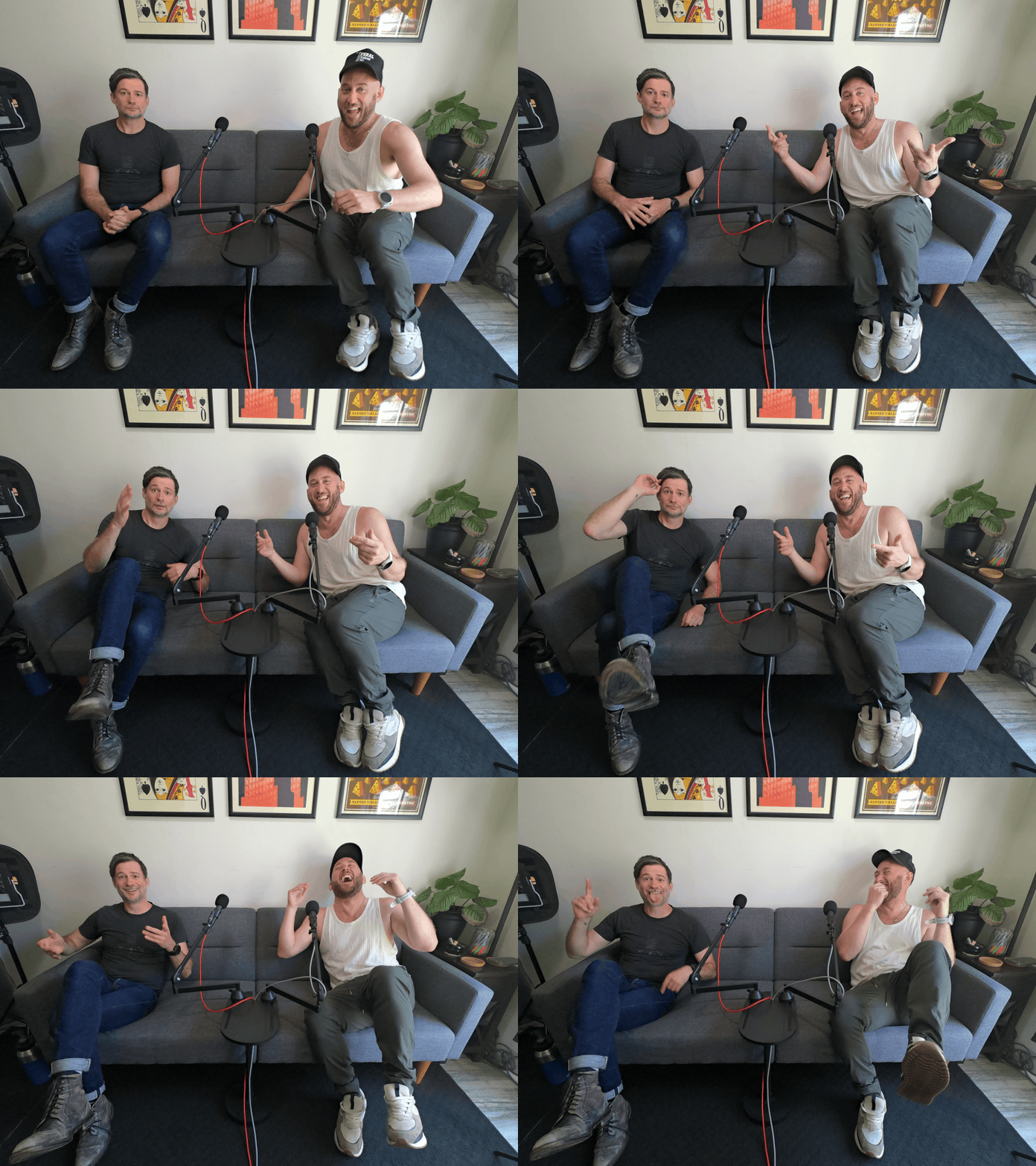
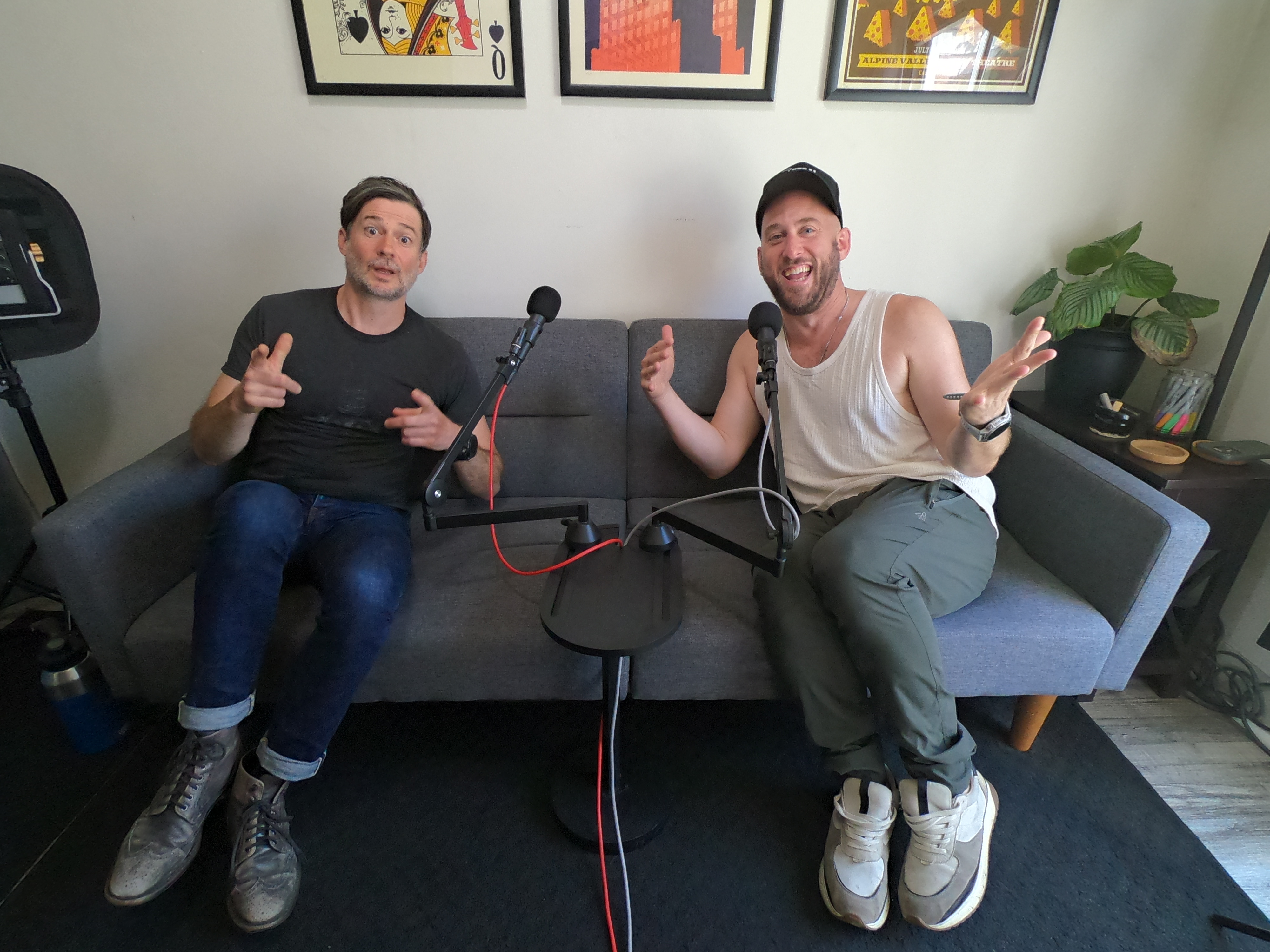
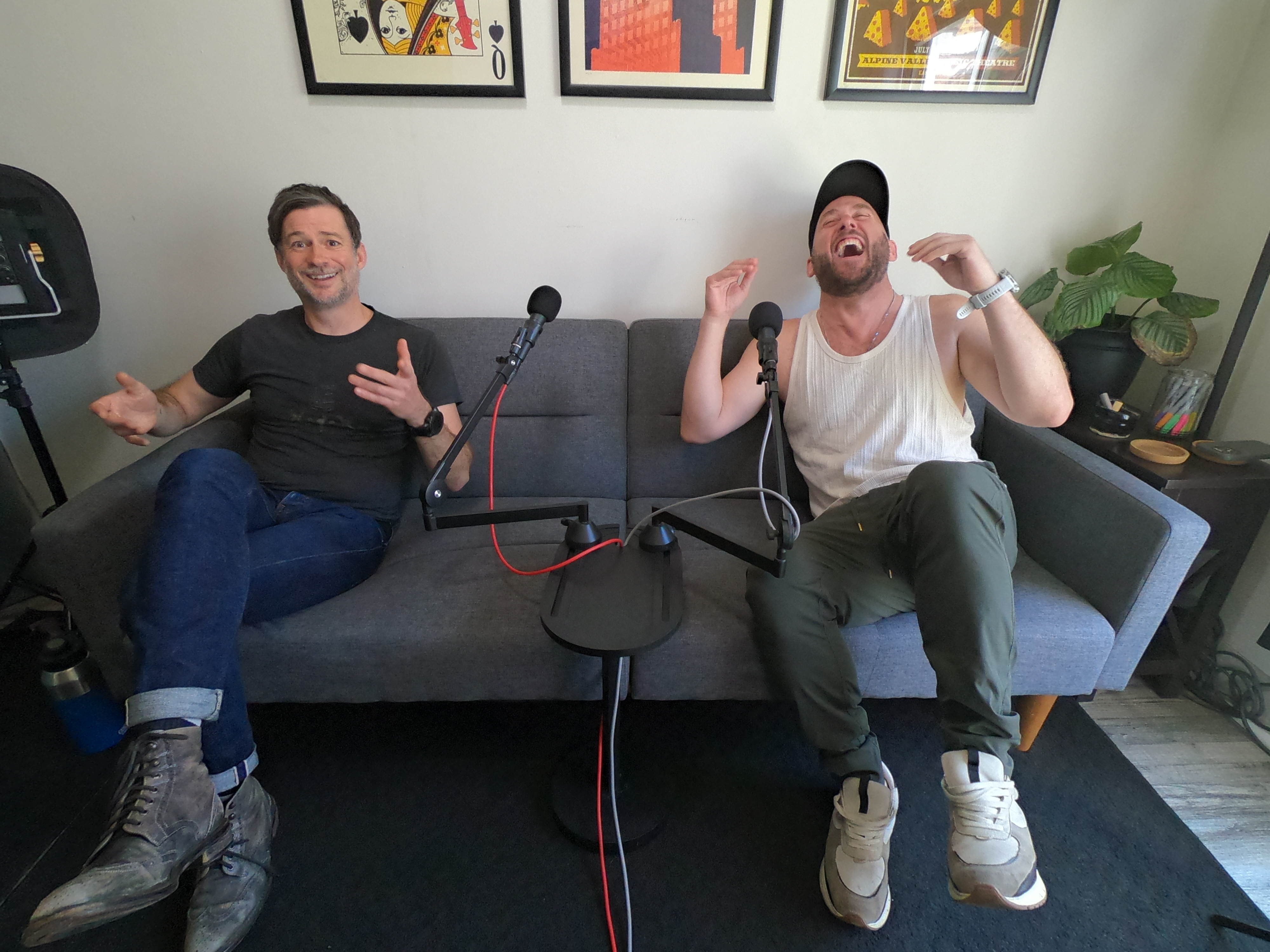
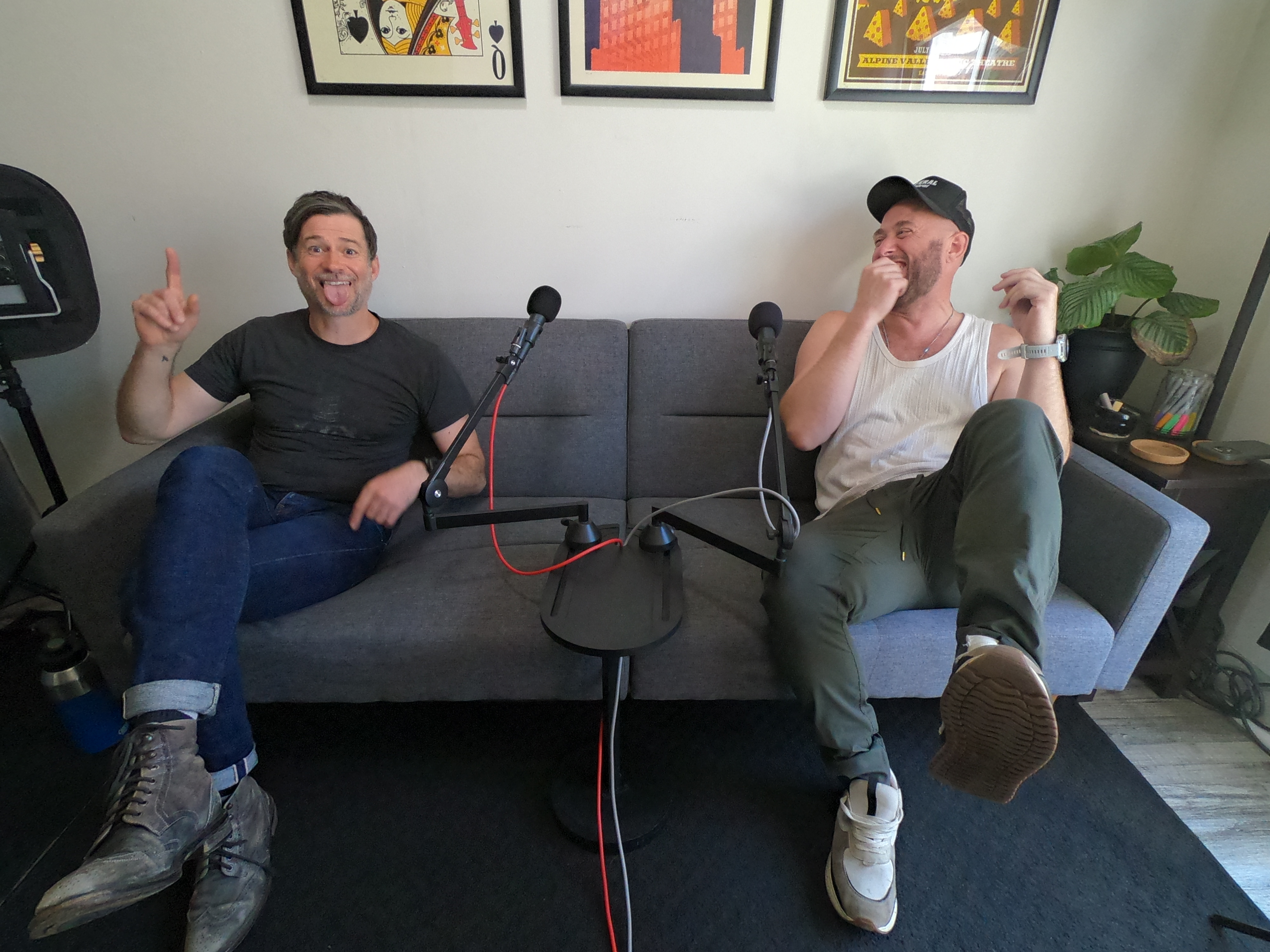
More Brandon
 – Check Brandon’s IMDb.
 – Follow Brandon on Instagram @beerandrunning.
 – Listen to Brandon’s most recent episode of Box Angeles, #300 where he co-hosted.
Transcript
BRANDON SORNBERGER (00:00)
Hi, I’m Brandon Sornberger, 5’11”, willing to shave.
MIKE ELDER (00:12)
Hello and welcome to the Box Angeles podcast with me. I’m your host, Michael Elder. That is my proper name, my government name, Michael Elder. Thank you so much for being here. It means a lot. Sorry, the episodes have not been as frequent lately. I’m to the point where I’m sort of just doing it sporadically. I have been reaching out to some people. We’ll see if we can get some more regular episodes for you, but I appreciate you being here, even if the schedule is sporadic.
We had a really good episode this week, but first go to the YouTube channel, go to the Instagram, TikTok, subscribe wherever you get your podcasts, leave a rating and review, do all that. It means a lot to me if you could support the show.
Okay, we had a really fun episode this week. I sat down with my dear old friend, Brandon Sornberger. You know Brandon from this podcast. He’s been on a lot of episodes of this podcast as a guest host, as a co-host, as just a guest. You’ve also seen him on stage at UCB, iO. He’s been on shows recently like St. Denis Medical, Young Sheldon, Grand Crew. He’s a Chicago improv guy. He’s hilarious. He’s a dear friend.
And we had a really good, honest conversation. It was more so about life than the business, this one. We talked about, you know, going to therapy and nihilism and our approach to the business and how we view acting now as we’ve gotten older and where we’re at with this business and divorce and relationships and love. And it was a really thoughtful conversation. Brandon was upset. I had nothing written down, but I knew it’d be very honest and open and sort of free-flowing. And it was, and it didn’t disappoint. I love Brandon.
And he talked about sort of where his mind is and how he’s sort of grown and, you know, become less entitled with the business and appreciates every little thing he gets. So it was a very sweet conversation. I love reconnecting with Brandon here on this conversation. I think what a treat for you to get to be able to hear it. So without further ado, I give you Brandon Sornberger.
🎵 ROCKFORD (02:05) 🎵
You wanna talk to me? You wanna talk.
MIKE ELDER (02:10)
Hi, Brandon.
BRANDON SORNBERGER (02:11)
Hi, Michael.
MIKE ELDER (02:12)
You were just giving me shit for not preparing any questions. Should I have prepared questions for you?
BRANDON SORNBERGER (02:15)
I don’t know. You’re the one who’s in charge. You also said literally right before that, I haven’t done one of these in a while. Do you understand that’s a little bit like taking someone home and being like, I haven’t had, you know, I haven’t had sex in a long time, but I probably can figure it out.
MIKE ELDER (02:29)
Okay, that’s an interesting comparison. I’d love to double click on that later, but no, it’s nothing like that. You and me go way back. This is your, I think, sixth time on the podcast.
BRANDON SORNBERGER (02:37)
Is it really? Holy shit.
MIKE ELDER (02:38)
You did three episodes and then you guest hosted one and you co-hosted the 300th. So this is your sixth time.
BRANDON SORNBERGER (02:43)
Oh my God. Starting when?
MIKE ELDER (02:46)
Oh God. It was like 2013, probably 2014.
BRANDON SORNBERGER (02:49)
It’s been that long. It’s been over 10 years.
MIKE ELDER (02:51)
2015. Yeah.
BRANDON SORNBERGER (02:51)
That’s crazy.
MIKE ELDER (02:52)
We go way back.
BRANDON SORNBERGER (02:53)
We do go back.
MIKE ELDER (02:53)
So why do you think I needed, what do you think I need questions for?
BRANDON SORNBERGER (02:56)
I don’t know. I would assume, I would assume if you do this, there’s a lot. I can, for most of your guests, you have questions, right?
MIKE ELDER (03:02)
Yeah, I write down some notes.
BRANDON SORNBERGER (03:03)
So you can imagine how I would feel, possibly, if everyone else gets questions, but I don’t.
MIKE ELDER (03:10)
I think I can. Okay, I hear you. I’m starting therapy next week, so I’m excited.
BRANDON SORNBERGER (03:14)
For the first time ever?
MIKE ELDER (03:15)
No, no, no. I’m getting back to it.
BRANDON SORNBERGER (03:16)
Oh, okay. That’s great.
MIKE ELDER (03:18)
So I appreciate your perspective. It’s wrong, but I appreciate it.
BRANDON SORNBERGER (03:22)
I don’t think you need any therapy, man. I think you’re great.
MIKE ELDER (03:25)
I solved it. There’s a familiarity I have with you that I’m confident I’m not going to be lost for questions. And I know you as a person that knows how to speak, and you’re not going to be one of those people when I talk to them, they’re not going to give me long-form answers where I can formulate my next question in my head. So I’m not at all concerned.
But now you got me in my head a little bit, and I’m a little bit concerned that this is going to be a bad podcast.
BRANDON SORNBERGER (03:45)
Oh, well, that’s a terrible place for your head to be in. So I’m going to just turn this right on you. So getting back into therapy, which I think is great, deeply support, is it just feels like this is just a moment when you would like some sort of guidance?
MIKE ELDER (03:58)
I mean, we can talk more off the air about this, but I started seeing someone for the first time as an adult, and I find I’m getting in my own way a little bit. I’m in my head, and I’m experiencing, oh God, what are we doing? I’m overthinking things, and I’m experiencing a lot of things I haven’t in a long time, and on purpose, I purposefully was avoidant.
It wasn’t something that, you know, I was an incel, but like, it’s been 20 years since a proper, I was in a proper relationship. And so I’m experiencing all this, you know, excitement and infatuation and fear and vulnerability. And I just find I’m overthinking things to a degree that isn’t helpful. And I end up fixating on certain things and sort of spiraling. And so I’m like, I got to get some, I got to talk to somebody and figure out what I’m doing.
BRANDON SORNBERGER (04:40)
I think that’s deeply mature. I get that you don’t want to talk about it now or in this state. I mean, like, your energy is like, you, I’ll turn these fucking mics off, dude, and I will write 15 questions and I will get away from this. So totally don’t have to do it. But I think it’s great. I think I always support when anybody’s like, oh man, I think I could use a little bit of help or anything. I think that’s awesome.
MIKE ELDER (04:59)
Yeah, I went to Portugal a couple weeks ago, and on the flight out, it was like a 12-hour flight, and I was just like ruminating on things that weren’t relevant or helpful or useful, because it was the first time I was like stepping away for a little while.
Obviously, that’s great, too, is scarcity in a new relationship. You know, you’re in that, you know, infatuation stage where everything, nothing can go wrong. So to step away, but my brain just like spiraled when I stepped away. And I was like, this is not good.
BRANDON SORNBERGER (05:21)
Yeah, as someone who’s, I got divorced two years ago. So I’ve also been out of the relationship world and now am back in it. And it is, I can understand wanting some insight into how your brain works in this kind of situation.
MIKE ELDER (05:37)
Absolutely. Yeah. Well, it’s also too, like, I guess we’re just doing this, which is great. It’s also like, it turns out I’m not as like, cool as I thought. If that makes sense.
BRANDON SORNBERGER (05:52)
No, I’m gonna, I’m gonna ask you to tell me more.
MIKE ELDER (05:55)
Like, I like to think I’m easygoing and I’m cool and nothing shakes me, but it seems like some things that I don’t contend with normally, I am contending with.
BRANDON SORNBERGER (06:09)
Tell me more. Or just give me a specific.
MIKE ELDER (06:12)
Needs like, I need words of affirmation. Like, I’ve always known that’s my love language. But if I don’t get that, that shuts me down quick.
BRANDON SORNBERGER (06:21)
Buddy, I totally relate. And it’s weird to be able to be honest about that kind of thing where there’s a vulnerability in acknowledging that. And it’s really uncomfortable to say to your partner, at least I’m finding this, but I’m trying to be better about of like, hey, I need you to let me know that you’re attracted to me. Or, and which I know sounds so superficial, but I realize, like, for me, I’m essentially the same kid in sixth grade who was a dork.
You know what I mean? And like, you’re, I’m always that kid. And so I need you to talk to that kid and let him know like, hey, I find you attractive. And even me saying this now, this is deeply embarrassing for me, but also at this time, it’s something I’ve evolved as an adult to kind of, why is it that embarrassing to have that? Like, there’s, it’s, so I kind of, I relate to what you’re talking about.
MIKE ELDER (07:15)
No, it sounds like you do. I think that’s why we’re all actors, right? We want that attention and that validation. And like, if you’re not getting it, it shouldn’t affect me like it does. And that’s what I’m learning. I’m like, I don’t need it. I shouldn’t need it every five minutes. Like, what am I doing here?
BRANDON SORNBERGER (07:28)
You know, I thought about that today as I was walking my dogs, as I knew I was coming here, and I was like, I’m in the crossroads of acting. I think a lot of us are to some degree and trying to think of why did I begin doing this? And there was something so deeply validating about being in front of people and having them apparently seem to like you. You don’t know what’s going on. You know what that really spoke to?
And this is such a stereotype, but it spoke to something that felt like it was missing for me. So that’s a great way to begin the, or not a great word, it’s a way to begin in this career. But then the continuation after that is, when you do this for so long, it can’t be just for that reason. Does that make sense? It’s like a way that your career can perhaps it was the seed of it. But man, you can’t 25 years later, it’s tough for that to be the reason.
MIKE ELDER (08:18)
I feel like you and me, I think it was like 150 episodes. This was, I don’t know, 2019, 2018, we ran it back. Weren’t you even then saying what else would you do? You were convinced you couldn’t do anything else.
BRANDON SORNBERGER (08:32)
Even then I was. And isn’t that not sad? But it’s, I mean, I think if you remember, just after 2019, there was some stuff that occurred in the world that I think, I think in 2019, even when I thought, what else could I do? I felt like things in this business were at a different place.
Yeah, certainly felt like there was more work. This is pre Covid, you’re still going into rooms, you’re still, I was on stage at least once a week. And even then, I still felt like, well, what else could I do?
And now all these years later, when all that has shifted, I’m asking myself the same question. And I’m not sure what that says about me, or what that says about, how drawing this business can be, how hard it is, how there’s always still a little bit of hope. Do you know what I mean?
MIKE ELDER (09:29)
Yeah, there’s always that little glimmer. I mean, and it’s different from every level. Like, I was just talking to somebody who’s like, dude, they keep telling me, you got it. And then they cut me off, or I get like an avail, and then I don’t get it. And all these close calls, and they keep telling me, that’s good, you’re close. And I’m, and he’s like, over that. He’s like, that doesn’t pay the bills. It doesn’t do this.
And to me, I’m like, I would kill for a couple close calls. But like, we’re all at different levels where those little glimmers are different. It’s almost like a drug, right? Like, we all have different dosages of drug we need, but we’re getting that glimmer from wherever we’re at. If I get a callback, it’s like a glimmer. If you get an avail, it’s a glimmer. If he books something, it’s a glimmer. So like, no matter where we’re at in our career, we get those little teasers that we. It keeps us going, it’s the carrot dangling.
BRANDON SORNBERGER (10:08)
And that is something that someone has said, it is. And that’s something I’ve heard from the beginning, from people who are way above me, saying like, whatever it is, your struggle is going to be the same, slightly different circumstances, slightly different details. But no one is ever at that point when they’re like, I feel like I have everything in this business. And even though you can have that information logically, whether or not you fully accept it is tough. Does that make sense? I’m being unclear in the sense of, it’s, is that a satisfying existence?
MIKE ELDER (10:42)
Yeah, I don’t know. And constantly chasing it. Yeah.
BRANDON SORNBERGER (10:45)
Constantly chasing it, but also, it’s different now in the sense of you can produce so much more of your own stuff, if that’s what you choose to do. If that’s, and even that, like saying, well, you got to make your own stuff, you got to film your own stuff. I feel like that’s people been saying that for what, 10, 15 years, maybe.
MIKE ELDER (11:01)
It still annoys me honestly.
BRANDON SORNBERGER (11:03)
For a long time. And so yes, you have the ability to do that. But I mean, what is the famous Mitch Hedberg joke about like, about farming? Do you know what I’m talking about? I’m going to butcher this. So I’m not going to tell you, but it essentially is like, I know how to, I’m a cook, I can make really good food.
I want to, oh, that’s awesome. Yeah, yeah. But do you farm? Meaning, can you do? Well, I developed one particular skill set. I’m going to promise not to do any more butchering of Mitch Hedberg.
MIKE ELDER (11:33)
That’s why I’ve always hated that idea. It’s like, yeah, that’s assuming you have resources that not everybody has, mainly time.
Time. And we don’t all have time to make our own shit. Yeah, like this podcast takes forever. And like, I get nothing from it.
I made a short film last year, I’ve submitted it to 30 festivals, I got rejected from like 15 so far. And it’s like, great. Okay, like, even if we make it, there’s no guarantee that that, and it just sucks all the time. And it’s like, what do we?
BRANDON SORNBERGER (12:00)
I do, I will push back a little bit of, do you get nothing from it? There has to be a creative satisfaction.
MIKE ELDER (12:08)
Yes, of course, there was a satisfaction, but I’m just saying, like, if that’s your remedy to solve getting out there and like, becoming something, because that’s what they’re trying to say, if you make your own stuff, then you’ll become something. But sure, maybe, but it’s still as much of a lottery as just auditioning and stuff.
And it sucks up a lot of time and resources that you could be spending, making sure you’re physically healthy or mentally healthy, that it’s, people just throw it out there like it’s a fix-all. And I don’t think it is a fix-all.
BRANDON SORNBERGER (12:38)
I agree with you. There is a, there are certain people who, even if you, they create that one thing, they didn’t get anything from that, they will create another thing, not get anything from that, and will continue to do it. And I admire that kind of drive, that ability that, and they face the same issues of time, of resources, but they will do that.
I’ve acknowledged at this point, and it’s not, there’s this difference between, and as you get more into therapy, I’m sure your therapist will talk about this of resignation and acceptance. So I’ve accepted that this is not the person that I am, but I’m not resigned to that fact. There’s not something, resignation seems much more depressing, or acceptance seems like it’s a self-examination and knowledge. That is not going to be the path that I choose to take of constantly creating things, at least not right now. That doesn’t feel satisfying to me.
Yes. So do you think we’re all just hanging on to this dream of someday? It’s just going to keep like, realistically, play this hand out, like, how’s the path end?
MIKE ELDER (13:42)
For me?
BRANDON SORNBERGER (13:43)
For any of us, like.
MIKE ELDER (13:45)
I mean, I don’t know. I think a lot of us just never do anything. And then we die poor.
BRANDON SORNBERGER (13:51)
Yeah, okay.
MIKE ELDER (13:52)
For me, I’ve always said, I’m going to keep acting until I’m the oldest guy. And I’m the only one in my demo. And I’m the weird 80-year-old that they just need to be the teacher or the neighbor on every sitcom, if sitcoms even existed.
BRANDON SORNBERGER (14:03)
You know what’s weird? The older you get, the more you do is you realize that there are other, there’s, you know, there’s guys who are my age who are also kind of, I mean, we’re at a higher level than me, but they’re not going anywhere, man.
MIKE ELDER (14:12)
And they’re waiting for them to other ones to leave.
BRANDON SORNBERGER (14:14)
They’re just, you’re all just waiting for, and they’re like, we’re just trying to, are you working out a lot? Yeah, that’s good. How’s your cholesterol?
I hear you. I’ve thought that same thing of, well, they’re going to need a guy, you know, when I was in my 40s, or there’s gonna, well, one of my 50s, they’re going to need a guy who’s going to be like the, I don’t know, the youth pastor with a, who has, you know, a little, he might be morally corrupt.
But I do think even at that level, so what is the best case scenario of that? So you do.
MIKE ELDER (14:45)
You book five gigs a year as like a guest star?
BRANDON SORNBERGER (14:46)
Yeah, and maybe you’re a guest star. And I think right now, there’s absolutely nothing wrong with that. I’m so deeply appreciative now of anytime I’m on set for anything, anything. And it is a big shift for me. I don’t know if it is for you.
MIKE ELDER (15:02)
No, it’s not. But for you, that’s saying something.
BRANDON SORNBERGER (15:04)
In my 30s, when I was, and I never had like a, I worked a lot at one point, I never had a monstrous, but I did, you know, and I think at that time, there was a, well, this will just keep happening.
I’ll book more commercials. I’ll do more, you know, I’ll get more shows. My friends were at on shows, they’re going to be kind enough to bring me in on shows. And I’m not saying I was.
MIKE ELDER (15:29)
I think you had a little entitlement about you.
BRANDON SORNBERGER (15:31)
Yeah. And there’s been a humbling that I’ve had to.
MIKE ELDER (15:35)
It’s great. I want to know what triggered this.
BRANDON SORNBERGER (15:39)
You stand behind a bar in your 40s, and you watch your friends come in sometimes. And they’re, I don’t think they’re judging me, but probably a little bit. Probably a little bit. And that’s just, it’s a feeling of Justin Long in Waiting. And he’s in his 20s at that point. But somebody comes in and tips him $100.
And you know, he feels like embarrassed that he’s seen doing this. And I think that the more I do that, the more it made me feel like, man, this used to be just a thing that I did in between acting jobs. And now, this is the thing I do.
MIKE ELDER (16:23)
This is your thing.
BRANDON SORNBERGER (16:24)
And it’s become becoming okay with that. Because now I try to see like, well, what benefits do I bring in doing that job? Or you know, how can I be of service to other people in that job? So I think that’s one thing. It’s truly just getting older and perspective, and having friends leave this business.
Having friends who are wildly successful, all of a sudden, through different reasons, lose that place. It’s all so transient. Getting divorced, my father dying, I think just things happening really made me think like, oh, even if it was a bit that you were that kind of, I’m like curmudgeonly cantankerous, even if it’s a joke of like, this is my personality.
I don’t want to come across of like, I’m not, I’m so thankful. And that is what I, you know, that’s kind of the place I’m trying to live in. Is it all the time? No. But at least I, it is really something for me that I focus on.
I shot a sketch this weekend, probably 10 years ago, if someone had asked me to do this, I’m like, what are you talking about? I’m not doing, are you kidding me? I’m not gonna do this. Instead, I’m like, absolutely. And I had a great time. And it was, I think better that I learned this lesson now, than never having learned it. So I guess that’s why, how I got to this place.
MIKE ELDER (18:00)
I love it for you. It’s a good look on you. I mean, curmudgeon was a fun look on you too. But honestly, like, this has got to be better for you to live this way, more so than anyone else. It’s more about you. Like, this has got to be being appreciative on set, going to set, enjoying it.
Like, I love that because I think actors want to book something so bad. And then the moment they’re on set, I see them and they’re just on their phones, not in the moment, and wanting to get out of there. I’m like, this, you did it, you’re there. What do you, why are you now just want out of there? So I think this is just a good look on you. And I love this for you.
BRANDON SORNBERGER (18:29)
I appreciate that. I mean, the adage is what, how do you make her, how do you make an actor angry, give them a job?
MIKE ELDER (18:36)
That’s funny. I’ve never heard that. But I honestly feel that way to a degree with auditions, which is, I told this on a podcast, I don’t know, three, four months ago, I don’t love that, that I’m starting to feel a little bit of that.
BRANDON SORNBERGER (18:46)
Of frustration with them?
MIKE ELDER (18:47)
No, when I get an audition, I’m like, oh, I got to do an audition.
BRANDON SORNBERGER (18:50)
Jack Plotnick had said something years ago, was that one of my first acting teachers that I worked with. And I really love that he said this. He would say, he would get an audition, and he would allow himself that moment of, ah, fuck, I know I got to move my schedule around, I got to learn these lines, I got to do this, this was how I plan my day. He’d allow that. And then that’s okay. And then he’d move past it.
So I think that’s totally normal because an audition is essentially like a phone call that you weren’t expecting.
MIKE ELDER (19:23)
1000%.
BRANDON SORNBERGER (19:24)
And even if you really want to talk to that person, we’re all just kind of set in our pathway so that interruption of pattern is jarring. So rather than denying the interruption, accept it, allow the anger, and move past it.
MIKE ELDER (19:37)
Yeah, sit with that, that’s great. It’s more for me, like self-tape. So like, if I get an in-person, I’m like, great, let’s fucking do this. Yeah, yeah. But then I’m like, oh, I got to tear down my fucking, my room and set up all the lights. And then I’m like, oh, this is a nightmare. And I’m the type that just wants nothing on my schedule. My favorite zen is when there’s nothing in front of me, and I can just be. So those frustrate me.
With this growth, the Brandon growth, we’re calling it, which is not, it sounds like a tumor sticking out of your neck.
BRANDON SORNBERGER (20:04)
I also have to have something removed from my back next month. So, you know, I’m not overly worried about it. But yes, yeah, so there is an actual Brandon growth.
MIKE ELDER (20:12)
You’re the resident nihilist. Are you still feeling general malaise about life and the industry? Or where are you at?
BRANDON SORNBERGER (20:20)
Am I feeling malaise about life and the industry?
MIKE ELDER (20:23)
That could be a two-part question, I guess.
BRANDON SORNBERGER (20:24)
Or about life? I’m feeling, you know, that’s one of those questions that I think is dependent on when’s the last time I’ve eaten recently. And by that, I mean, like my blood sugar is dropping now, I can sense. So I’m probably gonna get more nihilistic as I get hungry.
MIKE ELDER (20:40)
That’s hilarious.
BRANDON SORNBERGER (20:41)
But there’s a study that showed like, judges would meet out harsher sentences the farther it got away from the last time they ate. I think we’re so unaware of how much we function on like our molecular level that is controlling what we believe is actually a conscious choice. So anyway, so I’m not fully answering the question. But what I just said.
MIKE ELDER (21:05)
That was fascinating though.
BRANDON SORNBERGER (21:07)
I feel, I feel nihilistic, but more in the sense of, hey, man, we’re all in this to get like, there’s nothing, we’re all on a plane that’s crashing. So the best thing to do is to try to turn your neighbor and be like, this sucks, huh? It’s really, it’s pretty shitty. I’m gonna hold your hand or like, do you know what I mean? Like, it’s, it’s, I think I had more of an anger about it when I was younger. And I have less of an anger about it.
MIKE ELDER (21:36)
Okay, that’s good.
BRANDON SORNBERGER (21:37)
Does that answer?
MIKE ELDER (21:37)
You’re talking about the business or life?
BRANDON SORNBERGER (21:38)
No, I’m talking about life in general. At my best, I believe more in absurdism than nihilism, the idea that none of this matters, there is no actual purpose. Revel in how crazy that is. Like, and not in a way, still treat people kindly, still be a decent human being, but like, enjoy the absurdity of existence.
MIKE ELDER (22:00)
There’s a meme that I’ve loved that me and my friends send all the time to each other. And it’s, it’s two guys on a bus and one guy’s, it’s like nihilism, right? And one guy’s looking out on the left side of the bus. And it’s like a black wall and just rocks. And the other one’s looking out the right side. And it’s a beautiful sunset, and just a beautiful mountain scape.
And it’s like, we can agree nothing matters. But how do we approach that? It’s beautiful and great. And when you and me die, nobody’s gonna think twice about us. And none of it matters, or we’re gonna dwell and sit in the ennui of it all and just get depressed. And I think the perspective of like, enjoying the beauty of this craziness is the better way to go.
BRANDON SORNBERGER (22:37)
That’s what I strive for. But much like trying to eat better or whatnot, I don’t do it all the time. There’s some real appeal to the darkness as well. And because it’s comforting, when you know something for so long, you just continue to do it. So I guess that’s my nihilism for is at my best, trying in terms of the business, I think my, I don’t feel nihilistic.
I feel like I’m accepting the fact that, even if I work just a few more times again in something, what a, what a, how lucky did I get? I got really lucky, which was great. And is it where I wanted to be? No, of course not. But I bet you, even if I got there, I would still be like, well, I didn’t get to where I’d want to be. Yeah. So I feel like, I hope to be somebody who, you know, in my mid 50s, someone’s like, hey, we need, we need a guy to play a science teacher. He’s got two lines, you know, you know, Brandon, yeah, yeah, yeah, let’s see, let’s have him come in. Yeah. And just be so happy to do that. Does that make sense?
But I don’t look at it now as, I’m not thinking I’ll probably book a series regular. And then this will become a thing of like, I don’t, do I still work to do that? Sure. Does it feel like that’s gonna happen? No. And that doesn’t feel like pessimism to me. It feels like I’m trying to see how this hand plays out is saying the same thing I said to you.
I mean, what’s the best case scenario? Not with just with fewer roles and fewer for, for, for me and the roles I can play, the parts that I can believably play. But as AI continues, like, I don’t think really, I mean.
MIKE ELDER (24:29)
I know my day job, I’m going to be one of the early ones that gets swept out from AI, I feel like just because I live in spreadsheets all day. And that stuff doesn’t so easily. It’s fascinating though.
Do you, you don’t remember, there’s no way you remember this. But I remember distinctly being, and I’d love for you to therapize me on this. Is that a word? By the way, I say therapize all the time. And I think.
BRANDON SORNBERGER (24:49)
Therapize, I don’t, I don’t know if it’s considered like an Oxford, English. But I understand what you mean by it. So in that case, it is a word.
MIKE ELDER (24:56)
Well, I don’t speak Oxford, I speak American.
BRANDON SORNBERGER (24:58)
Perfect. Perfect.
MIKE ELDER (24:59)
I was like, working at the iO West bar with you. And I think I just turned 30. And I said, my goal for 30 is to book a TV credit. At the time, I was convinced I was going to be on Comedy Bang Bang, if nothing else.
I now turned 40 a couple months ago. And I still have not technically had a TV credit. I booked Kimmel, I got cut. I’ve done those Fox Sports sketches, but that’s not a TV show credit. So every year for the last 10 years, my goal has been to book a TV show credit. And I still don’t have it.
BRANDON SORNBERGER (25:29)
Well, I’ll say two things. You do, I mean, you did book Kimmel, you did like, those are wins that should be celebrated.
MIKE ELDER (25:34)
Of course, I celebrate them all. Yeah.
BRANDON SORNBERGER (25:36)
Number two, acknowledge it is you who continues to set this goal and go after it. No one makes you do this.
MIKE ELDER (25:43)
Interesting.
BRANDON SORNBERGER (25:43)
And that’s not a bad thing. But I’m saying there’s no, what was me, no one told you, no one cares if you continue. And this is not, this is not a condemnation. We’re all choosing to do this. And I think we all have to be, no one put a gun to our heads, like, we need more actors, baby. And you’re going to be the one to do it. So you got to be, yes, you have these goals, and you want to do them. But there must be a reason.
MIKE ELDER (26:07)
But I can’t, that’s not the problem I have. Okay, my problem is I can’t even get past my first goal out here. I’ve been here 12 years, stuck on goal one.
BRANDON SORNBERGER (26:15)
Well, okay. What would you tell somebody who told you this in a different thing? Take out the context of acting. I want to.
MIKE ELDER (26:23)
I would tell them to do something else. Oh no.
BRANDON SORNBERGER (26:27)
I’m not telling you to do something else.
MIKE ELDER (26:29)
Yeah, but I would.
BRANDON SORNBERGER (26:30)
I’m telling you to acknowledge, maybe those things aren’t, maybe those goals, those are dependent on other people. And this is not going back to make your own stuff. I’m just saying it’s very hard when your goals are dependent on other people doing it for you. I don’t, go ahead.
MIKE ELDER (26:50)
I would love like numbers, because I’m such a number guy. I log all my auditions, I break it down.
BRANDON SORNBERGER (26:55)
That’s great.
MIKE ELDER (26:56)
I wonder, God, my head just goes, this is like why I should go to therapy, because this is what I do in this relationship. It’s like, I just noodle on this thing. I’m like, okay, choose your own adventure. I’m a bad actor. What does that mean? Choose your own adventure. It’s just bad luck. Choose your own adventure. I just like go down these different scenarios and like fill them in and see if that’s what it is. And it’s like, oh, God.
BRANDON SORNBERGER (27:20)
I think those are very like black and white things that you’re saying. And that’s tough. Like I’m not a, I’m a bad actor. It’s as if I’m either a good actor or a bad actor. I think there are things you can do to prepare yourself to be in a position to be more likely to book with classes, with constant practice with that, I think. And then after you’ve got to a point where you do feel like all those skills have been refined, then it truly is out of your hands.
But the issue I have, and I’m not saying this to you, is when people are like, oh, nothing’s happening, nothing’s happening. There is some effort on anyone’s end that has to be put into this self-taping. I’m fortunate to tape with this woman, Rachel, from my acting class, who has such a great eye. And I’m so fortunate to have her, like, she understands how you look on camera, how you work on camera, how to make a small thing. That’s a skill. And it’s a really hard skill, in my opinion.
So she has worked on that. And she’s, and it’s resulted in not only is she massively talented, it is really, she has found this other part that most actors think, well, that’s not acting, that’s not that, no, but that’s all we’re doing now. How good can I look in this frame in 30 seconds with not great lighting? That is a talent that I think that’s where people should be putting their energy into.
MIKE ELDER (28:42)
I agree. I hadn’t had a TV audition in a while, but I had one last week, and I didn’t coach. And I kind of regretted not doing it. It was like two lines. So I was like, I don’t need a coach.
But I, up until that point, I was coaching every TV audition, because I find that so helpful too, because somebody tell me what to do. I have my own opinions. But like, I don’t know what I’m doing clearly.
BRANDON SORNBERGER (28:58)
I wouldn’t even say like, I’m gonna ask you to reframe it as not someone telling you what to do, as opposed to someone who understands what the story is. And again, this is something that was great for me for being in John Rosenfeld’s class for so long is really understanding what the story is, what is your role in the story? What is your role in this scene in order to help tell the story most efficiently?
Like that kind of script analysis and understanding, especially for a two-line role, is incredibly important, because people are, it’s not that you’re trying to do too much, you just don’t understand your function in the scene. Again, I’m not saying you, but I’m saying like that kind of thing is a skill that I wish I had worked on earlier when I had a lot more opportunity when I was younger, and I first moved here, and I had all these auditions, and I was deeply untrained. I look back on that with a sense of if I could do this again, man, I wish I’d had this sort of training at that time.
MIKE ELDER (29:53)
How much are you auditioning right now?
BRANDON SORNBERGER (29:55)
Oh, very, very little. I have a self-tape I’m doing after this. I don’t track my auditions like you do. I find it depressing.
MIKE ELDER (30:06)
Other people have told me that.
BRANDON SORNBERGER (30:07)
Which also, if someone told me that, I’m like, well, when I book stuff, I’ll go back and look at the self-tape to see like, do you know what I mean? Like, what did I do there? And I do occasionally see like if someone else booked something, what did I do in my tape that was different? I think there maybe is a little bit of benefit in that.
I’m avoiding your question. I would say I audition for, I probably have a commercial audition once every two or three weeks, and probably have a film or TV audition once a month, maybe.
MIKE ELDER (30:41)
What was your, what was your most you were doing?
BRANDON SORNBERGER (30:44)
When I was auditioning at my peak?
MIKE ELDER (30:45)
Yeah.
BRANDON SORNBERGER (30:46)
I mean, I think for a lot of us, like in commercials in 2014, I would say, I mean, I forgot when I booked my most, maybe 2015, a while ago, I was probably four commercial auditions a week. You would do a ton.
MIKE ELDER (31:00)
I know. And that’s the thing, like, you used to just get reps. And now there’s so few and far between, it’s harder to do what you even just said with like, I guess, make your own self-tapes. But.
BRANDON SORNBERGER (31:10)
You know, I know it’s, there’s, look, I run marathons. They don’t, they’re not, not everyone’s the race. You got to do a lot of these reps to get ready for the race. So you do have to do that sort of practice of making your own self-tapes. You know, if you do just have a friend, like, let’s just do this. Let’s do this. And it will be a skill set that will pay dividends. But yes, at that peak, I guess four times a week TV at that time, I don’t know, maybe once a week at my peak when I first moved here, that pilot season, because I had just booked something. And like, I went out for everything. So it’s, it’s, it’s very different.
MIKE ELDER (31:52)
You kind of just implied you’re not taking class anymore?
BRANDON SORNBERGER (31:55)
I’m not since when my divorce started. I had to kind of reassess everything I was doing. And then I started to work more at my job. So now.
MIKE ELDER (32:07)
So you buried yoursel at work? Healthy.
BRANDON SORNBERGER (32:09)
Okay, fair. Okay. I did go from two incomes to one income. So I did have to kind of figure out, you know, assess my life. But you know.
MIKE ELDER (32:17)
I just ask because I’m curious what you’re doing to stay sharp then. Are you practicing what you’re preaching right now? My hard line question.
BRANDON SORNBERGER (32:22)
I guess is to some degree, not as much as I should. No.
I want to get back into class. I want to find a way to get back into it. I would like to get back into stage performing.
Recently, I’ve reached out to people, I’ve been so alienated from the improv community, not alienated. You know, post COVID, I never really jumped back in the way other people.
MIKE ELDER (32:41)
Yeah, well it collapsed completely.
BRANDON SORNBERGER (32:42)
It did. But it’s definitely returned in all sorts of ways. I mean, you live right by two improv theaters, three improv theaters, you could conceivably every night go see a show and kind of which. So.
MIKE ELDER (32:57)
I would, but I signed up for kickball next week.
BRANDON SORNBERGER (32:59)
What’d you say?
MIKE ELDER (33:00)
I just signed up for kickball. I’m really excited. I want to get back into organized sports.
BRANDON SORNBERGER (33:03)
I think that’s great. Doing anything like is get out, get out more.
MIKE ELDER (33:10)
There’s more to life than improv.
BRANDON SORNBERGER (33:12)
There definitely is. I just, I will say, so to answer your question, am I doing as much as I said I should be doing? No. Am I currently working to get out of that bad habit? Yes.
MIKE ELDER (33:23)
Yeah. Yeah. I read a book last year.
BRANDON SORNBERGER (33:28)
I hope that’s the end of your story.
MIKE ELDER (33:29)
It was Bernstein Bears. Is it Bernstein or Bernstein?
BRANDON SORNBERGER (33:33)
Bernstein Bears.
MIKE ELDER (33:35)
Bernstein Bears?
BRANDON SORNBERGER (33:36)
Bernstein Bears. Bernstein, it’s steen.
MIKE ELDER (33:38)
I read a book called, I think it was called The Five Types of Wealth last year. Okay, just read the first chapter. You don’t need the rest. But it was really interesting.
BRANDON SORNBERGER (33:45)
So the one type of wealth?
MIKE ELDER (33:46)
It was talking about, no, not even that. It’s just like, does the high level overview and then it goes into them. But it’s like, we’re measuring the wrong thing on a scoreboard. And we’re measuring like our bank accounts going up and up, but we’re not measuring like our physical health and all this stuff. And I just, I really love that.
Because at one point he was like, today’s, today’s, today’s more is tomorrow’s not enough. And when I think about like.
BRANDON SORNBERGER (34:10)
Say that one more time.
MIKE ELDER (34:10)
Today’s more is tomorrow’s not enough. So I just need a couple more auditions this week.
BRANDON SORNBERGER (34:15)
Yeah, yes.
MIKE ELDER (34:16)
And then I get those couple more. And no, I need a couple more. And when we’re talking about all this, you know, scarcity or whatever numbers, it’s just, I remember that. And it’s just interesting because it’s like, why do we, I don’t know, this was a segue, sorry, that wasn’t relevant at all. But I just, as you were talking about that, you were like, in 2015, we had so many more. And it’s just funny that we like, I don’t know, necessarily take it for granted or want more or just don’t, aren’t happy with what we have. And it’s, it’s, it’s interesting. Not saying, not saying that that’s what you’re saying.
BRANDON SORNBERGER (34:44)
I think to some degree, that’s very correct. My ex-wife would often say, and not in an accusatory way, you’re moving the goalposts in terms of my career of, I wanted to like a book to host a show. So I book that. Oh, that’s not enough. I want to do this.
And there’s a fine balance between gratitude and still wanting to be motivated that I would say I have not figured out. And it is along the lines of the acceptance resignation thing, meaning, I would like to be able to feel gratitude towards something, but don’t have that inhibit me from continuing to progress forward.
It is tougher as you get older and people that, you know, you get more comfortable, it gets harder to continue to motivate yourself. So I’m not fully answering your question. But in my defense, I don’t know if you had a question.
MIKE ELDER (35:46)
It wasn’t a question.
BRANDON SORNBERGER (35:47)
It’s just making me think of, yes, it is hard to be grateful when you still want more.
MIKE ELDER (35:58)
Yeah. Well, it’s all, yeah, it’s like what you were saying earlier, what is like the end? What’s the end game? What’s the goal of this all? And to me, it’s like, I’ve kind of sadly, and maybe not sadly, just become resigned to like, acting’s a hobby. And when I get an opportunity, hell yeah, let me swing this bat as hard as I can. And hopefully make contact.
BRANDON SORNBERGER (36:21)
Yeah.
MIKE ELDER (36:22)
It doens’t have to go out of the park. Let’s foul tip would work.
BRANDON SORNBERGER (36:25)
I understand. Yes. And I view that too. I would just say I use, I’m going to use the word accept as opposed to resign because I’m too, and it’s a small difference where resigned feel is a negative thing where I accept like, honestly, this isn’t a negative thing.
How does this play out in the best case scenario? I book a few more roles before I fade off into, and I start a dog rescue. Like that’s, you know what I mean? That’s okay. And there’s something very realistic about that.
This is more of a hobby. This is a hobby. I don’t know how what it would be like to leave like a Tisch or something and come to LA right now in your 20, you’re like, Rachel said this. And I hope she doesn’t mind that I’m saying this when people ask her, how do I get, how do I become SAG eligible? How do I, you know, how do I like young actors and that she’s teaching?
And I think she said this parts as a joke. She said, I don’t know, but just make sure you get your Pilates license while you’re or your Pilates instructor certification while your parents will still pay for it. And I think that’s, that to me is deeply realistic and honest.
And I think that’s part of the reason I feel less shame about bartending now. I’m thankful I have this other skill. I worry that if I were an actor who just had just a hint more success, I would have quit doing any of that. And then I’d really be fucked.
Because yes, I could do other things. But I have a consistent job. I have healthcare through this thing that do I love doing it? No. But.
MIKE ELDER (37:58)
But that’s not true. But you do, I think you do love doing it.
BRANDON SORNBERGER (38:01)
I love, look, I became a cicerone.
MIKE ELDER (38:03)
You hate people, but you like.
BRANDON SORNBERGER (38:04)
You know, I get, there’s days I get better. I’m telling you, on my worst days, yes, there’s days I try to, a guy I used to work with named Kemp said to me, because I said something about somebody who walked in. And he’s a writer. And he’s like, you know, I just try not to write off people right away, like just based on their appearance. So I take that to heart now when I work of a little bit of like, I try to find people like what’s interesting about you.
MIKE ELDER (38:32)
Meet them where they are.
BRANDON SORNBERGER (38:33)
Meet them where they are. Not only that, like, what is your story? Why are you, what you’re coming in here with such a weird energy towards me or this, I just want to kind of, so I meet it with a little more curiosity, as opposed to this fucking fuck you.
MIKE ELDER (38:46)
Well, that seems great for you, because you are naturally a very curious person. I think you’re a very thoughtful person.
BRANDON SORNBERGER (38:51)
Yes. Yes. So it has made it a little bit easier for me.
MIKE ELDER (38:56)
Yeah, it definitely humanizes him too. It’s not just somebody that’s wanting something from you. It humanizes you to a degree.
BRANDON SORNBERGER (39:02)
It does. But it’s, yes. Again, I don’t do this all the time. This is an ideal.
MIKE ELDER (39:09)
One day a week.
BRANDON SORNBERGER (39:10)
It’s hard, man. Again, when’s the last time I ate? If I didn’t eat recently, my blood sugar is, I’m not going to be, and if you’re starting to ask annoying questions, I’m not, you’re not getting the same grace.
MIKE ELDER (39:19)
You know, it’s funny, I interviewed, you know, Reece Rios.
BRANDON SORNBERGER (39:21)
Oh, love Reece.
MIKE ELDER (39:22)
Yeah, I interviewed him recently. And he was talking about session directing being a commercial. And he was like, have, he was like, the best of us session directors, the people running the commercials was, he was like, we keep it lively, we’re friendly, we do all this. But he’s like, it’s exhausting to have a personality to just be up for everybody. Because for everybody coming in, it’s their first audition of the day. And they’re excited to see him. And it’s his 70th time he’s seen somebody say, pass the Budweiser. And he’s like, it’s exhausting. And by the end of the day, he’s a shot. And I assume, I’ve never fully bartended, but I assume it’s very similar where you, it’s just a constant they don’t stop coming.
BRANDON SORNBERGER (39:58)
They don’t.
MIKE ELDER (39:59)
But to me, like, I romanticize bartending. I’ve always thought bartending would be great.
BRANDON SORNBERGER (40:02)
I think you’d be great at it. You’re, you are an extrovert, people like you, you’re charming. No, I’m seriously, you’d be great at it.
I’m naturally very introverted. I, my skills as a bartender are my efficiency and my product knowledge. I am not one of those who, there’s bartenders that I work with, they can talk to anybody about anything. Yeah, that is not my skill set.
That made me also appreciate Reece is such a good session director. And he must also, he must, it must be tiring, because you’re constantly trying to thread this needle of how do I be friendly to people? How do I keep it moving as fast as possible? How do I give people direction? How do I, that’s, I wanted that job so badly when I first moved here. And now, I don’t know. I guess every, every job has their pitfalls.
MIKE ELDER (40:45)
Yeah, grass is always greener on this side for sure. Do you, we talked, we sort of touched on like, this is a, this, we’ve decided acting might be a hobby for some of us, or many of us, or most of us, I guess.
But like, what are you doing now in your life to, you run obviously, but what are you doing anything to get away from acting or to like, clear your head other than eating and running?
BRANDON SORNBERGER (41:07)
Well, I mean, my life has been in a pretty transitory state. So I don’t feel like, I just moved, like, I got divorced, I had to leave, I left my house and had to move to another place. So now I’m in, I don’t even know if I’ve had a chance to kind of settle in my kind of this phase of my life.
So I anchor myself in running, I’m trying to run all seven world major marathons, I’ve run four of them. So I have three more to run. So that’s kind of the big thing that I do. That is not either working at the bar and buying for the bar and acting.
Also, I’m going to go back to the hobby thing. I like, I don’t like the word. It’s.
MIKE ELDER (41:53)
What do you do for leisure?
BRANDON SORNBERGER (41:55)
No, no, no, I’m saying for acting, like, I don’t, I’m like saying it’s just a hobby.
MIKE ELDER (42:00)
Well, if I’m not making any money, what is it?
BRANDON SORNBERGER (42:03)
Again, like that dichotomy bothers me. Is it a passion?
MIKE ELDER (42:07)
Maybe not for you, but I just did my taxes today. I didn’t make a lot of money acting.
BRANDON SORNBERGER (42:12)
Well, I hear you. But it’s a hobby feels dismissive.
MIKE ELDER (42:21)
Yeah, I’m being slightly pessimistic. I’m now the nihiist of the two of us.
BRANDON SORNBERGER (42:24)
What a shift, huh? What happened here?
MIKE ELDER (42:29)
Side hustle?
BRANDON SORNBERGER (42:31)
I don’t know. I don’t, all these words seem diminutive to it.
MIKE ELDER (42:37)
Grind? Joyful passion?
BRANDON SORNBERGER (42:38)
Why not? I mean, look, that’s a little too, I hate the word woohoo. Like, I don’t know, I don’t know, for some reason that also, that doesn’t make me feel great. Like we’re, it’s got to be somewhere between hobby and passion.
MIKE ELDER (42:51)
When somebody asks you what you do, what do you say?
BRANDON SORNBERGER (42:54)
I say I’m a Cicerone.
MIKE ELDER (42:56)
Which is a bar.
BRANDON SORNBERGER (42:57)
I’m a sommelier.
MIKE ELDER (42:57)
Which is a beer. Yeah.
BRANDON SORNBERGER (42:59)
Do I, it depends. Sometimes I’ll say I’m an actor. Here’s why I don’t like it. And I think everybody can relate to this. What have I seen you in?
MIKE ELDER (43:08)
Of course.
BRANDON SORNBERGER (43:10)
Would I know anything you’ve done? So just to kind of not have to deal with those questions. If I’m talking to other people, I’ll say that I am. But I never know, what have I seen you in? In 2011, did you watch Criminal Mind Suspect Behavior? Did you watch a bunch of GameStop commercials? You know what? Like I don’t, it also to recite your resume feels disgusting.
MIKE ELDER (43:32)
I’ve started just saying I’m an auditioner. And my mom fucking hates this when I was negative self-talk on this podcast. But I don’t act, I audition.
BRANDON SORNBERGER (43:42)
Here’s what I’m going to say, this is where I will argue with you. You 100% are acting during those auditions. Someone gave you a chance to do it. You’re fucking on, you’re acting dude.
MIKE ELDER (43:50)
But everybody, okay, I’m going to push back on you. Everyone says auditions are different than acting.
BRANDON SORNBERGER (43:54)
It’s still a skill. If you want to just act, get on stage. TV acting, have you, you look.
MIKE ELDER (44:01)
No, I haven’t been on TV.
BRANDON SORNBERGER (44:02)
Well, let me tell you, it is nothing like stage acting.
MIKE ELDER (44:06)
No, I’m better at stage acting because I fucking sing to the back of the room.
BRANDON SORNBERGER (44:09)
You’re also present the entire time and within, you’re constantly within this character, within this world, within this moment for the duration of the play.
MIKE ELDER (44:17)
Should we put a play up? Should you me do a Fringe show?
BRANDON SORNBERGER (44:19)
I’m saying if you truly miss acting, like that is what you do. Like TV acting is a very specific skill that occasionally will pay you very well.
MIKE ELDER (44:29)
Yes. But I think I, what I do is I audition.
BRANDON SORNBERGER (44:33)
Sure.
MIKE ELDER (44:34)
So that’s what I tell people. I say I’m an audition-er.
BRANDON SORNBERGER (44:36)
It’s weird. Like I normally, if I said that, I would be like, yeah, that’s fine. But you, I don’t want you to be so negative about it.
MIKE ELDER (44:41)
That’s so sweet.
BRANDON SORNBERGER (44:42)
I just don’t.
MIKE ELDER (44:43)
You’re looking out for me. You always look out for me though.
BRANDON SORNBERGER (44:45)
I just think no one, when you talk negatively about the thing that no one forced you to do, what are people supposed to think about why you’re doing it?
MIKE ELDER (44:55)
But why do you think that’s negative? Why? Okay, I hear you. And that’s a very insightful point, honestly. But why do you think that’s inherently negative that I’m saying I’m an auditioner?
BRANDON SORNBERGER (45:04)
Why do I think that’s inherently?
MIKE ELDER (45:06)
Because if I say I’m an actor, you get, what have I seen you in? And you’re like, oh, have you seen the short film that I haven’t released? Because I’ve submitted it to 30 festivals, and none of them want it. You know, like what?
BRANDON SORNBERGER (45:16)
No, I can see both sides of what you’re saying. Auditioner just sounds flippant. It’s like, imagine a pediatric neurosurgeon. What do you do for work? Oh, I cut kids open. Like it’s technically correct. And I don’t love that analogy. But you get what I’m saying. It just feels flippant for a protective reason that I get.
MIKE ELDER (45:41)
I see. It’s like if you said you serve alcoholics booze.
BRANDON SORNBERGER (45:46)
And I do say that. Like I, there’s times, here’s what I, like, what do I do? I sling, I sling addictive carcinogenic poison. That’s what I do. Mike, I’m not saying I’m right about it. Oh, I am saying, I’m saying I’m not hypocritical about this. I’m just saying.
MIKE ELDER (46:03)
God, that’s funny.
BRANDON SORNBERGER (46:04)
In my best space, I would hope that I would, I have to, I’m going to do a self-tape today. I have all the things you’re saying. I don’t want to, I don’t want to set up my lighting. I got to get my dogs to be quiet. I got to do all this, I got to get a reader. I got to see if that reader has time. I got to make sure I respect their time. So all that stuff.
And then like, what are the statistics I’m going to book it? Are they even going to watch it? All of those negative things. At the same time, if I were to, God forbid, on my way home, get in a car accident, die, I would have rather that I did the self-tape before. Does that make sense?
Like I, I don’t, no one’s making us do it. So when I do them, at least I try to be like, why is this fun for? What is the thing that relates to when I was doing like got up and did like a play in sixth grade that made me feel? I don’t know. And again, I’m not there yet. I’m trying.
MIKE ELDER (46:59)
I’ve been flirting personally with moving to New York for about a year. Because part of me wants to like, jumpstart and start fresh and be a new shiny object to people in New York. Because I feel like I’m just stale here, obviously. So I guess my thought with that is when, and feel free to tell me fuck off, when you are going through these big life changes, do you think that’s giving you a weird fresh start?
Well, obviously, it’s giving you a fresh start to a degree. But I mean, as far as acting and stuff, is it giving you like a fresh perspective or a fresh start? Do you think it’s kicking you in your ass at all, acting wise?
BRANDON SORNBERGER (47:36)
I think it’s made me have to be more honest with myself. And that can only be beneficial, I think, the more, a better understanding of myself. In terms of just to say specifically what you’re referring to, it’s given me the opportunity to be like, do I want to move back to Chicago? Do I want to go back to New York?
MIKE ELDER (47:55)
Oh, the freedom. Yeah.
BRANDON SORNBERGER (47:56)
That I felt like I didn’t have before when I was married. That is kind of exciting and overwhelming. And I can, I relate to what you’re saying too, maybe a smaller market would be a better market.
So yes, I guess, and again, I’m only referring to the specific thing that you were talking about in terms of moving. It has given me.
MIKE ELDER (48:24)
But not just moving, I just mean like, do you suddenly now you feel a little different when you get a single dad audition or something? You know what I mean? Like, has it changed your perspective on how you approach auditions or anything? Because.
BRANDON SORNBERGER (48:38)
I don’t know if it has. And I don’t know if I’ve had enough opportunity to kind of see that. I will say in regards to any dad audition, they’re my most dreaded, most dreaded when I have to be with a child, I don’t know what it is about me.
I just know I don’t have dad energy. I know no one buys that I have a kid. I don’t know why.
But I hate, and it’s really tough when you hit this age, and you get some point, what else is there, man? Either you’re, I guess you’re some sort of politician, or you’re the weird uncle, like what?
MIKE ELDER (49:11)
I’m the weird uncle. I’m getting pepper in mine, by the way, I’m catching up to you.
BRANDON SORNBERGER (49:15)
I don’t know if you’re catching up to me.
MIKE ELDER (49:17)
No, it’s getting, it’s getting pretty.
BRANDON SORNBERGER (49:19)
No, I think, I mean, it’s to the point, I think you look great. I will say don’t dye it.
MIKE ELDER (49:24)
Why would I ever dye it?
BRANDON SORNBERGER (49:25)
Because I talked to, I talked to Reece about it. Because Reece, I’m not saying Reese dies his beard, but he knew.
MIKE ELDER (49:30)
Exclusive.
BRANDON SORNBERGER (49:31)
He, I’d asked him because I was feeling so self-conscious about it. And I do still feel self-conscious about it.
MIKE ELDER (49:36)
Really?
BRANDON SORNBERGER (49:36)
Yeah.
MIKE ELDER (49:36)
I like it.
BRANDON SORNBERGER (49:37)
Thank you.
MIKE ELDER (49:38)
I think, no, I meant I like mine. But then.
BRANDON SORNBERGER (49:42)
Oh, I’m sorry. How awful to assume you complimented me?
MIKE ELDER (49:47)
But I think it’s like, I think it’s happening too early for us. But I like it overall. I think.
BRANDON SORNBERGER (49:52)
I’m 48 man, I don’t know.
MIKE ELDER (49:52)
Yeah, but I’m 40.
BRANDON SORNBERGER (49:55)
Yeah.
MIKE ELDER (49:55)
I feel like us millennials started graying earlier because we’ve gone through much, so much world trauma, collective world trauma.
BRANDON SORNBERGER (50:02)
Have you gone through more than like Gen Z? Like.
MIKE ELDER (50:03)
Yes. We have no, we can’t buy houses.
BRANDON SORNBERGER (50:06)
Yeah, most people can’t buy houses.
MIKE ELDER (50:08)
No, Gen Z can.
BRANDON SORNBERGER (50:11)
They can?
MIKE ELDER (50:12)
Oh, not Gen Z. Sorry, I thought you were talking about.
BRANDON SORNBERGER (50:14)
Gen X, my gen, my generation. Yeah.
MIKE ELDER (50:16)
Yes. No, Gen Z, I think Gen Z is going to have a lot of privileges, I think. Just with how the world is going to be so efficient.
BRANDON SORNBERGER (50:24)
Here’s where you and I differ where I will go deeply pessimistic and you are so optimistic about that. I don’t think they’ll have a fucking chance to see a world in which there’s going to be any sort of thing like that.
MIKE ELDER (50:33)
Maybe in a world of politics, but I think just in the world of advancements in technology, I also think they’re so empathetic. I think they’re so smart. I think they’ve just been, could you imagine what you could do if you had a fucking cell phone in your hand forever? Like.
BRANDON SORNBERGER (50:46)
No.
MIKE ELDER (50:47)
It’s crazy.
BRANDON SORNBERGER (50:50)
But also.
MIKE ELDER (50:51)
My two nephews are the smartest kids ever.
BRANDON SORNBERGER (50:53)
Don’t you wish you never had a cell phone in your hand ever at any point?
MIKE ELDER (50:55)
Maybe, but who knows what happens if you had it the whole time? Like maybe you just become fucking smart.
BRANDON SORNBERGER (50:59)
I mean, you’re just, we’re both romanticizing two different things.
MIKE ELDER (51:05)
Yeah.
BRANDON SORNBERGER (51:03)
Do you ever feel like we’re like five years away from people being able to live forever and you just want to make it to that point?
MIKE ELDER (51:08)
No, but that’s funny.
BRANDON SORNBERGER (51:09)
I’d like to like real close being able to be uploaded. I don’t think I want that. But it’s got to be weird to be the last person who dies.
MIKE ELDER (51:15)
Yeah.
BRANDON SORNBERGER (51:16)
Like that’s, you’re just like, do you remember this, do you remember that there’s a video of this bridge of this guy driving across, I think during the Iraq War, and he drives across and as soon as he goes over a bomb blows up the bridge and I’m like, that guy, he did it.
He’s the last guy who maybe was supposed to get back the other way. So I don’t know how his story ended , but there’s going to be the last person who dies. And that really sucks.
MIKE ELDER (51:37)
That’s so funny, dude.
BRANDON SORNBERGER (51:39)
I kind of want that to be me.
MIKE ELDER (51:41)
Ohhh.
BRANDON SORNBERGER (51:43)
Right? Because that is so scary. You talk about, no.
MIKE ELDER (51:46)
You gonna cry?
BRANDON SORNBERGER (51:47)
Yeah. No, I hadn’t cried forever. It is interesting when you ask about becoming a better actor. I had not cried in forever. Once my divorce started, I could not stop crying. It opened up an emotional capacity to me that I forgot that I had. I was like, I think my SSRIs are preventing me from crying. I’ve been on antidepressants for so long. It’s like, oh, I don’t, it’s so muted.
It was shocking. Once my divorce started and once my dad died, I would cry at everything. And I kind of liked it.
MIKE ELDER (52:18)
Crying’s great.
BRANDON SORNBERGER (52:19)
It made me feel human. And now it’s kind of gone away again. And I’m like, oh man, how do I get back to crying?
MIKE ELDER (52:24)
What’s the name of that dude that hangs out with Holly Laurent all the time? Ed? African American gentleman, skinny guy. He has a joke, a stand-up joke where he’s like, crying is like busting a nut from your heart. It feels great.
BRANDON SORNBERGER (52:36)
Oh, that’s great.
MIKE ELDER (52:37)
It feels so good. I love that. Every time I cry, I hear that joke.
BRANDON SORNBERGER (52:40)
No, that’s a very funny. It does feel, it’s cathartic.
MIKE ELDER (52:43)
Yeah.
BRANDON SORNBERGER (52:43)
In a way that you, I remember I was going to take, I wanted to take a cry therapy class at one point because I couldn’t access it. I was like, maybe I can take a class and they can teach me how to cry. Turns out all you need to do is blow up your fucking life and you will start to cry. It’s all it takes, man. It’s very easy.
MIKE ELDER (52:59)
It’s easy for me. I wear my heart on my sleeve and I’ll cry at like, you know.
BRANDON SORNBERGER (53:03)
I think that’s amazing.
MIKE ELDER (53:04)
At a Full House episode.
BRANDON SORNBERGER (53:05)
Man, I think that’s, that is one thing I’m envious of younger generations where there is less of an idea of masculinity where you cannot, to me, I’m like, thank, and whenever I see someone who still kind of lives in that way of like this manosphere world of, have you, there’s a great thing on Netflix about this. I’m like, oh, there’s still people like you. Like, what are you doing? You don’t have to do that anymore.
MIKE ELDER (53:26)
Yeah.
BRANDON SORNBERGER (53:27)
Yeah.
MIKE ELDER (53:29)
All right, we’re almost to an hour. What do you, did we miss anything?
BRANDON SORNBERGER (53:32)
I don’t know. You had all these questions.
MIKE ELDER (53:34)
Anything that you wanted to talk about. Let me check my script.
BRANDON SORNBERGER (53:38)
It’s like I don’t, I didn’t come in with anything planned. I am, no, it’s, I feel, I feel like we covered the big ones. You know.
MIKE ELDER (53:49)
What’s so funny is I feel like forced life changes are great. Because I feel like you are in a good place. I don’t know if I, if we talked much last year, but I quit my job in April.
BRANDON SORNBERGER (53:58)
Yeah.
MIKE ELDER (54:01)
To do a, and I realize how privileged I am to be able to do this. But it’s also hard work. But I took a six-month sabbatical. And I have, I’ve never been as healthy as I am in my life. I was so burnt out of work.
I started running, doing yoga nonstop. My physical mental health got better. I’m in the best shape of my life. I ran, dude, I ran 10 kilometers last week straight through.
BRANDON SORNBERGER (54:19)
That’s amazing.
MIKE ELDER (54:20)
Never done that in my entire life.
BRANDON SORNBERGER (54:20)
I remember we ran a 5K together years ago? And that was quite difficult for you.
MIKE ELDER (54:23)
Yeah, I ran 10k.
BRANDON SORNBERGER (54:24)
I think you look great.
MIKE ELDER (54:25)
Yeah, dude, I feel great.
BRANDON SORNBERGER (54:26)
Good for you.
MIKE ELDER (54:27)
But like that life changed and I kind of forced it on me. I was like, I got to get out of here. I’m so burnt out. But that just like opened up. And it’s funny, like, we’re afraid of change ultimately, but it’s so good for us. And it does so much good stuff. Even if it is, there’s a horrible path behind us of destruction and sadness and all that, we come out better on the other side, I think.
BRANDON SORNBERGER (54:46)
There’s those, the ability to adapt. My therapist has talked about many times before is one of the important things for survival. Like those who tend to live the longest, the healthiest, I ain’t gonna live that long. But you know what I’m saying? Like those are other habits that are preventing me from doing that.
But the ability to adapt to life changes, as opposed to wallow in those is deeply important in order to continue to, yeah, to progress, to survive at all. Yeah. So yeah, I think that quitting your job sounds terrifying to me.
MIKE ELDER (55:22)
It was, I was terrified for a bit. Yeah, but then I just got to the moment where I was like, you know what? I have to do this.
BRANDON SORNBERGER (55:27)
Yeah. And there is privilege in that, which is good for you to acknowledge that you like. But even if there is any disruption of comfort, why do you think most people don’t change anything about their lives? Patterns are so comfortable and necessary. And even if you hate them, you know them.
MIKE ELDER (55:44)
But that comes back to me moving to New York. I’m like, let me fucking force some change. Maybe it’ll mess up some chemicals in me and I’ll work really hard or become really good at some acting or something, you know, like maybe it will just like, I don’t know.
BRANDON SORNBERGER (55:57)
Have you ever heard the expression pulling a geographical? It’s an AA.
MIKE ELDER (56:02)
I think I did that on that 10K run.
BRANDON SORNBERGER (56:04)
It’s an AA expression of people who say like, if I could just move to another city, if I could get away from that bar, I’d stop doing what I’m doing. And I’m not saying that’s what you’re doing. But I’m saying, consider like, what change, because you’re there too, you’re moving to New York. So is it, you know what I mean? You’re not going to get away from yourself. Does that make sense?
MIKE ELDER (56:31)
Yeah, but I think I’m doing it because like, my short film we shot last year was like inspired by me in New York for a week. Like, I just, there’s so much romance in New York for me. And I wondered how, what that would inspire or bring out of me or challenge me. Because everyone’s like, oh, you would get your ass kicked in New York. I’m like, let’s see, bitch, I’ll rise up. I love New York.
BRANDON SORNBERGER (56:49)
But I think.
MIKE ELDER (56:50)
I don’t know. I’m just thinking, I’m thinking out loud.
BRANDON SORNBERGER (56:52)
I support those. I’m telling you, it’s important to kind of consider why we are we running away from something or to something.
MIKE ELDER (56:59)
To something.
BRANDON SORNBERGER (56:59)
Yeah.
MIKE ELDER (57:00)
Yeah.
BRANDON SORNBERGER (57:00)
Then that’s different.
MIKE ELDER (57:01)
That’s interesting. Running away from something.
BRANDON SORNBERGER (57:02)
Again, these are all from my therapist. You should just have him on here.
MIKE ELDER (57:02)
Do you go weekly?
BRANDON SORNBERGER (57:05)
I used to go, I did a lot of EMDR, which is trauma processing many years ago, like a lot of it, it was deeply helpful for me. And now I go every two weeks, it’s over Zoom, but I’ve had the same therapist since 2011.
MIKE ELDER (57:17)
Oh, wow.
BRANDON SORNBERGER (57:17)
Maybe longer, like, he’s known me forever. But when I got divorced, I was like, I’m going to move to Austin. I have friends in Austin. I have friends in Colorado and Boulder. It’s like, I’m going to move to Boulder. And he’s like, it’s important to remember not to run away from something, but to run to. And I was like, ah, fuck. You son of a.
MIKE ELDER (57:36)
It’s so funny. I dumped my therapist two years ago. I was going for like two years. And because the most drama I had in my life was work, I was like burnt out.
BRANDON SORNBERGER (57:44)
Yeah.
MIKE ELDER (57:45)
And now I didn’t have that. And now I got all this other stuff that I’m like, oh, this therapist, I’m gonna, this new therapist.
BRANDON SORNBERGER (57:50)
Because it covered up like the work covered up the other stuff.
MIKE ELDER (57:53)
I didn’t really have much. I was single. I was vibing. I was living my life. I was auditioning. I was literally the only, I would go in there and I would just like try to have a conversation with her. And she wouldn’t give me anything. And then I would be like, okay, this is not particularly, yeah, I don’t need this. I’m fine. I’m seeking betterment, but I’m already better. I’m already better. I’m good.
But now that I’m all up my head, I’m like, oh, I’m gonna, I’m gonna dump on this new therapist. I got.
BRANDON SORNBERGER (58:16)
That’s interesting. I’m excited to see how this goes for you. And I, yeah.
MIKE ELDER (58:23)
So ribbon this up, we started with therapy and ended with therapy.
BRANDON SORNBERGER (58:26)
And then we’re in a couple months are gonna be an update on it.
MIKE ELDER (58:28)
Yeah. Come back on for seven.
BRANDON SORNBERGER (58:30)
Number seven?
MIKE ELDER (58:31)
Number seven.
BRANDON SORNBERGER (58:32)
What is your, after me, who is your next most frequent guest?
MIKE ELDER (58:36)
I’ve had a lot of people on twice.
BRANDON SORNBERGER (58:38)
No threes?
MIKE ELDER (58:39)
No threes.
BRANDON SORNBERGER (58:41)
Okay. In your life?
MIKE ELDER (58:45)
Only threes exclusively.
BRANDON SORNBERGER (58:46)
Only threesomes? Good for you.
MIKE ELDER (58:48)
Oh, I thought you meant 3 out of 10.
BRANDON SORNBERGER (58:50)
Oh, no, no, no, no, no, no, no, no, no, I meant, I know. Oh boy, Jesus.
MIKE ELDER (58:55)
Brandon, this was a pleasure. We miss you. And by we, I mean everybody.
BRANDON SORNBERGER (58:59)
Well, I am deeply reclusive. So I’m trying to force myself out. I drove, I left my neighborhood to drive here. I forgot how nice it is over there.
MIKE ELDER (59:06)
Well I don’t do that. I literally never leave my neighborhood.
BRANDON SORNBERGER (59:08)
Why would you? You have all that over there. I can’t believe. Yeah.
MIKE ELDER (59:10)
It’s great. Brandon, you’re pleasure. This was a pleasure and you’re a pleasure. So thank you for doing it.
BRANDON SORNBERGER (59:15)
Thank you, Mike.
MIKE ELDER (59:16)
Alright, you gotta tail slate.
BRANDON SORNBERGER (59:16)
Hi, I’m still Brandon Sornberger.
🎵 ROCKFORD (59:22) 🎵
MTV and the channel E!. A thing for a celebrity.