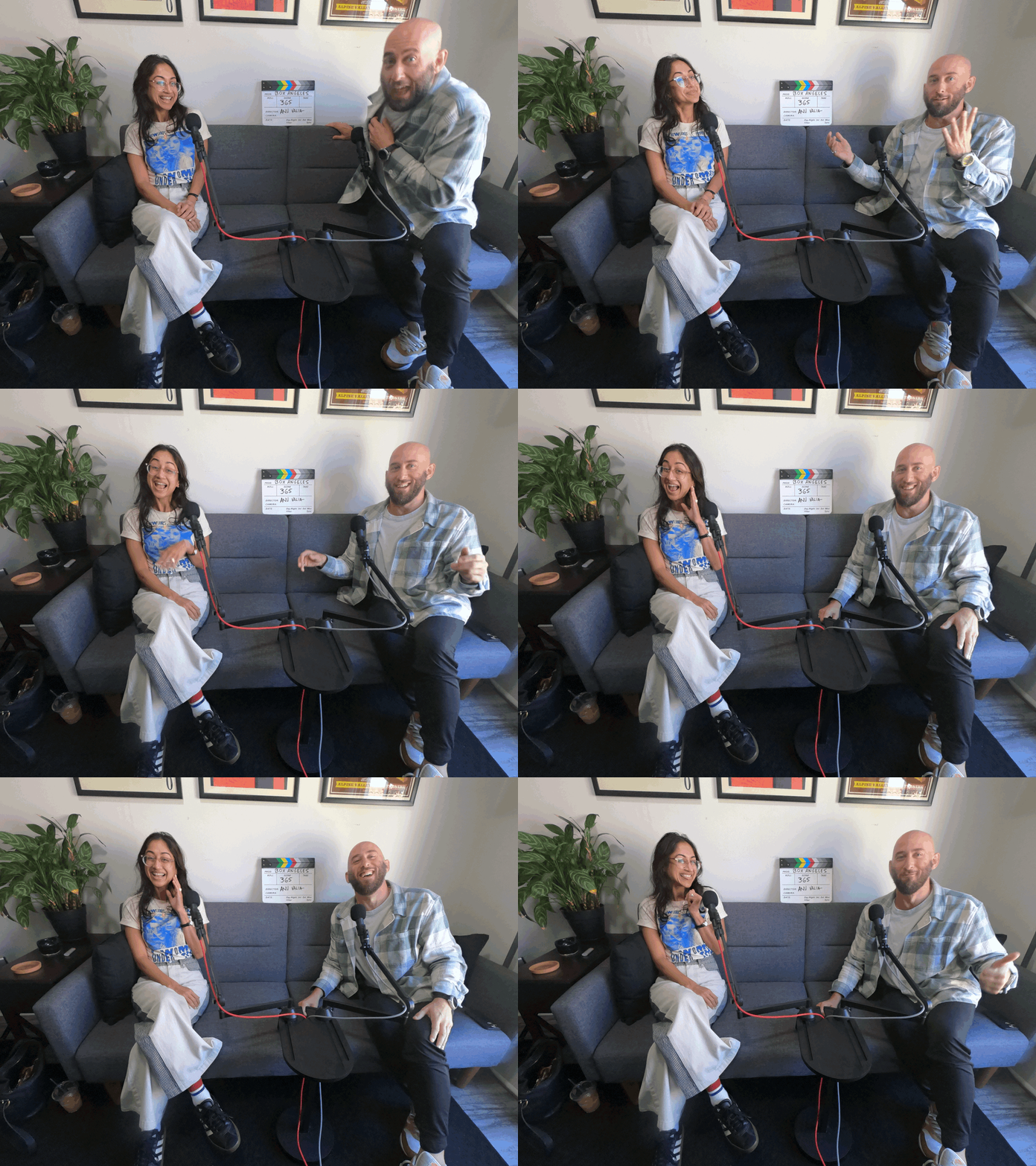
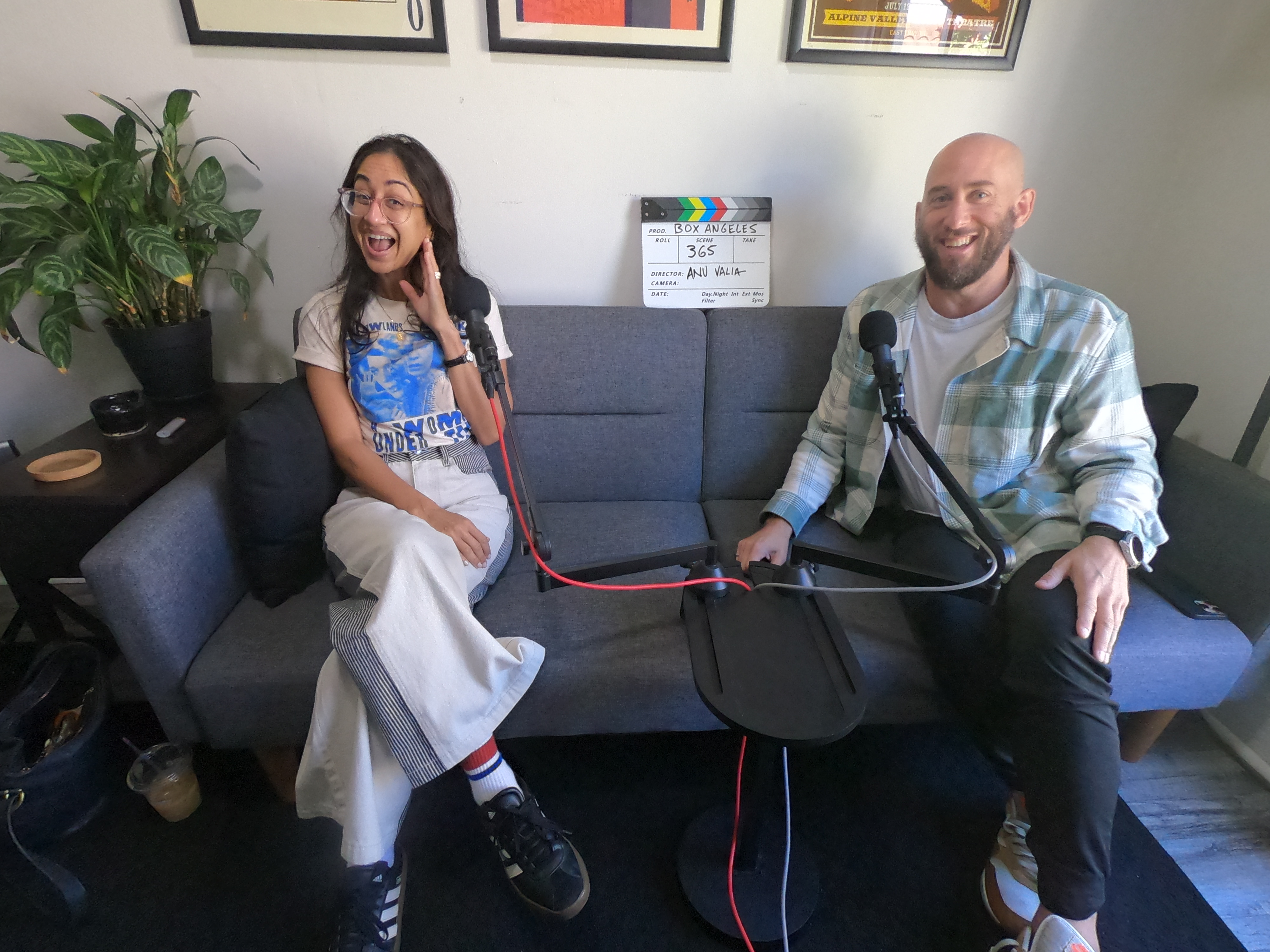
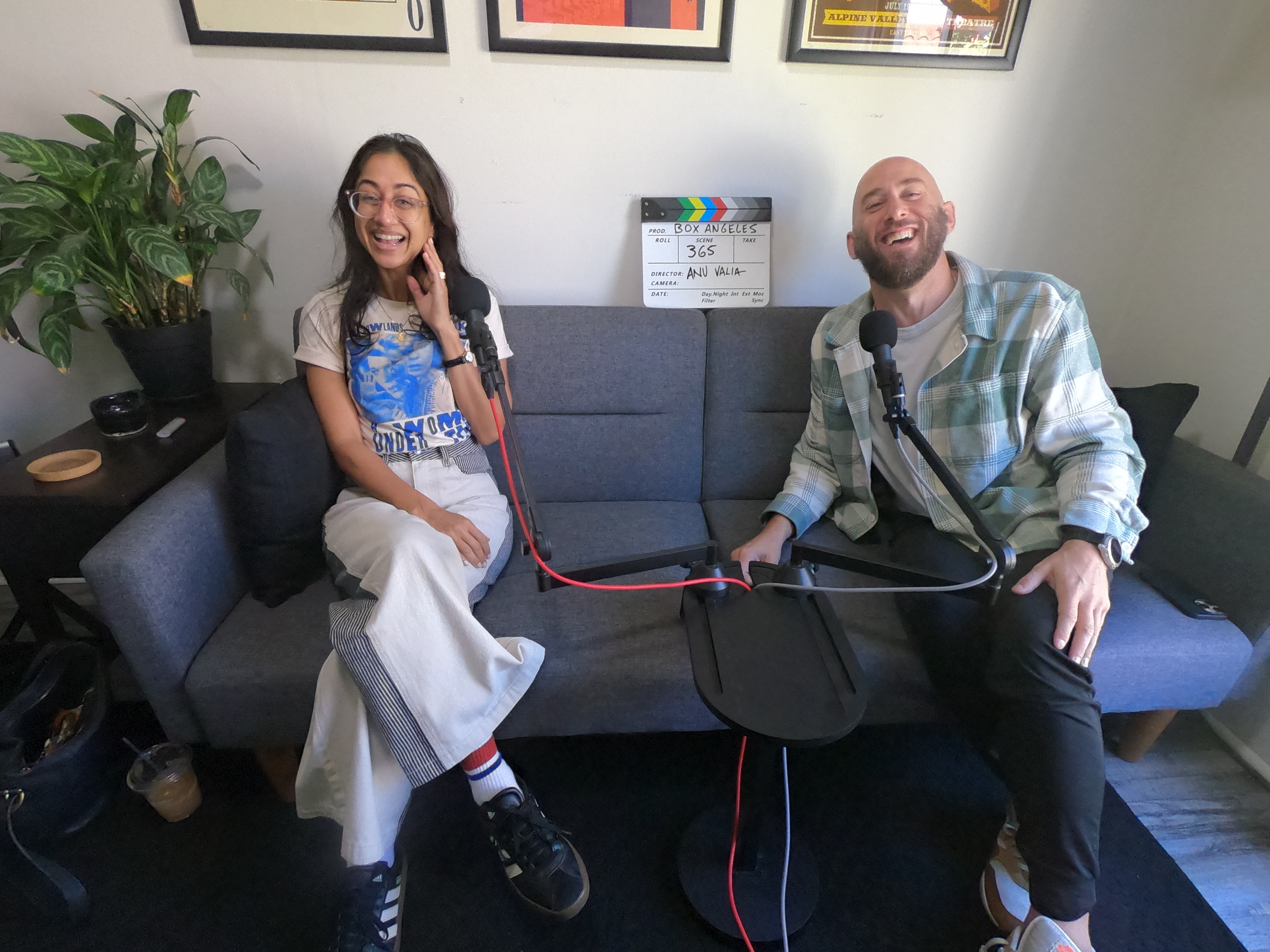
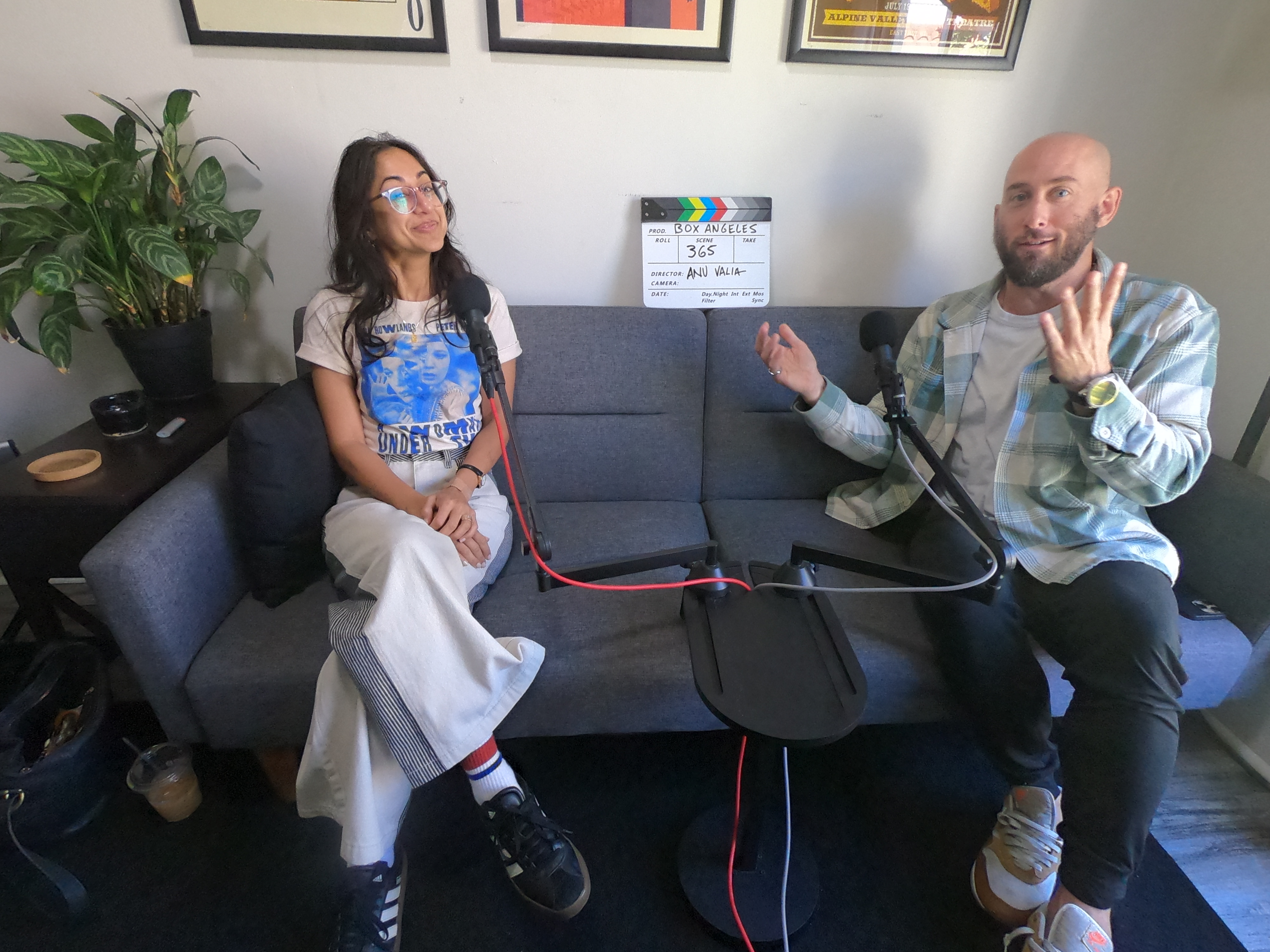
Director Anu Valia (Rooster, Shrinking, Shrill, The Other Two) joins us on the Box Angeles podcast episode 365. Anu stops by the bungalow and discusses her journey from Sundance to directing television, why success doesn’t happen overnight, the problems with self-tape auditions, working with stars like Steve Carell and Harrison Ford, what directors look for when casting actors, and more!
“I find [self-tapes] to be incredibly disrespectful of an actor’s time.”
— Anu Valia
Beats
00:00 – Anu slates.
00:11 – Introduction.
01:53 – Why In-Person Conversations Matter.
03:09 – Making Shorts and Finding Her Voice.
07:47 – What Makes a Great Short Film?
09:15 – Finding Your Voice in Television Directing.
11:23 – What Really Happened After Sundance.
13:22 – Turning Opportunities Into a Career.
16:09 – Luck, Timing, and Hollywood Gatekeepers.
19:46 – Why Self-Tapes Are Failing Actors.
27:00 – How Directors Actually Watch Auditions.
29:18 – Advice for One-Line Auditions.
32:41 – Helping Actors Feel Comfortable on Set.
37:07 – Directing Steve Carell and Harrison Ford.
42:18 – Building Trust With Established Actors.
48:47 – How TV Directors Find Work.
50:51 – Who Took a Chance on Anu Valia?
More Anu
 – Check Anu’s IMDb.
 – Follow Anu on Instagram @anuvalia.
 – Peep Anu’s website.
Transcript
ANU VALIA (00:00)
My name is Anu Valia.
MIKE ELDER (00:11)
Hello and welcome to the Box Angeles podcast with me. I’m your host, Mike Elder. I know there’s a lot going on out there; everything feels a little unstable, uncertain – SAG issues, self-tape issues. So this new episode is me giving you a little treat, a little joy, a little stability. You’re welcome.
Show Full Transcript
I’m no hero, but I do look out for you guys. And what a treat this episode is, because I sat down with director Anu Valia. Anu’s worked on so many amazing shows. I could go on and on and on, but I’ll name a few: Rooster, Shrinking, Shrill, AP Bio, And Just Like That, Adults. I fucking love Adults. She’s a talented director. She’s so excited to talk about the business.
This conversation was so fun. She had so much joy during it. We talked about self-tapes, how she approaches working with celebrities, how her short film opened the door for her a little bit, but not as quickly as she would have thought, maybe. It was a really good conversation.
Anu is such a sweetheart, as I said. I think this is a really insightful one for actors. Again, this whole self-tape world has become quite frustrating for many of us, and Anu has the same sentiment about them. So it was refreshing to hear that from a director. And I think if you’re an actor or a director listening to this, I think you’re going to get something out of it.
But first, before I get to it, I just want to remind you there’s a YouTube channel. All the full episodes are up there. Go watch. Tons of clips from the past episodes. So much good content. Please click subscribe on the YouTube channel. It would mean a lot to me.
All right, that’s it. Housekeeping done. Without further ado, I give you Anu Valia.
🎵 ROCKFORD (01:48) 🎵
You wanna talk to me? You wanna talk.
MIKE ELDER (01:53)
Hi, Anu.
ANU VALIA (01:54)
Hi.
MIKE ELDER (01:54)
Now we’re in it.
ANU VALIA (01:55)
Yes.
MIKE ELDER (01:55)
Thank you.
ANU VALIA (01:56)
Thank you. Right before I was in New York and now LA.
MIKE ELDER (01:57)
Thank you for coming down.
ANU VALIA (01:59)
Yep.
MIKE ELDER (02:00)
As we were just talking about, it’s impossible to get people to come down. So thank you for coming down.
ANU VALIA (02:05)
Coming down?
MIKE ELDER (02:06)
To the podcast.
ANU VALIA (02:07)
Oh, down. I traveled east.
MIKE ELDER (02:08)
I email so many people. I’m like, do I have to come in person? And I’m like, please.
ANU VALIA (02:11)
That’s the only – that’s the best thing.
MIKE ELDER (02:13)
I agree.
ANU VALIA (02:14)
Yeah. I don’t want to do it over Zoom.
MIKE ELDER (02:16)
Zoom is the worst. You can’t connect. You don’t get the vibe. It’s like self-tapes. They’re pointless.
ANU VALIA (02:21)
Don’t get me started on self-tapes. Yes.
MIKE ELDER (02:22)
Oh, I will later. But I will say, I was watching Rooster, and I reached out to, like, all the directors. You were one of them. And so I love that show, and I’m pumped to talk to you.
ANU VALIA (02:30)
Oh, my God. Did any other directors respond?
MIKE ELDER (02:34)
Yes. Oz responded, but then he didn’t. He said he’d hit me up in October, and then I did, and I haven’t heard from him. We were talking about how hard it is to podcast before this. The hardest part is, like, I email in batches, and very few people respond. And then the people that respond, it’s very hard to get people to come down. So when I say, “Thank you for coming down,” truthfully, I mean it.
ANU VALIA (02:54)
You’re so welcome. Tell Oz that I did this, and then maybe he’ll do it. Tell Krisel too.
MIKE ELDER (02:58)
Okay. You have sway with Oz Rodriguez?
ANU VALIA (03:02)
Yes.
MIKE ELDER (03:03)
Yeah. So it’s so hard to get people to do anything in person in LA, I feel like. So thank you again.
ANU VALIA (03:08)
Oh, my God. What a pleasure.
MIKE ELDER (03:09)
But I loved Rooster. I would like to start by talking about how you got started, because I watched your short film. Is it Lucia or Lucia?
ANU VALIA (03:16)
Lucia.
MIKE ELDER (03:17)
Lucia.
ANU VALIA (03:17)
Lucia. But it’s a made-up name, so you know she’s a made-up person.
MIKE ELDER (03:21)
Lucia before and after.
ANU VALIA (03:22)
Yes.
MIKE ELDER (03:23)
That, I assume, was – it was obviously your big break because it went to Sundance. It did very well. Was that your first short film? Is that really where it all started for you?
ANU VALIA (03:32)
It was not my first short. I made a lot of – who knows what a lot is. Well, I just – I was going to say I made a lot of shorts, but I look at, like, kids today, and I’m so impressed.
Well, I just think about people who are, like, 18, 19, and by the time they’re going to college, they’ve already made tons of films with, like, really interesting editing patterns and, like, costume changes. Like, I just – like, I see – I think about how little I knew when I was 18.
MIKE ELDER (04:04)
Yeah.
ANU VALIA (04:05)
Making shorts, how to learn everything, like, complete. Like, I didn’t even understand the concept of editing and, like, eye lines and all that. And I think now people do.
And so I wonder, I think that’s like – I think of, you know, the success of Backrooms and Obsession, very popular films. A lot has been said about them. But I’m also like, yeah, I mean, if when you get to practice from the time you’re like 15 years old, you’re going to get good. You know, I think you just need to do it a lot to get good.
MIKE ELDER (04:34)
Yeah.
ANU VALIA (04:34)
And so I thought I made a lot of shorts, but maybe not in the grand scheme of things. But I went to film school, made shorts there. Afterwards, kept making shorts. Yeah, nobody saw them, but I made them.
MIKE ELDER (04:48)
Was there something about before and after that you – did you know that had a chance when you made it, or was it just the same thing? Were you making them, submitting them, just hoping something would stick?
ANU VALIA (04:57)
Yeah. I mean, I think I see things in a certain way, as I think every artist does. And you’re trying to express yourself of, like, how you see the world, how your brain thinks. And film is like the only medium I know how to express myself in.
And it’s not even me expressing myself. It’s like me asking, like, 40 other people to help me express something together. So it’s not really even me expressing myself. It’s like the actors and the crew. Like, we’re all doing it together.
Guillermo del Toro speaks really beautifully about this, how, like, you’re – you’re when you’re directing a film, whether you’ve written it and directed it, but if you’re directing something, you’re expressing yourself, but you’re asking everybody else to give themselves to it too and to put themselves in something else. So it’s really an expression of a bunch of people.
And I was going somewhere with this. Oh, so the shorts I would make moved in the way that I think, and it’s not very popular. Like, I work on a lot of popular television shows, but the way I naturally think is not. I don’t know. I’ve struggled with people liking the things I make.
So I made this. I was trying to make a film feature, and this was – I don’t like shorts that are like – I don’t like shorts that are like mini movies. This was a scene in this film that didn’t exist. It was like I was making a film about a woman trying to get an abortion, or I wanted to make a feature.
And I thought of this moment of this waiting period, sort of based on the – inspired by the film “Clio from 5 to 7” by Agnes Varda. And I think it’s like Anya Varda, I’ve realized. I think I’ve been saying her name wrong the whole time. Anyway, so, but just the idea of a woman waiting, what does she do? She wants to get an abortion in Texas.
It’s kind of antiquated now because I made this – I made the film when Obama was president, and I was really concerned about abortion rights in certain states. I didn’t – I had no idea it would be such an issue around the country. And so I was just very obsessed with this idea that, like, a person could travel 300 miles, try to get an abortion, realize they’d have to wait. What does a person do when they wait?
And I’m just interested in, like, bureaucracy, American bureaucracy and our government that makes it hard for people to live their lives and, like, how that affects us. And that’s why I made that short. And yeah, I had no idea. I mean, even when I made it, people would watch it before it got accepted to Sundance and they’d be like, “I don’t really get it or like it.” So I just was very surprised.
MIKE ELDER (07:47)
I have so many follow ups from that because that’s interesting. So you’re saying you don’t approach a short as, like, a perfect work. You take a slice of something, like a full movie, like a scene from a movie, and make it into a short, which is really interesting to me because when I watched it, I was like, “I wanted more.”
And I studied so much improv, and they’re always like, “Start in the middle of the scene. Don’t start, ‘Hello, hi, nice to meet you.'” They say, “Start in the middle of the scene.” And that’s kind of what you did.
Like, you started in the middle, you took a cut out, and then it left us wanting more, I think, which is fascinating.
ANU VALIA (08:16)
Yeah. I mean, I think – I think good shorts, which I would not say mine is maybe even a good short, it’s kind of a slice of life because that’s – that’s how I think. It’s what I’m interested in.
But shorts, I do think, like, really good shorts do have a really propulsive and mysterious, like, beginning, middle, and end. I think the shorts that people really are drawn to actually, like, ask a question, draw you in, and then, like, turn whatever idea you had on its head. I think good short stories and good short films do that.
My short did not do that. And so I didn’t think it would be very successful because it is not like that. It’s very observational, slice of life, to try to create a feeling and ideally a question.
And yeah, I think what I mean is I just don’t really respond to shorts that are like, “Oh, you’re just very obviously watching someone’s, like, calling card or proof of concept for a larger idea.” I find that to be boring. So yeah.
MIKE ELDER (09:15)
Have you found – so you talked about your perspective is different, and now you work on popular shows. Have you found that weirdly has helped you with the popular shows because it gives you a different sort of approach, or are you not fitting the mold so it’s harder on these popular shows?
ANU VALIA (09:28)
I don’t know. I think, like, people are just composed of very different things. Like, you know, I’m sure, like, actors, like, when people – when actors are asked, like, “Why do you pick the things you pick?” And they’re like, “I don’t know. I just audition for a ton of shit.”
And then I get cast in something, and then I just learn what the tone is, and then I do that. I think it’s similar. Like, I think.
I, like, there were shows that hired me, and I learned how that was the tone and the idea. And then, yes, I would bring myself. I think any director, when you’re working on something you didn’t write, your job as a director is to, like, find your way in.
What do you connect to? Like, even a show like Rooster, like, what do I – how do I connect to this show? Like, where do I see myself so that I have an entry point, so I have empathy and can understand, like, where every character is coming from?
And so, but I have to say, like, I just kind of, like, I think every artist does that in their own way. You kind of put yourself – I think, like, if I think of, like, a pop musician who’s scoring a film, you’re going to, like, or if they’re, you know, lending their musical talents to a film, they can’t really take themselves out of it, but they’re putting – they are using their talents to tell another person’s story, like Charli XCX did for Wuthering Heights or, oh, my God, Atticus Ross and Trent Reznor do for the various scores that they do.
You can kind of tell it’s them, but you can tell it’s them 100%. But they, you know, they lend their talents to something else.
MIKE ELDER (11:03)
Yeah.
ANU VALIA (11:03)
Television directing is different because we’re all kind of lending our talents to a showrunner and writer’s larger idea. It’s very different than film directing. I’ve only made one movie, so what do I know? But, like, it’s very – it’s very different. From my experience, it’s very different.
MIKE ELDER (11:17)
Yeah, yeah, yeah. So not to minimize your film, but before and after.
ANU VALIA (11:22)
No, I’m fine.
MIKE ELDER (11:23)
Sorry, not your film, but, like, what happened after your film. So I assume before and after did very well, is very well received, and then you’re off and running. Like, is that the simple version of it? Like, you got – you met with a bunch of agents after you won the short film award and all that, or did it take longer?
ANU VALIA (11:36)
It’s funny because I remember, like, listening to Mark Duplass talk about this, and it was – I had a very similar experience. Like, you win an award, and then you’re like, “Whoa, my life’s going to change.” Like, I’m going to make – like, I’m going to make my movies. That’s why every filmmaker who makes your movie – you want to make your movies. And that’s absolutely not happened.
Like, nothing happened for, like, eight, nine months. I mean, yes, I did meet – I guess it’s not if I can really be genuinely honest about it. I’m trying to think. Like, I think I signed with an agency right after, but then I just went on a bunch of generals.
Like, the, you know, infamous people talk about, like, a water bottle tour where you – which I’m glad, like, I got to do that before COVID because, like, you actually go into a lot of people’s offices and you meet people. And I think it’s coming back now, and that’s great. And you have generals, but, like, it’s hard to translate for that to become, like, jobs or to pitch ideas.
Like, it did not for me. I think some people maybe made more just the movie I had in my back pocket. It was a movie nobody wanted to make, so I pitched it all the time, and nobody wanted to make it.
And I didn’t direct my first television thing until, like, maybe, like, nine months after that. I didn’t do my first, like, union TV show for another year, I think, year and a half maybe.
MIKE ELDER (12:59)
Interesting. So it was just sort of a slow slog. It was a tease.
ANU VALIA (13:02)
Yeah, yeah.
MIKE ELDER (13:03)
Well, that’s good. I mean, I did a short film last year, and I, you know, obviously, I try not to, you know, daydream, but I was like, “Oh, I’m going to submit it to everything, and then people are going to find me, and it’s going to happen.”
So it’s good to know that since that didn’t happen, it wouldn’t have happened either way. It still would have been a slow burn, and you just have to bide your time and be patient even when you get all those.
ANU VALIA (13:22)
I think so. And I think, I mean, the truth is, if I’m being completely honest, yes, having a short at Sundance absolutely helps because it’s that same thing of, like, are you going to read a script from someone? If someone’s like, “Hey, I’ve had my shorts, Sundance or Cannes or Venice or whatever,” you’re like, “Okay, this person probably got it.” So you read the thing.
MIKE ELDER (13:42)
Yeah.
ANU VALIA (13:42)
Compared to, like, that’s true. That’s 100% true. But it is up to – so yes, there’s the privilege of that. And then I think the artists that really soar from that have something in their backpack.
Like, you know, we’re all told this. Like, have the script, have the thing ready to go. That’s incredible so that when you’re – when a door opens, you have something to do with that experience, opportunity. I was so – and maybe I’m still so stubbornly dedicated to making arthouse cinema that when that opportunity came for me, the script I had, nobody wanted to make. It took me 10 years to make it.
So that – so, so while that was happening, you know, a girl’s got to make a living. And I was working in comedy at the time. And as you said, it’s so smart what you just said about what you learn in improv because improvisers make, I think, incredible actors, incredible writers. They understand they’re great listeners, as you are, and also understanding, like, you want to start in the middle of things. That creates for really magnetic, propulsive storytelling.
And so I learned a lot. I was – I need to make money. I was working at CollegeHumor in, like, the early 2010s in New York. And from that, I met a lot of comedians, was working on a lot of, like, sketch comedy, directing comedy shorts and stuff for free, was working with comedians. That’s just kind of who I knew. I wasn’t in, like, a very serious drama theater school. I wasn’t, like, I just knew comedians.
And so my first, like, TV opportunity came where I was introduced to this comedian, Jenna Friedman, who’s so funny and so smart. And we have, like, a real Venn diagram cross-section of what we’re interested in. And I got to direct, like, a pilot episode of an Adult Swim show she had. And then, like, eight months later, something, my friend Sarah Schneider and Chris Kelly created their show, The Other Two. And that is 100% luck that I just got an opportunity to direct on that show. And that was the first show I got to direct.
And then, like, my comedy television career started from there. That’s the truncated version.
MIKE ELDER (16:09)
Well, it’s not luck. First off, you were around, you were doing stuff, you were making all that stuff. So clearly you put in the work. They didn’t just say, “Hey, come do this thing.”
ANU VALIA (16:16)
Yes, but you know.
MIKE ELDER (16:16)
Now you’re minimizing.
ANU VALIA (16:18)
No, I think it’s like, I think it’s important to, like, there’s, like, opportunities arise and that’s the luck. And then.
MIKE ELDER (16:24)
Yeah, it’s timing.
ANU VALIA (16:25)
Timing. That is. And then, and then if you can, like, seize that opportunity, that’s fantastic. And that’s the hard work. But it is timing.
And, like, I just have to mention it because it was, I remember when I was younger and starting out, I would go to all these talks of other people doing the jobs I wanted to have. And I was like, “How did you get it?” And it’s like Steven Spielberg, like, he was just always around the Paramount lot. And I was like, “I don’t even know how to get onto the Paramount lot. Like, how do you do that?”
And I just remember hearing it was consistently people just, like, getting an opportunity. And it was so frustrating to hear that because I was like, “How do I manufacture this luck? Like, how is that going to happen for me?” And then I did happen to get lucky, but everybody doesn’t.
And so I don’t know. I try to tailor whatever help I can provide to, like, to a person specifically because I think, like, advice isn’t catch-all. It’s like, “Okay, you actually are a great YouTube sensation, so you got to use that to help.” Like, I didn’t, you know, I don’t know. Like, I think everyone has to, everyone’s path is just uniquely different.
MIKE ELDER (17:27)
Right. I always talk about on this, sending the elevator back down, how important that is. Once people do it, to send it back. And also, like, with the film festivals, it’s like, I’m just realizing more and more how many gatekeepers there are in this town. And to your point, it’s like almost a choose your own adventure book of, like, “Okay, I’m going to go this route of gatekeepers.” There’s another, like.
ANU VALIA (17:47)
100%.
MIKE ELDER (17:47)
It’s a video game.
ANU VALIA (17:48)
100%.
MIKE ELDER (17:49)
C an you go to the Mario World where you warp to a different level? Maybe. But overall, you got to just kind of go through all these gates.
ANU VALIA (17:57)
100%. I mean, that’s the actual truth because it’s like, “Oh, if you know this person that, like, knows, maybe you can get, like, a writer’s assistant job on the show and then you can”, like, that is true.
And I, it is true. Like, privilege is different for different people. Like, somebody, I grew up in Indiana, and the opportunities for people to do what we do in Indiana are very different than if you live on the coast. Like, that is true.
And so sort of maybe you know one person that, you know, it’s, that is true about this industry.
MIKE ELDER (18:31)
Yeah. And one of the.
ANU VALIA (18:32)
Like comparing who they know.
MIKE ELDER (18:33)
Yeah. And one of the catch-all advices, I talked to my buddy Brandon about this on the podcast recently. One of the catch-all advices of just make stuff, make stuff. Even that is a privilege to have the ability to, like, the amount of time and resources it takes to make stuff.
ANU VALIA (18:46)
Yes. Yeah.
MIKE ELDER (18:47)
Not everybody has that. Some of us have to work full-time jobs just to survive. And it’s like that, even that advice of make stuff can be exhausting.
ANU VALIA (18:55)
Yes. And I think it’s, film is such a, it just requires a lot. It requires a lot of time and energy. Like, I wish I could paint. Like, if I were a painter, that requires a lot of time and energy. It’s like a solo operation.
And then maybe you can put your paintings on Instagram and you can, like, there’s kind of, yeah, it’s, I don’t know. I’m sure a painter, I don’t know if, I don’t know the cross-section between you and painters who are listening to this, but I’m not trying to say it’s easy to be a painter.
I just think that, like, that you, God, it’s like you don’t have to convince somebody to be, like, a boom op while you are shooting and then, you know, you’re at, you know, you can teach yourself how to do everything, but it’s still hard. You still need a lot of people to make, which is good, which is the joy of it.
But yes, it is hard to make stuff all the time. And you want to make, like, I want to make good stuff too. And so that takes time too.
MIKE ELDER (19:46)
Yeah. I touched on self-tapes earlier. You had a reaction to self-tapes. Obviously, let’s talk about, tell me what you hate, love.
ANU VALIA (19:53)
I ask actors. I’m curious about how actors feel because I’ve heard actors, “How do you feel?”
MIKE ELDER (19:58)
I fucking hate them now. I mean, you see my wall. I get no feedback. I send this off. It feels like a quota. I don’t know if you’re even watching it. I don’t know what’s happening.
It’s very, it just kind of kicks you down and you just feel beat down after them. I mean, I got, I just got one this morning. I got to do it. I’m like, “What?” And I’m just sending it off into the ether. I don’t know if anyone’s watching it. We don’t know what’s happening.
Like, for you on Rooster, like, or any show, like, are you watching all the self-tapes that the casting passes on? Are you watching on your phone? Are you watching it on a monitor? Are you watching on set? Are you casting them before you even get to set?
ANU VALIA (20:33)
I watch everything, but I have to say, this is why I don’t like self-tapes either. And I’ve heard actors who do, and I get that and I respect that. I find it to be incredibly disrespectful of an actor’s time.
MIKE ELDER (20:45)
Yeah.
ANU VALIA (20:46)
I also think I have a lot of opinions about self-tapes. I think the joy of what we do, because it’s not a commodity. I mean, it’s treated like one, but like, the joy of what we do is like, as a director, I get to meet actors and we get to work on a scene together and I get to get, I get to feel their energy and I get to, they get to feel mine. They get to have direction so that I think the thing I don’t like about self-tapes is it’s putting so much onus on an actor without any direction, tone, context to make a perfect choice because that’s kind of what the showrunners, directors are looking for.
It’s like, did you kind of do it right? And it’s like, I don’t know. And I’m not like a real actor, but I’ve totally, I’ve put myself on tape and it’s like, I know that they’re just looking for like, did you do it right? And it’s like, well, I don’t know. Like, is this a comedy? Is it a dramedy? Like, what’s the fucking tone of this show? Like, you know, I know what the tone is because I’m the director, but I’ve realized and like, you know, if I know a friend of mine is auditioning, I will tell them more information than the other actors have. I’ll be like, just so you know, like, this is kind of like the context of the character. And then they’re like, oh, and then they can make a better first choice.
And that’s not fair because at least the way I try to watch self-tapes is like, if you’ve made an interesting choice, I will push to have a callback. Like, I push as much as I can, even if a show doesn’t typically do them. I love it when shows do typically do them. I will push to have callbacks even for, like, smaller roles because I just like, if you’ve made a somewhat interesting choice, maybe the choice was wrong, but like, then I can also, it gives me opportunity to see if you can be directed, whatever. We all know why callbacks are great, but like, just television moves so fast.
People do not, that people absolutely do not watch everything. And I find that sucks. Absolutely. Tapes are watched in vans, on set, on phones. I try to watch them on computers when I can. Like, I try, when I first started, I absolutely, I was so respectful of the process. And then you’re just moving, moving, moving, having to make decisions quick. And then actually the writers and showrunners have made a decision before you. So then you’re quickly watching to be like, let me see this. And then you’re like, wait, but there’s all these other actors and I have to watch. And it’s so, it sucks.
Like, I just think it treats, and then.
MIKE ELDER (23:01)
Go off queen.
ANU VALIA (23:02)
You’re seeing the actor has been told to do three scenes, three scenes. Like, and I get it. Like, I know many showrunners who watch everything, who watch all three scenes, who they need that and they’re too busy. Everybody’s too busy because the production schedules have been truncated so much because studios are trying to save money. So everything’s been to, what is the fastest, easiest way we can do this? And.
I think ask an actor to do one scene, one scene only, one scene always. And then if you like them, bring them back. Have them do a callback.
MIKE ELDER (23:41)
Give them another one then.
ANU VALIA (23:42)
Do then. I just need to put three scenes into the ether. That takes about two, three hours of your day. And it’s just.
MIKE ELDER (23:49)
Longer when it’s a self-tape, you have to edit it and set up and tear down.
ANU VALIA (23:52)
Yeah. I really, really, if I, it’s not like, I try to be like, I’m so grateful I get to do this for a living and it rules and I love this job and I love working with, like, incredibly talented artists. And I’m not a cynical person. Like, I’m, I feel so, it is the nature of self-tapes is, is, is corrupt. I think it’s just, it’s, it’s.
MIKE ELDER (24:16)
It really is.
ANU VALIA (24:17)
It’s wrong. It needs to change.
MIKE ELDER (24:18)
I saw your girl, Tatiana Maslany, who you directed on She-Hulk recently, talking about it.
ANU VALIA (24:23)
I love her. I just saw her yesterday.
MIKE ELDER (24:24)
Yeah, she, oh, that’s funny. She was just saying, like, how COVID is like, we blame COVID for self-tapes, but like, everything else is reverted back to normal procedures except for self-tapes. So why are we cutting budget on that when it’s such an important part of what we do? And I was like, yes. Preach queen.
ANU VALIA (24:42)
She’s right. She’s right. She’s 100% right. Like, why it, you, God, it does not take longer because I would rather see less people see the, like, see the right people for the job, have the cast, and then the casting director has a better relationship.
It’s like the proper way it should be. Casting directors seeing these actors in person, you have a, you build a relationship because I’m also like, yes, to drive around town, whatever, it’s a waste of your time. It costs money.
But what you’re gaining, what the actor is gaining is a continued relationship with the casting agent, with the casting agent’s assistant, with the whole team. And then that’s how you, and then they’re like, okay, you’re not right for this, but this, you start to build an ecosystem.
The other way to do it is just, these tapes just don’t go any, they don’t go anywhere. And like, you’re not building a real relationship. You can tell me with the casting director unless you get close and then you get coached and then you, you know what I mean?
MIKE ELDER (25:43)
1000%. 1000%.
ANU VALIA (25:44)
It’s just.
MIKE ELDER (25:45)
Like, I don’t even know how many of these casting directors would recognize me, you know, in person because it feels like it’s just bing, bing, bing, bing, bing. And they’re not like connecting.
ANU VALIA (25:53)
Yes. I feel like you only get close when you get very close on a role.
MIKE ELDER (25:56)
Or meet in person.
ANU VALIA (25:57)
Yeah. Or you meet, of course. Then you meet in person. And I think that, like, also it’s changed the nature of what I think on our side, people are looking for, which is like, they want the actor to just be the role. And it’s like, but actors are, they can do a lot of things. And I think if you give them the opportunity to try something different or like,
give them a chance to become the character, if you give them a lot of information, they can become a character for you. But we’re really just, I don’t know. I think it’s a, it’s sickness.
And yeah, I really, really, I would never, you know, I, I try, the thing I try to do on shows is like, I try to do callbacks when I can, even if it’s over Zoom, at least that way I can like work with an actor.
MIKE ELDER (26:45)
Yeah.
ANU VALIA (26:46)
But, yeah.
MIKE ELDER (26:51)
Keep doing it. Be the change. We need some people to be the change.
ANU VALIA (26:54)
That’s true. I think I didn’t need to have more power to actually make real change. Like, if it were mine or my set.
MIKE ELDER (27:00)
You have more power than a lot of us. So keep doing what you’re doing. If we all move that boulder up that mountain.
It’s funny you mentioned callbacks though, because like, I was, while I was waiting for you, I was looking at my audition numbers, which I do from time to time. And yeah, my callback rate in 2016, 2017 was like 25%. And now it’s like 5%. And I’m just sending these things out and I’m like, oh.
Do you ever, when you’re watching on your phone, do you ever like just go to swipe like you’re almost just perusing social media when you’re watching auditions and you’re like, oh, this one sucks let me move it.
ANU VALIA (27:32)
No, no.
MIKE ELDER (27:33)
You’ve never been tempted because it’s on your phone and you’re just, okay, good. That’s nice.
ANU VALIA (27:37)
What I will say, this is because I really, really, really want to be respectful of what an actor has done and when they’ve given, when they’ve put themselves on tape. But what I will say, and this is for the director’s process, I have noticed sometimes I’m trying something slightly different where I have given too much, like I’ve watched too much and I’ve talked myself into thinking somebody is right and they’re not.
So what I have tried, what I have started to do is if somebody is wrong and I’m really sure they’re wrong, I have moved on quicker. I have been like, you know what? This is not right. And then moved, because part of the process for directors, you have to listen to your instinct.
Is this person right? Do they feel right? Are they good? Do they look right? Is their energy correct? That is important. But
I think the process needs to change to get there. Like, I think instead, but it should still be in person. I don’t think it should be over. I don’t think we should be doing self-tapes at all.
Unless, unless it’s like they’re from really far away. They don’t live around here. So it’s like, you do the in-person and then there’s like, oh, there’s four self-tapes because there’s this person in Indiana, in Ohio, or whatever. You should take a look at them. That I think is great.
MIKE ELDER (28:55)
Yeah.
ANU VALIA (28:57)
But yeah, just the, it’s just all of it, all of the being like, how do we remove the human experience from the story, from the, from the act of telling human stories is so weird.
MIKE ELDER (29:08)
Yeah.
ANU VALIA (29:08)
It’s so weird. I don’t like it. And I, I don’t, I don’t do it when it’s my own thing. You know, it’s just not how I operate, but.
MIKE ELDER (29:18)
Well, let me selfishly ask you about, you said make interesting choices. I notoriously get one line auditions like a motherfucker. How do you make an interesting choice in a one line audition? Or what do you have advice for one line auditions or two line or whatever?
ANU VALIA (29:32)
It’s the hardest thing. And then sometimes the one line thing, this is the truth. The, when you’re special, when it’s a self-tape, the people on the other side are like, they just want to see it done right, quote unquote, right? It’s a subjective form. There’s no right.
So it’s like, if it’s funny and deadpan, it’s that. It’s not making it too precious. If it’s a waiter, it’s just being like a regular ass waiter. Do you know what I mean? Like, and then a lot of times it’s just like what you look like in the thing, you know? It’s like, that’s my experience.
–
I’m not saying that my experience is everyone’s, like maybe I’m wrong and maybe other directors listening to this or showrunners or writers listening to this is like, no, that’s not at all what I do. But like, I can say from my lived experience, there have been times I’m like, that was funny. That was deadpan and funny.
Like, I just did this thing where it was like three, it was three one line jokes. It was like somebody doing an interview. So it was like every person got one line and one was just very deadpan. And I was like, that was funny. Read.
One was actually made the line more interesting than it was. Like, I’m trying to think about the three people who are cast. One was the funniest, deadpan. So they got that role.
The second line, they said it in an interesting way that made the line more interesting than it was. And then the third one, just kind of did it. They didn’t do too, they didn’t try too hard. So that’s three different.
MIKE ELDER (30:54)
That’s interesting because.
ANU VALIA (30:55)
I’m totally there to read. So you just got to be yourself. You just got to be yourself and do the thing you think is right. And you’ll probably hit that bullseye like one out of, you know, 10% of the time.
MIKE ELDER (31:04)
Well, it’s interesting you say that because I’ve been taught, maybe wrongly, that these one-liners are mostly to service the story and not do too much and not be too interesting.
ANU VALIA (31:13)
No, I think that’s true. I think that’s true for the most part. That’s true for the most part. Like, it’s hard because you don’t have context, the context that we do, because they’re not giving you the whole script.
I think it’s really important to ask if there’s any way to get context, because I think that’s, I’ve like helped friends with auditions for shows I’ve not been a part of or never have heard of. And I’ve been like so confused. I’ve been like, what is the tone of this show? Like, is this funny? Like, I’m so confused.
And, and, and if it’s funny, you know, to do something slightly different, if it’s grounded, even if something as simple as like pace, how you speak, I will say that’s the thing. There’s no catch-all advice because sometimes you think you really got it and you’re like, oh, I just really.
MIKE ELDER (31:57)
I know.
ANU VALIA (31:57)
So I think you just got to listen to your instinct. You just have to listen to your instinct and you’ll be right. You know, broken clocks right twice a day.
MIKE ELDER (32:03)
But I hate to keep harboring this, but your instincts are hard when you’re watching yourself and editing yourself. And then you’re like, wait, is this right? And then you get in your own way oftentimes with self-tapes, which is goddamn exhausting.
ANU VALIA (32:13)
That sucks. That’s true. That’s true.
Like, you shouldn’t be, you don’t practice your lines in a mirror. You don’t, you know what I mean? Like, you don’t, when you’re actually learning a scene, you’re not doing it in a mirror, even though like movies and television shows sometimes show you do that.
Like, that’s not really how you’re doing it. Because you’re not trying to, you don’t, unless you’re like doing a FaceTime, like we’re not supposed to look at our faces as much as we are.
MIKE ELDER (32:36)
Right.
ANU VALIA (32:36)
And it makes you overthink everything. And it’s really dangerous. And like, I just don’t, yeah.
MIKE ELDER (32:41)
Yeah. It’s come up too with self-tapes, with directors I’ve had on where it’s like the on set, they couldn’t even perform. And it’s like, how many takes did they end up having to do for that self-tape? They couldn’t, on set, they just froze up.
Have you had that happen? Not necessarily that, but like, have you noticed something where an actor’s a really good auditioner, but not as good on set or vice versa, where they’re a really good on set, but not necessarily a good auditioner?
ANU VALIA (33:06)
I’m trying to think. I’m so sorry.
MIKE ELDER (33:08)
You’re good.
ANU VALIA (33:10)
I’m trying to think. I’m trying to think because in TV, God, I’m just like, I would say I made one movie and there was an experience where, but it was so different because our actor was just so, I’m trying to think.
I’ve heard other actors, here’s where I’ll be truthful with you.
I guess I’m not thinking about it like that. I’m not, I’m not thinking like, whoa, their audition was great. Now let’s hope they can perform.
I’m just like in the moment, like we’re all in the scene together. And if it’s not working or if I’m seeing they’re nervous, it’s definitely happened where I’ve seen an actor has been nervous. And then my job is to help them not be nervous.
MIKE ELDER (34:00)
Sure.
ANU VALIA (34:00)
That’s my job. Because in the end, like I want so badly for everybody on set, once we’re there, we’re working to feel free and to feel the most free. And if they’re feeling nervous, like I try really hard to help that not be because it’s like, it’s like asking somebody to sing or dance, like the worst thing when someone’s like, is watching someone dance and they’re self-conscious.
MIKE ELDER (34:21)
Yeah.
ANU VALIA (34:21)
That’s the worst. And so my job is to try to remind them that like, you looking stupid is the best thing is that I want, I want that.
MIKE ELDER (34:31)
Well, to that point, that’s interesting. Is there anything actors are like obsessing or worrying about that you as directors don’t even give a shit about?
ANU VALIA (34:41)
I don’t know.
MIKE ELDER (34:43)
Like me thinking about me overthinking one line auditions.
ANU VALIA (34:47)
But I understand that. I understand that. I think it’s so hard. Like I’ve watched actors do that one line well and I’m always so impressed. I’m always like, how did you do that?
Like, well, I’ve like, was shooting this show and the waiter had one line and he nailed it every time. And it was with two actors who had like a big scene and you’d have to interrupt with like, do you want to? And I was just like, you’re great.
Like the fact that you, and I learned more about him later, he was like a filmmaker and, and I was like, like he literally was like, I’m just here because like I’m happy to be like doing this with these actors. And I was like, amazing. Like you’re awesome. And I was just so impressed because I was like, I couldn’t do that.
MIKE ELDER (35:25)
Wait, does that not happen often where somebody’s just happy to be there? I feel like whenever I’m on set, I’m like, I’m just happy to be there.
ANU VALIA (35:31)
It’s not, it’s just like when I asked, I was just kind of like, how did you do that? Like you just did that same line for like 20 takes. That must’ve been hard.
He was like, yeah, it’s, you know, it’s my job. And I was like, but it’s hard. I think it’s hard.
Like I’ve, I’ve had, I am not a real actor. So the only time I’ve been on set in an acting capacity, I’ve had very few lines, like the couple times I’ve been cast in things and I get so nervous. I mean, I just get so nervous.
MIKE ELDER (35:58)
Why do you say you’re not a real actor? What do you mean by real actor?
ANU VALIA (36:01)
Because I think a real actor is, is, is they do the work to not be nervous on set. They do the work to stay focused when you, when you do have, that is the job. And they do that work.
And I don’t know how to do that work. I’m not trained at that. I’m not trained at like at a moment’s notice, just like drop in. I get, I get nervous. I feel the camera on me. I get really nervous.
I don’t know like where my mark is. I don’t know where my light is. Like, I literally just don’t remember anything. It’s so, I’m not in the moment. I’m just like, you know, and so that’s why I’m not a real actor.
Cause I just, I haven’t done, I’m not practiced at the professional job of being a film and television actor, which is what you are practicing.
MIKE ELDER (36:40)
Sure. I think actors generally just focus on that question. Going back to the question about what actors are worrying about, I think actors are just so focused on themselves all the time. That might be a problem too. Cause you, you mentioned like, I’m not even thinking about this one person. I’m thinking about the collective. And so maybe that was just like, that’s the thing. Actors are too focused on themselves.
ANU VALIA (36:57)
That’s okay. Listen, someone’s got to be thinking about you. That’s good. That’s fine. You’re thinking about the character. It helps me. I’m happy that you’re thinking about yourself. Doesn’t bother me.
MIKE ELDER (37:07)
To that, to that angle, like when you go on a show, when you work on a show like Shrinking or Rooster and you’re directing like a Harrison Ford or a Steve Carell, I assume you approach those guys differently than the one line waiter. How do you notice there’s a difference between how you approach celebrities versus blue collar work actors?
ANU VALIA (37:27)
I don’t think it’s celebrities versus blue collar actors. I think it’s the actors that are maybe being asked to be the most vulnerable, the ones with the most weight on their shoulders. So like, in a scene, everybody deserves respect. But in a scene, you know, number one on the call sheet, they have a lot that they’re thinking about. There’s a lot, there’s a lot that they’re thinking about in a scene because they’ve, we’re shooting out of order. Who knows what episode we’re shooting? There’s a lot they’re holding onto.
They’re very, very vulnerable. They’re trying to stay in it. Maybe they’re trying to hold an emotion. Maybe they’re trying to get to an emotion. Maybe they’re trying to figure out the lines that aren’t really working quite right right now. Or maybe they’re trying to hit a joke that they did, or maybe they want to do something different. Maybe they just want to feel in the flow. They’re just doing a lot in a scene.
So my job, I’m just focused on like, in that scene, what does the scene need? Like, I have to be honest, like it’s not that I’m like, whoa, this is a celebrity. It’s like, we’re in a scene. Maybe it’s like Steve Carell and Annie Mumolo, and I’m just thinking of Rooster and like Danielle Deadwyler. Okay. The three of us are in a scene and there is like somebody else with one line in the scene. I’m just like, does the scene work? Is it working? What can I add? How can we add to the scene? What more does it need? What do you, do we get all those parts?
Like, I’m just, it’s just like, I think the best part about the job is like you’re incredibly present and everybody, if it’s feeling good, everyone’s in a flow state and we’re all just in a flow state. And that’s kind of like, and it’s not always that you are in that space. And that’s kind of like, cause we’re all trying to create a larger, bigger thing.
And maybe it’s not working. Maybe we got to figure out why it’s not working. Maybe we got to try something different. Maybe there’s a curveball here. Maybe actually let’s change the blocking. Like there’s so many other things going on. That’s kind of, I think what, I think that’s what everybody’s thinking about. Do you know what I mean?
MIKE ELDER (39:20)
Yeah.
ANU VALIA (39:20)
I think that’s what, I don’t know what other actors are thinking about, but that’s the goal. Because if we’re all thinking of that, we’re all getting outside of our heads. And that’s the goal that everybody wants, not just artists.
I think that’s why people meditate. That’s why we’re all trying to get outside of our heads and into the doing. You know, that’s what, that’s why people like to garden. That’s why I think that, I think actors want that.
I know I want that as a director. And so I think if we’re all kind of trying to get out of here and get into there, that’s the goal of all of us.
MIKE ELDER (39:48)
Yeah.
ANU VALIA (39:48)
Don’t you, I mean.
MIKE ELDER (39:49)
I love the visualization of it. Yeah.
ANU VALIA (39:51)
Yeah.
MIKE ELDER (39:51)
Out of here.
ANU VALIA (39:52)
Out of there, into there, into the thing that you’re trying to make together. Cause then that scene that you’re trying to, then you’re going to go edit that scene and put music to it. And then it’s going to be part of an episode of television that you watch. And that’s like, my goal is to be an audience member watching a scene and seeing if it’s working.
MIKE ELDER (40:07)
Yeah.
ANU VALIA (40:07)
You know.
MIKE ELDER (40:08)
But okay, let me press you on this. Do you, if you were to give feedback to an actor, I assume you could give feedback to Harrison Ford differently than you do the co-star waiter. No? Good for you. If not, I guess good for you. That sounds pretty badass.
ANU VALIA (40:24)
I would say maybe sometimes if a person has one line, I might be a bit more direct because it’s like one thing, they have one thing that I need them to do. Like there’s one change I might make and I just might be more direct.
But I don’t know. I don’t know.
I think like, listen, Harrison Ford deserves respect. He deserves respect. And I’m going to give that man respect because the fact that he is even allowing me to direct him is, I’m grateful.
MIKE ELDER (40:56)
Yeah.
ANU VALIA (40:56)
And then to respect him, I have to respect his work. And to respect his work, I have to be listening all the time and offer things when I think it can be moved in a certain way or tighter in a certain way or whatever. But that, I definitely think I do that with every actor. Cause I think that’s the risk to respect.
This is my, this is just my opinion. To respect an actor is to keep them inside a scene and allow a safe space to play, like a net to play, but, or to allow a kind of like, you can play, but I will be the net to catch you if it gets a little weird or I’ll be like a guardrail to be like, actually, I think we need to move in this direction. Cause it’s getting too melodramatic or it’s actually, we’ve breezed past this emotional point.
Like, but stay, keep trying. That was, be crazy, like try something crazy. And then you do and you’re like, actually, there’s something really interesting in that. Let’s keep that. That’s kind of, I think, my goal.
MIKE ELDER (41:55)
I love that.
ANU VALIA (41:58)
And I, I’m actually quite like a self-conscious person and like I think about myself too much, but the reason I like this job is like I don’t do that when I’m working. And then, so it’s just not about me. And then that way also, if somebody doesn’t like you, I can like tell myself a lie that’s not about me. Maybe it isn’t, that’s not true. Maybe they don’t like me, but it’s not about me.
MIKE ELDER (42:18)
I won’t double click on that. Even though this couch often turns into therapy, but I love all of that. To that point though, or in that, in that sort of world, like when you go to a show like And Just Like That, where these women have been doing those characters for 25 years, are you intimidated by giving that, being that net for that since they know it so well?
ANU VALIA (42:42)
Right. Actually, yeah. I thought about that a lot when it, when I started working on that show, they’re incredible. The actors on that show are absolutely incredible. I loved, loved working with them.
I thought about that a lot. I was like, huh, I never worked on something where the actors have been doing the character for a long time. So like, how do you approach that? It was really something I thought about a lot.
And I think, hmm, you, I’m trying to be specific. I feel like I would trust them to know their character. So I don’t think I gave that many character notes. It was more within a scene. Maybe there was something to play or something to try.
And also, I think you can ask questions. You can be like, would you do this? You know?
MIKE ELDER (43:29)
Yeah.
ANU VALIA (43:29)
Would it make sense to do this? What do you think? And they go, yeah, okay, I like that. Let’s try it. Or they go, no, I don’t think I’d do that. I’m like, okay, try it. What about this? And you can say you don’t know. You can be like, I don’t really know. Like, I don’t know. Like I’ve thoughts and ideas. I’m not saying I’m correct.
And I’m not, I don’t even know if my approach always works for everybody. Like maybe some actors really need us. I like to be collaborative and include. Like I think I have a vision, but I also, there’s no world where whatever blocking I made up in the comfort of my own, you know, playing all the characters, pretending that I know better than everybody. Maybe when the actors do it, they figured out something way better.
And then maybe I have a couple of suggestions that are better for camera or for something I’ve thought of before. And that’s a collaborate. That’s collaboration. And so, yeah, I feel like I would, with them in particular, I’m trying to think and access that. Like I’d have thoughts, ideas, ask questions, and then watch what they would do and then maybe guide and have suggestions and thoughts and stuff like that.
MIKE ELDER (44:34)
Yeah. I like the ask questions thing because then it’s, you’re collaborating, but also you’re kind of putting it in their court where they’re like, oh yeah, would I do.
ANU VALIA (44:40)
And they can tell me.
MIKE ELDER (44:41)
Yeah.
ANU VALIA (44:41)
And then I’ll learn a little bit too. Like I’ll learn if like Miranda would do that or not. Or like.
MIKE ELDER (44:46)
Oh, that’s so Miranda.
ANU VALIA (44:47)
Yeah. Truly.
MIKE ELDER (44:50)
I mean, people have been saying that for 20 years.
ANU VALIA (44:52)
Exactly. Like, is that funny? Like, would it be funny to do this? And then, then Cynthia [Nixon] can be like, yeah, let me try it. Or she’d be like, I don’t know if I do that, but what if I do this? Do you know, like that feels really, it’s really nice when there’s trust, which, you know, it’s our job to build where they can go, I don’t know, but let me try.
And I think I can tell when someone doesn’t trust me if I ask and they’re like, no, I wouldn’t do that. Or like, that’s fine. Actually, no, saying no is fine. That’s, that’s okay. It’s more like when somebody is like, cause I definitely have people say no, and I don’t feel like they don’t trust me. I just think the same thing’s wrong. My idea is wrong.
But I think I’m trying to think, like, I definitely, I’m trying, I can tell when someone doesn’t trust and doesn’t feel safe when they’re not free, when they’re not feeling free. And then, and then I spend a lot of time being like, how do I gain this person’s trust? How do I make them feel safe? It’s kind of.
MIKE ELDER (45:47)
Yeah. Well, that was going to be my follow up. How do you get actors, especially in a show like that, to trust you? Because I’m not saying they would do this, but like, they’ve been doing it so long and then you come along, you, you, you insecure little director come along.
ANU VALIA (46:04)
Yeah, yeah.
MIKE ELDER (46:04)
And it’s like, how do you, do you have a way to break down that trust or do you have a thing you do to like, ingraziate yourself?
ANU VALIA (46:11)
That’s the interesting part about television directing. In a film, you cast everybody, you know? And so in a movie, you cast everyone. So there’s a lot of trust because you’ve chosen them. And then, and they’re like, okay, I’m here. We’re making this thing together.
In a TV show, big, every television director you’ll talk to will say, part of our job is building trust. And I think about it a lot. Like, there’s no catchall. It is the thing I think about the most. I think, I think it’s, it’s the thing that keeps me up at night. It’s the thing that you, and the thing I will say as what I’ve learned and what I try to keep as a daily practice is I try to remember how can I be of service?
How can I be of service to the story, to the characters? Because then it isn’t about me. Cause I would find it annoying to walk onto a set and have the director be like, I want you to like me. Do you trust me? Are you feeling, I’d be like, get out of here. I’m not thinking about you.
And I don’t think, that’s the truth. I don’t think anyone’s thinking about you. Like, nobody’s thinking about you. Everyone’s thinking about themself.
MIKE ELDER (47:08)
Well, especially in TV. Yeah. Cause it’s a new, every week it’s a new director.
ANU VALIA (47:12)
Exactly. Everybody’s thinking about themselves. If I were an actor, I would hate that there was a new director every, every episode. I would direct myself. I would just be like, I got this. Like, I’ll be nice to you, but like, I don’t really care about you. And I think I would really hate it if a director came on set and was like, are you happy? Do you like me? Like.
MIKE ELDER (47:31)
Oh, yeah. That would be awful.
ANU VALIA (47:32)
I’d be like, get out of here. Stop talking.
MIKE ELDER (47:34)
That’s our job.
ANU VALIA (47:35)
Yes. And so, and so, exactly. That’s the actor’s job. So I try, whenever that little monkey in the back of your brain comes, just remind myself, like, it’s not about me. I’m here to help.
If I do my job well, you will not remember me. You know what I mean? If I do my job well, that’s why I try to take a lot of solace in. If I’m doing this job right, you won’t remember me.
You will just remember that you did a good job in this season. The goal to me is like just to give you space so that you feel like you can do a good job and I’ll pull back or help if there’s no, but it’s not about me. And I think that is a thing that we need to remind ourselves in television specifically.
MIKE ELDER (48:09)
Yeah. I like that a lot. I mean, it’s true though. I like it.
ANU VALIA (48:13)
I try to, you know, I work on it every day because it’s just not, especially your first day on a new set, on a new show, you have, I think I have to be like, I’m here for this.
What can I do for the show? What can I do for the scene? How can I create a space for everybody so that they can just seamlessly work?
The transition between the previous person and me is seamless. That’s what I tried to do.
MIKE ELDER (48:35)
Yeah.
ANU VALIA (48:36)
You know, cause they’ll move on. Like I just did a show, wrapped a couple of weeks ago. They’ve shot two episodes since they’ve been with me. You know, don’t need to think about me ever again. It’s fine.
MIKE ELDER (48:47)
How do you, you, yeah, you just said you shot for like three months. How do you procure work right now? Like, what, like, is your agent just constantly submitting you to, like, how does that work for a director?
ANU VALIA (48:59)
I mean.
MIKE ELDER (49:01)
Are you meeting people and saying, hey, I’d love to come work on your show? Or is it mostly your.
ANU VALIA (49:07)
I definitely do that. I definitely do that. I’m like.
MIKE ELDER (49:09)
Like, what does most of your work come from? Your agent or from your personal connections or your past work?
ANU VALIA (49:15)
It was really slow after the strike. People were not working and it was very slow. I feel like I went to shows I had pre-existing connections with.
MIKE ELDER (49:26)
Yeah.
ANU VALIA (49:26)
And it was harder to work on newer shows. But yeah, I, now I, I interview, I interview with people.
MIKE ELDER (49:35)
You do interviews?
ANU VALIA (49:36)
I do interviews. I pitch myself and my agents and managers bring things to me and then I, I, you know, beg for, for a living. I don’t know. I don’t know. You’re really getting inside the process. I feel very vulnerable.
MIKE ELDER (49:55)
Why? What do you mean? I mean, that’s what we all are doing to a degree, right?
ANU VALIA (49:58)
That’s true. We should, yeah, directors should learn to be more vulnerable.
MIKE ELDER (50:02)
Yeah. You guys always seem like you have it all put together.
ANU VALIA (50:04)
Yeah. That’s the, what we’re supposed to seem like.
MIKE ELDER (50:09)
Well, why do you think you’re being so vulnerable? What do you mean? Just by saying you beg for work?
ANU VALIA (50:13)
No, I just mean like, I don’t know. I, I, I suppose it’s good to talk about the process.
MIKE ELDER (50:20)
If you don’t want to, tell me to fuck off, but.
ANU VALIA (50:23)
I’m just, I interview. It’s just very boring. It’s very boring. I just interview.
MIKE ELDER (50:27)
I don’t think that’s boring or vulnerable. Why do you, but I don’t, you want to move on?
ANU VALIA (50:32)
No, I mean, I’m getting hot. I also realized I have to, I’m so sorry. I was late. I have to do a telehealth appointment in like five minutes. I’m so sorry.
MIKE ELDER (50:43)
You’re good. The last question.
ANU VALIA (50:44)
I need to see a doctor. Okay. Yeah.
MIKE ELDER (50:47)
So it’s an emergency mental, it’s an emergency mental health appointment.
ANU VALIA (50:51)
I’m so sorry.
MIKE ELDER (50:51)
No, you’re good. Last question I ask, which is ironic because we talked about this earlier, is who took a chance on you? Because I think that’s so important for people to take chances on you.
ANU VALIA (50:59)
I have to say unequivocally, there have been a few people that have. And two people that I owe so much to are, well, three people, but Sarah Schneider and Chris Kelly, who hired me to direct my first episode of like Union Television, The Other Two. That was my first job. It was a fucking fantastic job. And I felt so grateful. And they gave me a chance when nobody would. Like I had never done television before.
And because of that, I kept going. And then the second person who hired me was Tracy Oliver. And I did a show for her called First Wives Club. And she hired me before the other two had even come out. So she could have, you know, Jamie Babbitt did the pilot. Like she could have hired anybody and she hired me.
And I feel like those, getting to do those two shows within like a year was incredibly helpful. And I see how people really need to get their first shot. And, you know, Queen Sugar used to exist where like the whole mandate of that show was we were going to hire first-time directors only. People aren’t doing that anymore.
And it’s just so hard because I see so many incredible directors that don’t get that opportunity to have such vision. And the question’s always like, but can they do this? They can do this amazing short, but can they do television? Okay. They can do half hour. Can they do drama? They can do drama. Can they do comedy?
And it’s like people are just scared because there’s just scarcity mindset right now.
MIKE ELDER (52:27)
Yeah, for sure.
ANU VALIA (52:28)
But, yeah, I do think that I’m hopeful that things will change. Things always change.
MIKE ELDER (52:36)
They will. They’ll come back around. You’re going to be the change you want to see.
ANU VALIA (52:39)
That’s true.
MIKE ELDER (52:40)
Anu this was lovely. Thank you so much for doing the podcast.
ANU VALIA (52:42)
Oh my God. I’m sorry. I have to go to my telehealth.
MIKE ELDER (52:44)
No, it’s fine. You got a tail slate at the end here.
ANU VALIA (52:46)
I do?
MIKE ELDER (52:47)
No, just say, you can just say.
ANU VALIA (52:48)
I’ll just say my name at the end. The tail slate is, you know, anyway.
MIKE ELDER (52:51)
Not that, not the director version.
ANU VALIA (52:52)
Okay. I’m just saying my name again.
MIKE ELDER (52:54)
Whatever you want. It doesn’t really matter.
ANU VALIA (52:57)
I’m Anu Valia. Five foot four. I can work anywhere. Local LA hire .
🎵 ROCKFORD (53:04) 🎵
MTV and the channel E!. A thing for a celebrity.